





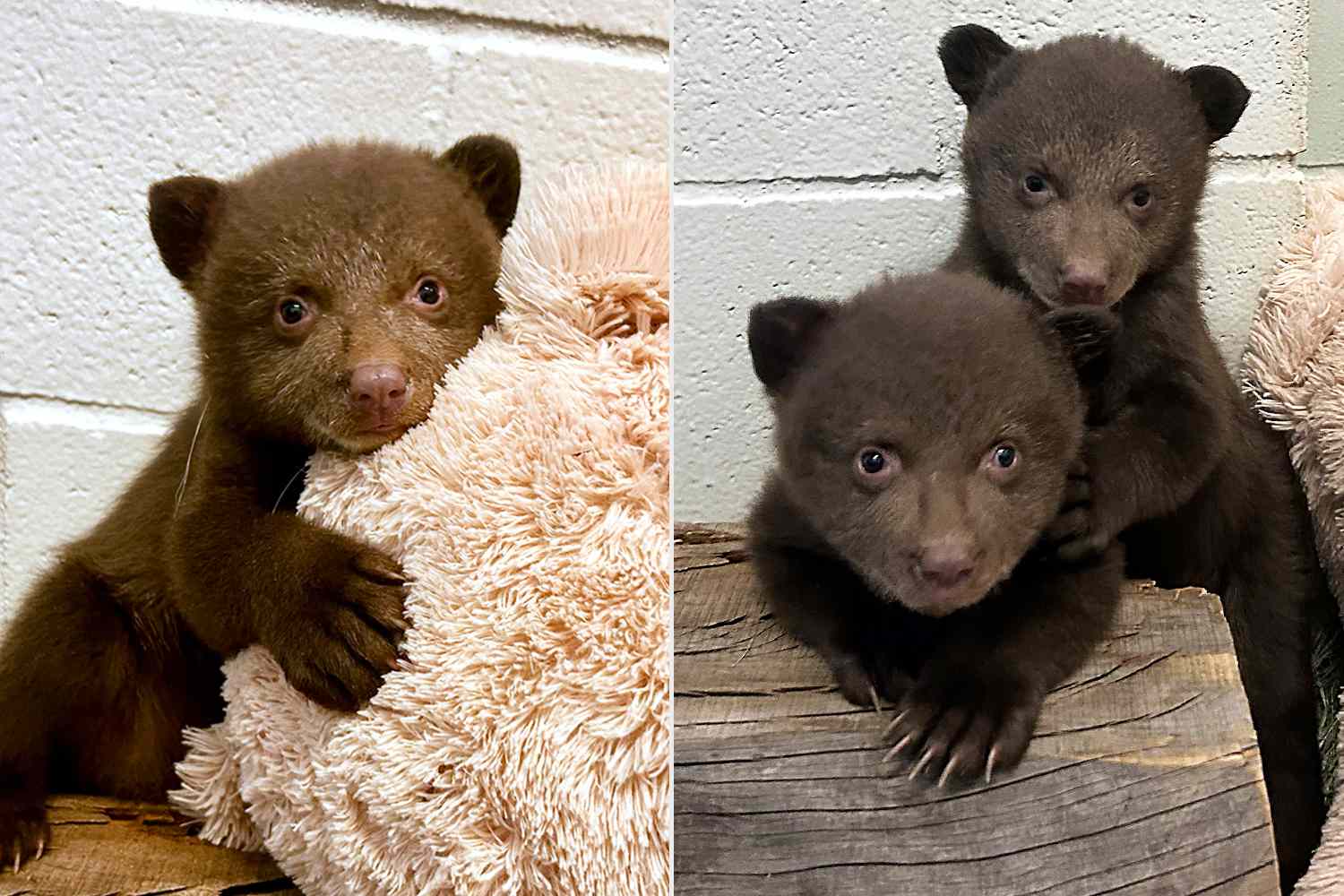
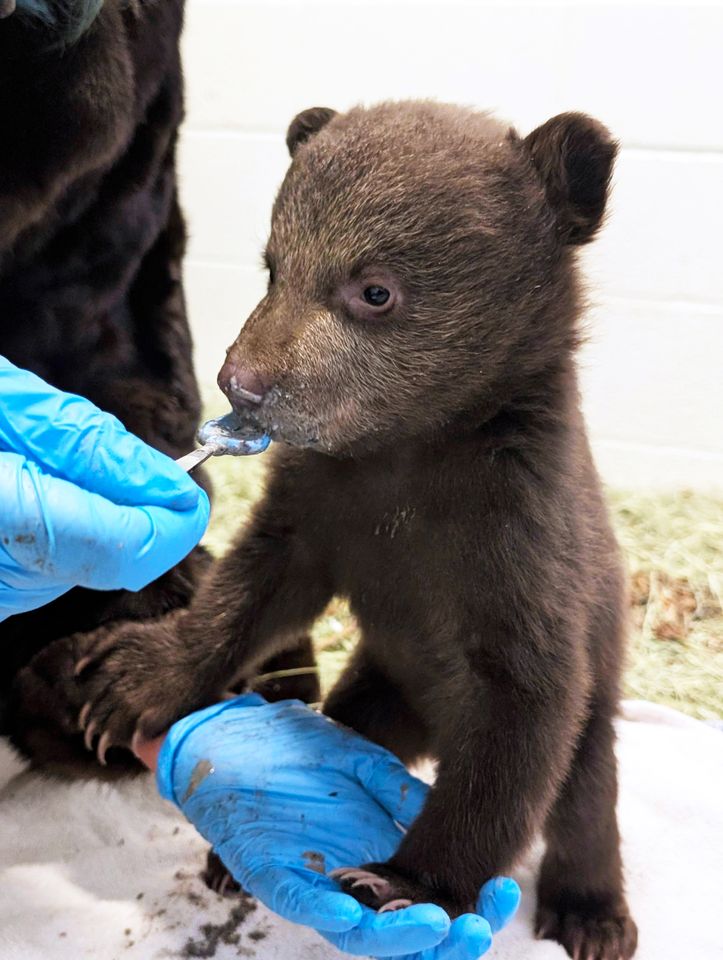
Rescue staffers are wearing fake fur, animal scents, and bear masks around the cubs to increase the baby bears' chance of being released into the wild
Credit: Courtesy San Diego Humane Society
NEED TO KNOW
- Two orphaned bear cubs from Monrovia, Calif., entered rehabilitation at San Diego Humane Society’s Ramona Wildlife Center
- Staff at the center are using full-body costumes, masks, and scents to prevent cubs from developing an attachment to humans
- The goal is to release the cubs back into the wild while also reducing future human-wildlife conflict
Two black bear cubs rescued from Monrovia, Calif., arrived at the San Diego Humane Society's Ramona Wildlife Center after state wildlife officials determined the cubs' mother posed a public safety risk and euthanized the adult bear.
According to a press release obtained by PEOPLE from the San Diego Humane Society, the California Department of Fish and Wildlife (CDFW) decided to humanely euthanize the mother bear after DNA testing linked the animal to two human-bear conflict incidents that endangered public safety.
Credit: Courtesy San Diego Humane Society
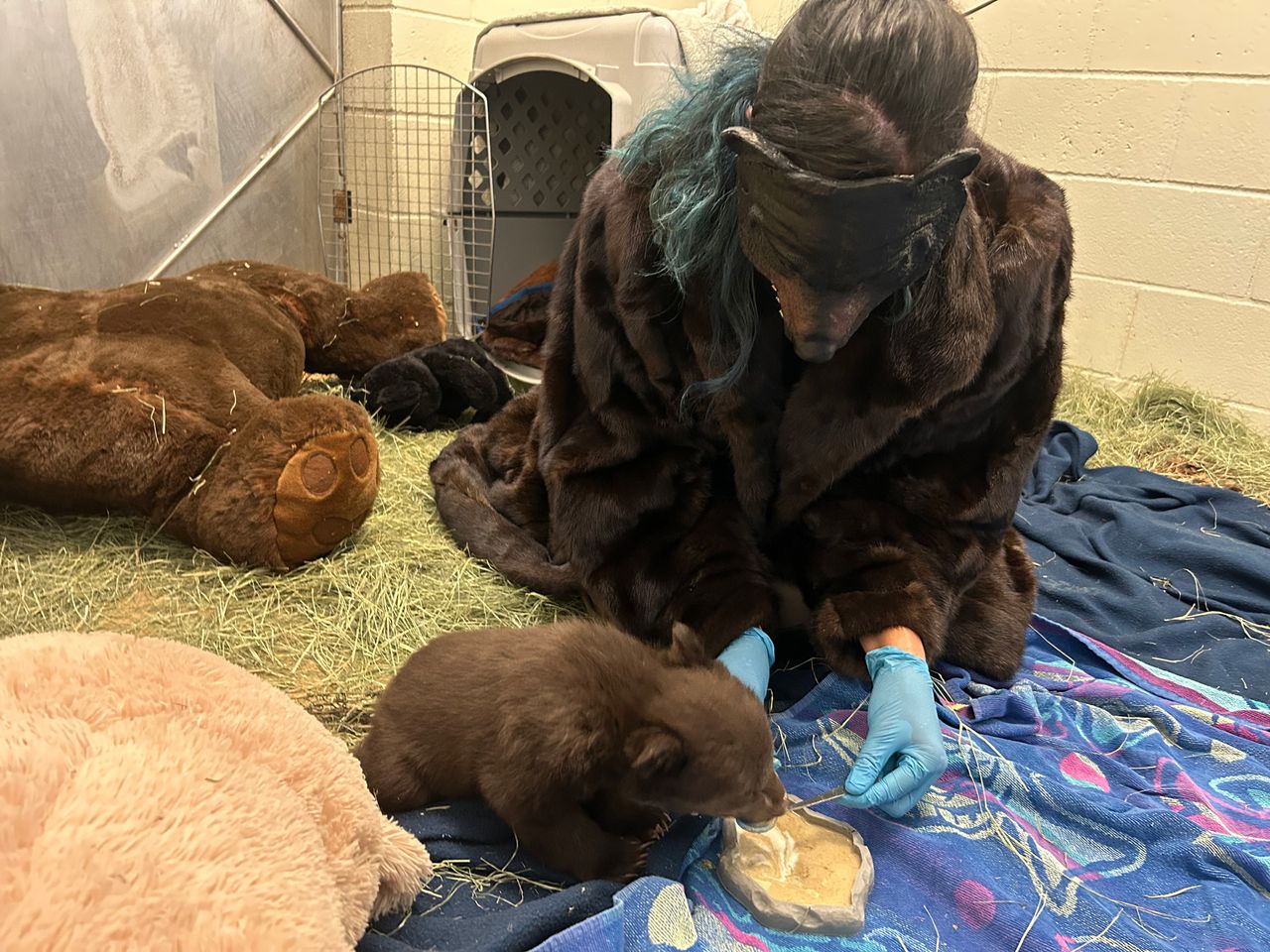
Following the death, the Ramona Wildlife Center is focusing on giving the deceased mother bear's two cubs the best chance at survival in the wild. Part of this plan includes having the facility's staff go to great lengths to ensure that the cubs don't become dependent on human care.
Animal caretakers wear bear masks, along with animal furs and scents, to disguise their presence while feeding and tending to the cubs.
"Raising bear cubs from this young age requires an extraordinary amount of time, expertise, and resources," said Autumn Welch, a wildlife operations manager with San Diego Humane Society.
Credit: Courtesy San Diego Humane Society
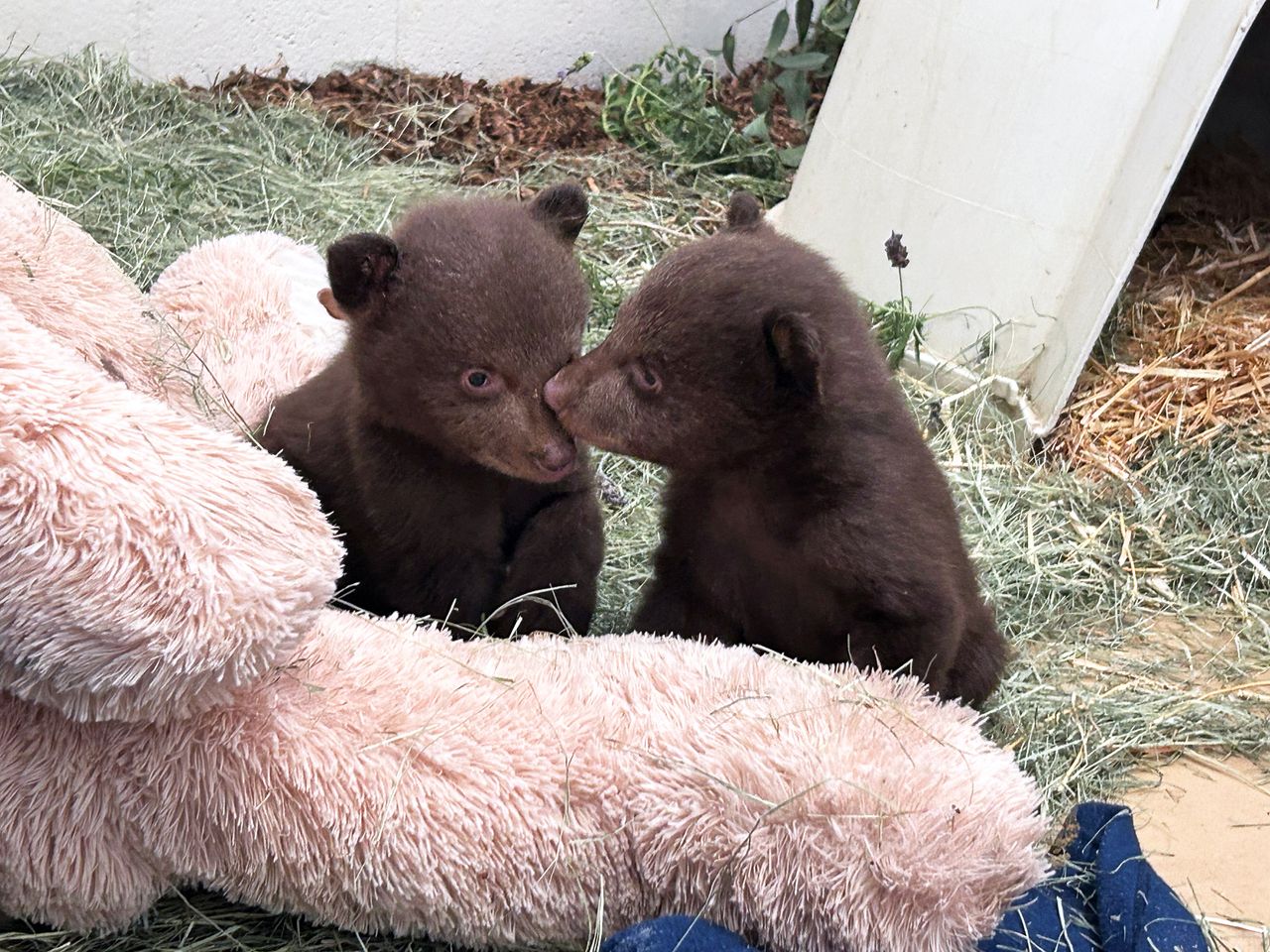
By limiting and disguising the cubs' human contact, the staff can prevent habituation, a behavior that can develop when wild animals begin to link humans with food and shelter.
"We don't want them to associate with humans in any way if they are going to have a chance to survive in their natural habitat," added Welch.
Avoiding habituation could help prevent situations like those that led to their mother's death.
Humans can also do their part to prevent human-bear conflicts.
Cort Klopping at CDFW explained, "Situations like this underscore the importance of prevention and shared responsibility. Bears are highly adaptable and will seek out food and shelter when opportunities are present."
Credit: Courtesy San Diego Humane Society
Never miss a story — sign up for PEOPLE's free daily newsletter to stay up-to-date on the best of what PEOPLE has to offer, from celebrity news to compelling human interest stories.
Klopping suggests securing crawl spaces, removing or properly securing trash bins and open pet food, and limiting access to sheltered spaces, such as basements or sheds.
"These actions help keep both people and wildlife safe and bears wild," noted Klopping.
Read the full article here