



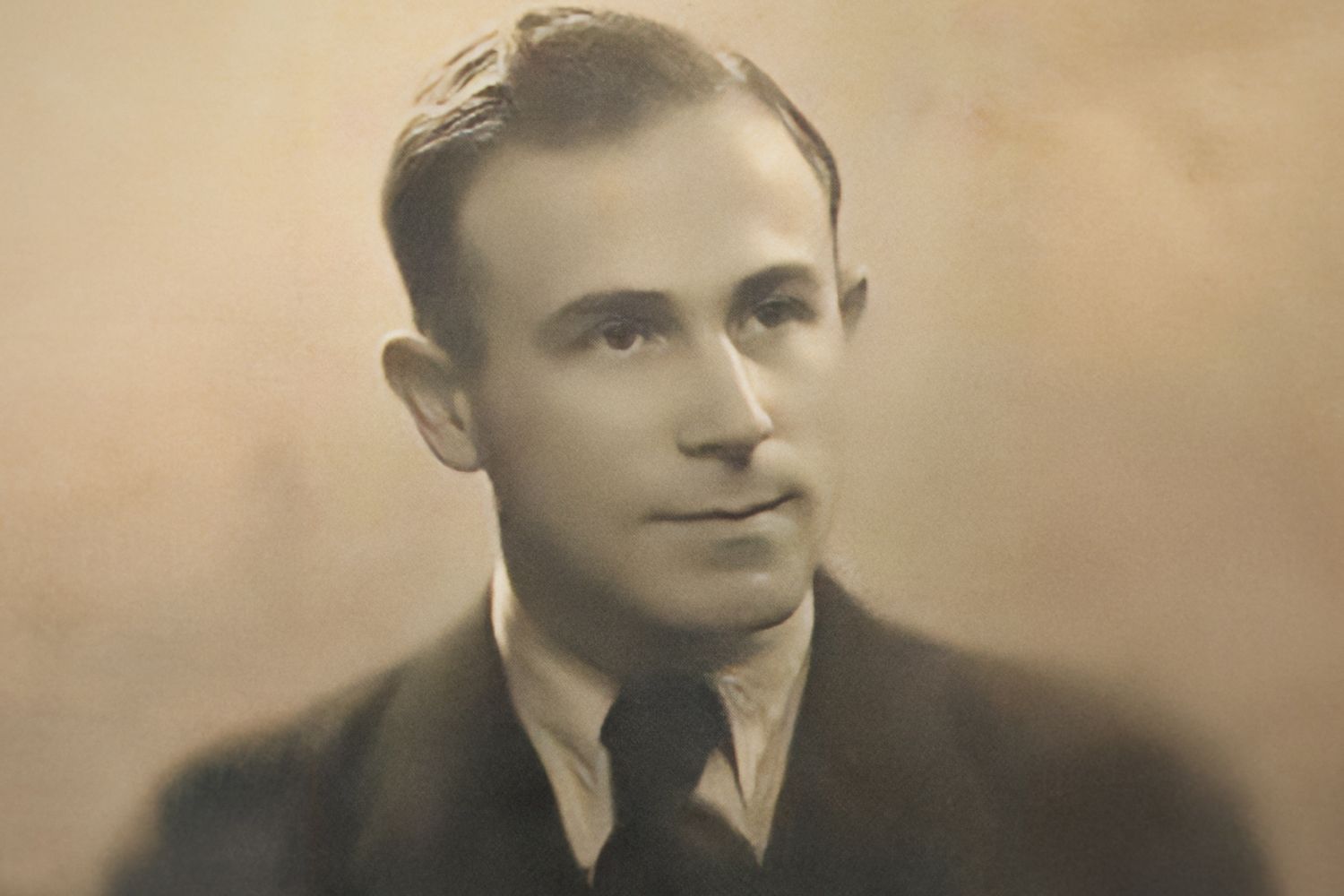
Erno “Zvi” Spiegel's story is examined through the eyes of those whose lives he saved during the Holocaust in the documentary 'The Last Twins'
Credit: PBS
NEED TO KNOW
- Judith and Israel Richter knew very little about their dad’s experience during the Holocaust until an article in Life magazine opened the floodgates
- After arriving at the camps in 1944, Erno “Zvi” Spiegel was put in charge of all the twin children who were part of Josef Mengele’s experiments
- Spiegel’s story is being examined by those whose lives he saved in the documentary The Last Twins, now available to stream on PBS
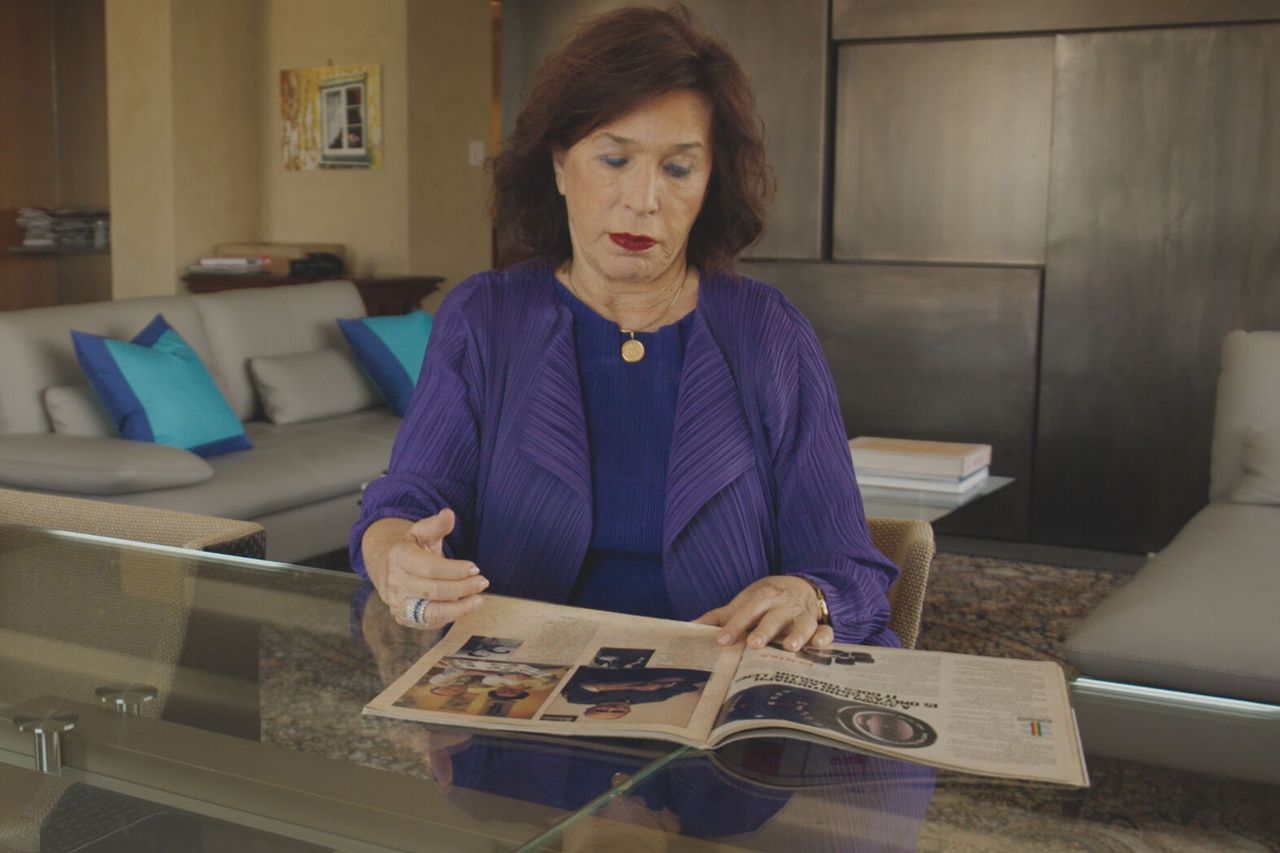
Growing up, Judith Richter didn’t know much about her father’s time in Auschwitz.
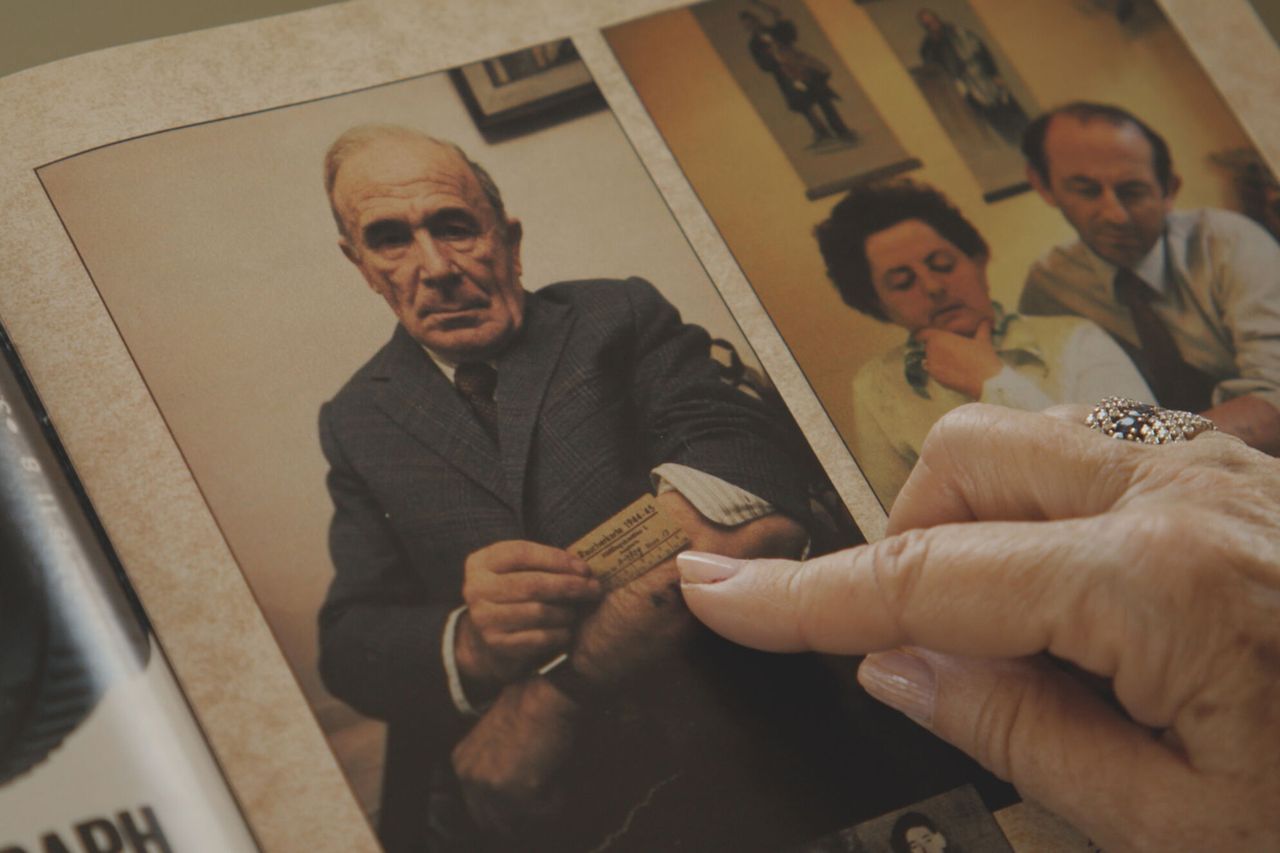
It wasn’t until decades later, when her husband Kobi Richter was flipping through an issue of Life magazine in the grocery store checkout line, that he spotted a photo of his father-in-law, Erno “Zvi” Spiegel, featured in an article about infamous Nazi doctor Josef Mengele, that the floodgates opened.
“We were taught to refer to my father as a delicate, porcelain figure,” Judith says in the documentary The Last Twins. “…There was some quiet noise in our home, quiet noise was you don't ask your father about the Holocaust.”
“He never talked about [it] but I knew in a way that he suffered, from stories that my mother used to say but we never heard from my father,” Judith’s brother Israel Spiegel says.
Credit: PBS
In the documentary narrated by Liev Schreiber, now available to stream on PBS in honor of Yom HaShoah (Israel's Holocaust Remembrance Day), Spiegel’s remarkable story of survival — and heroism — is told through the stories of those whose lives he helped save.
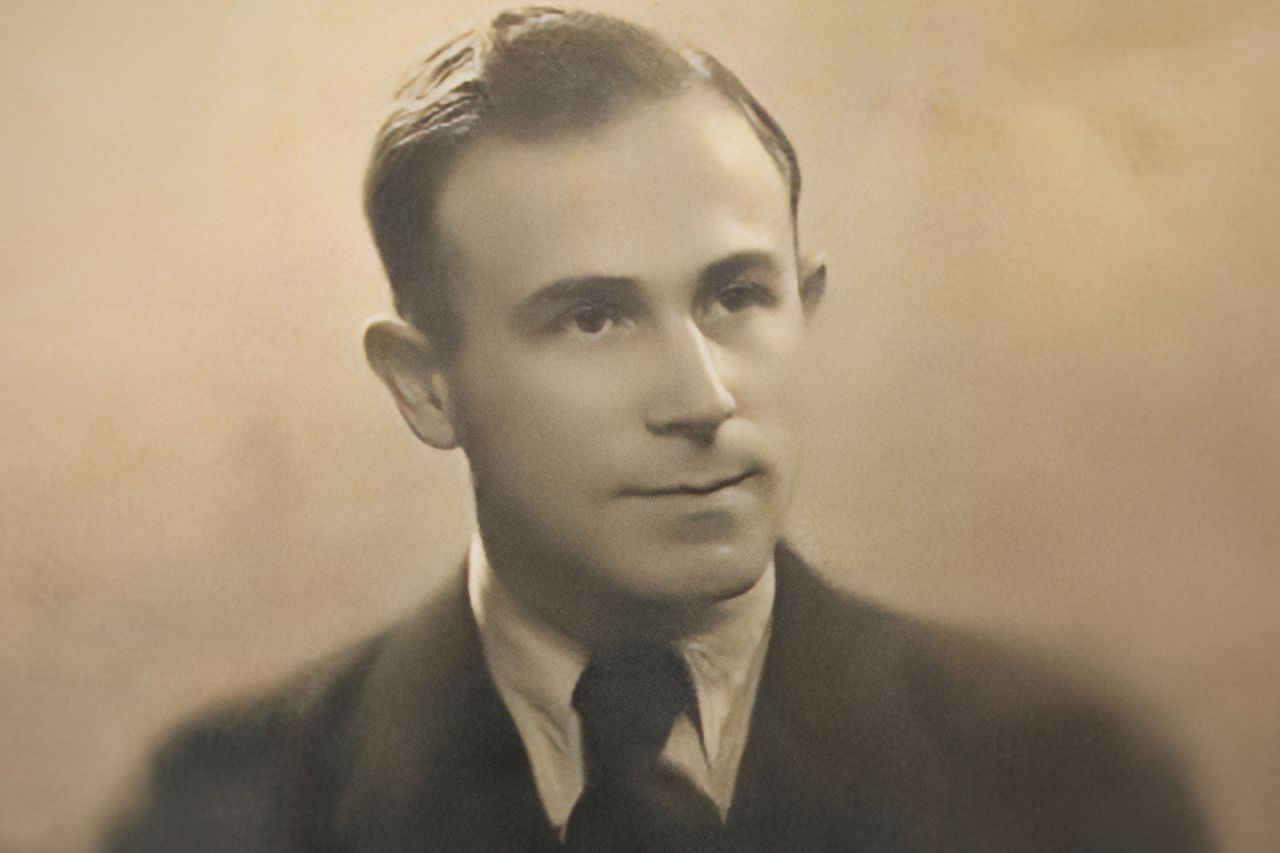
With Judith serving as an executive producer, she explores her father’s journey from Hungary to Auschwitz in May 1944 at the age of 29.
Once inside the camp, prisoners were separated into different groups, with some sent almost immediately to the gas chambers. Children were seen as too weak to be kept alive, though, as one of the exceptions, Mengele, known as the “Angel of Death,” opted to allow twin children to live so that they could serve as subjects to his experiments.
Spiegel himself was a twin; his sister was kept with female prisoners, and due to his past as a soldier, Mengele put him in charge of the children. The boys came to know him as “Spiegel Bácsi” — or Uncle Spiegel.
Spiegel, who was often a subject of Mengele's experiments, made several life-saving decisions during his time in captivity, including one instance, as explained in the documentary, when he changed two brothers’ birth dates to match after they had been mistakenly identified as twins.
Credit: PBS
He taught the boys math and geography and had difficult conversations with some of them about the fate of their loved ones who didn’t make it.
In the film, survivor Ephraim Reichenberg explains how he and his brother, who were one of the pairs that weren’t biological twins, had experiments done on their throats after it was discovered that his brother had a beautiful singing voice, though Reichenberg did not. A year after the war, his brother died “in agony,” and in 1967, Reichenberg, who speaks in the documentary with the help of a medical device, had to have his throat and gullet removed.
In just one of Spiegel’s “unheard of” protective measures, he intervened when SS Officer Heinz Thilo attempted to have the smaller children in the group killed. Spiegel asked to speak to Mengele and alert him of what was happening — a risky decision that saved the boys from death.
Upon liberation, with no direction on where to go next, the children “begged” for Spiegel to take them with him. He obliged, and they headed for Hungary and Czechoslovakia. Along the way, Spiegel had to obtain paperwork that proved their status as refugees from Auschwitz. The group— which would grow to 153 people — traveled for “nearly two months” to reach safety.
A year to the date after he was liberated, Spiegel married fellow Auschwitz survivor Rachel Anna Hecht and welcomed Judith before moving to Israel, where the couple welcomed their second child, a son named Israel. He went on to work as the chief financial officer of the Cameri Theatre in Tel Aviv for 30 years.
Credit: PBS
After Judith’s husband Kobi found that issue of Life magazine in 1981, she and her brother were stunned to learn the extent of their father’s heroism.
“I read it 10 times to make sure that I understand … I couldn’t believe it,” Israel says.
Also included in the article, alongside a photo of Spiegel, was an image of Peter Somogyi and his brother Thomas. Once he saw it, he reached out to the Israeli embassy to figure out how to get in touch with Spiegel. The remarkable meeting in Brookline, Mass., which was documented by local news outlets, marked the first time both men had really ever talked about their experiences.
In 1985, a mock trial was held in Jerusalem against Mengele, and Spiegel was called as a witness. At one point, one of the moderators asked those in his care to stand up, and numerous people rose from their seatsto the sound of applause.
“All of a sudden, my father becomes a hero; he’s being remembered as somebody who saved lives. That’s a hero, no?” Judith says.
Credit: PBS
Over the years, Judith has been contacted by many survivors and remembers one who said “'We are the children of Spiegel Bácsi.' ”
“I said, 'So we are family,' all of a sudden I have 'brothers'… that were considering my father to be a father also,” she said. “That was the first time that I really grasped the whole saga of my father in the camp.”
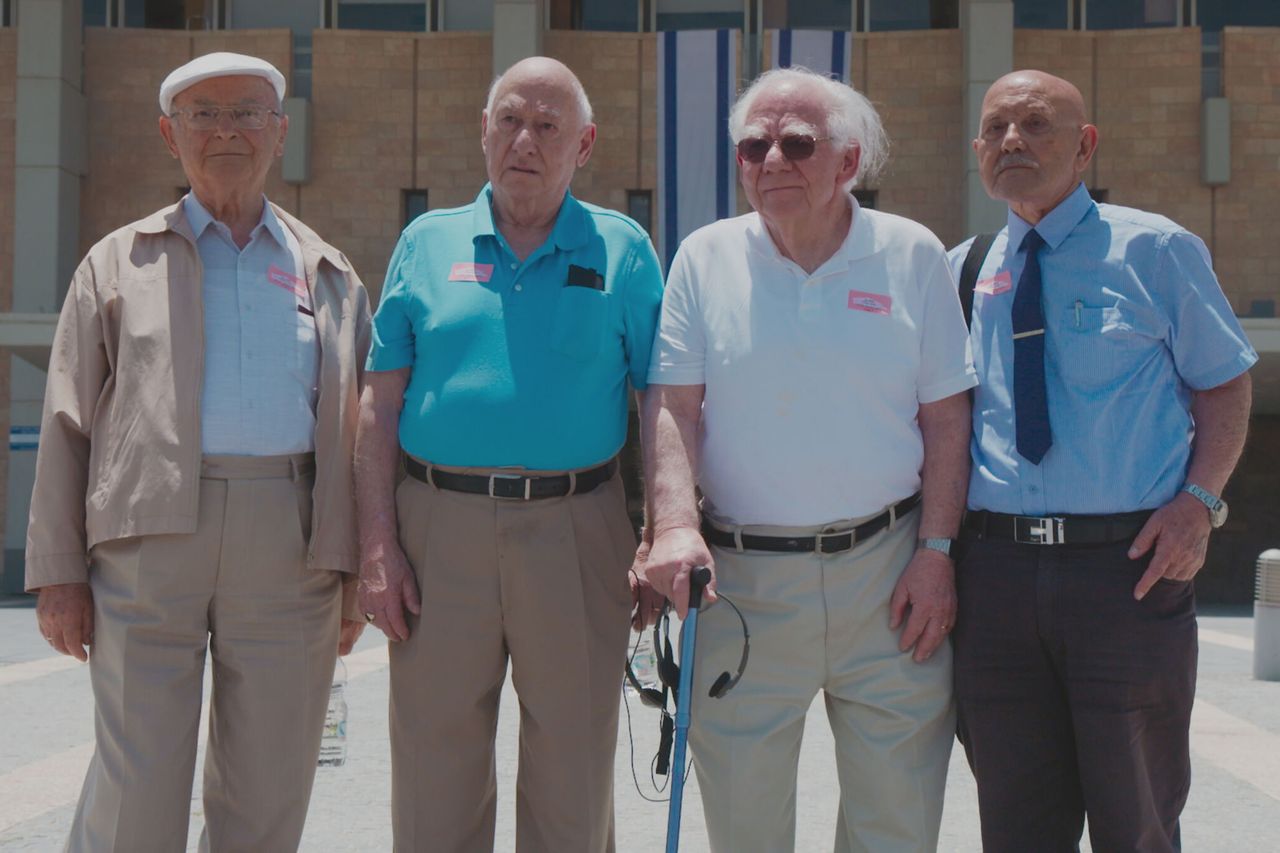
In 2017, Judith organized a group of surviving twins to gather in Jerusalem, where a plaque was unveiled in honor of the twin children who were killed. During the trip, a rabbi organized Bar Mitzvahs — a Jewish coming of age ceremony that typically occurs at 13 years old — for the men who had survived.
Spiegel stayed connected to many of the surviving twins around the world before he died in 1993. His twin sister died the same year.
The Last Twins is available to stream on PBS.org, the PBS YouTube channel and the PBS App. It's scheduled for a national broadcast on June 15 at 10 p.m. EST on PBS.
Read the full article here