



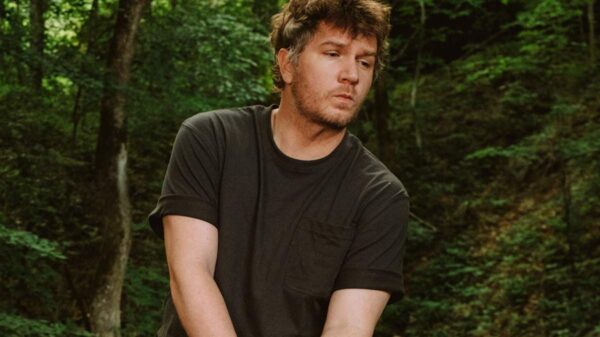

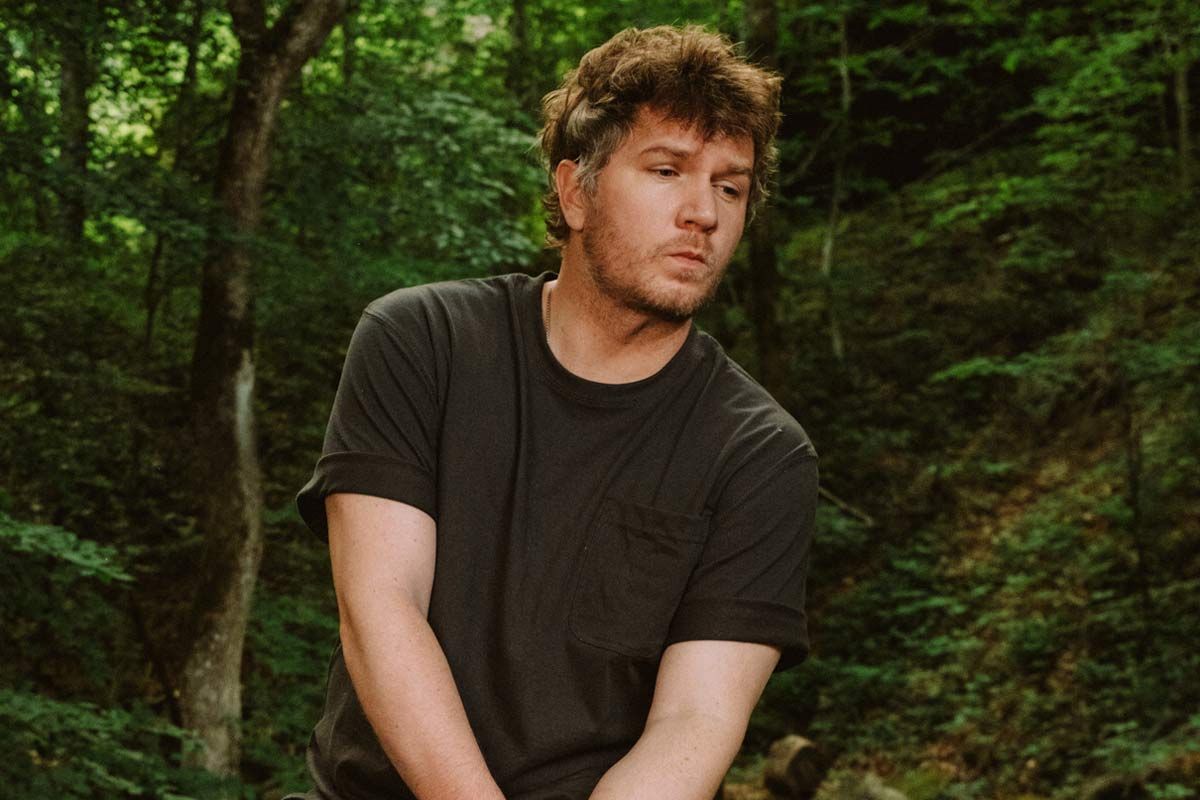
From the grandfather who taught him guitar to the Lee County characters who come alive in his songs, Noe opens up about the memories that informed his third album
Credit: Jace Kartye
NEED TO KNOW
- Ian Noe’s new album, Canyon Falls Trailer Band, draws inspiration from his Appalachian roots and life in Eastern Kentucky
- The project blends fictionalized characters with real-life experiences, exploring themes of hardship, humor, and humanity
- Noe credits his late grandfather and Kentucky’s landscape for shaping his songwriting and creative spirit
In the realm of places that you can leave physically without ever leaving spiritually, Ian Noe holds Eastern Kentucky in the absolute highest regard.
That deeply profound resonance is not one that is easily explained to any individual who hasn’t trod through the hollers of Lee County. From its kudzu-draped hills to its weathered coal mines, a sense of self exists that is deeply ingrained within its populous and incubates some of the most proud, determined and unique individuals one could ever encounter — the essence of whom Noe delivers in song via his long-awaited third studio album, Canyon Falls Trailer Band.
“Canyon Falls is just 15 minutes up the road,” Noe tells PEOPLE over a call from his childhood home. “I grew up here. It’s all I’ve ever known. I love it. I’m inspired by it. It’s where I learned how to play music.”
Now 36, and having established himself as a definitive modern poet weaving intricate tapestries of Appalachian life that extend far beyond the Eastern Kentucky Coal Field, Noe is able to look back at the landscape that informed him from the vantage point of a career built upon conveying its stories to the world. His latest offering, billed as the spiritual “parent” of 2019’s Between the Country and 2022’s River Fools & Mountain Saints, merges those fan-favorite projects’ sonics with the concept of a fictional band Noe ideated, who perform for one night only to garner industry approval in Nashville.
Filled with characters constructed from the memories of his past, heartbreak informed by experience, addiction referenced from torrid circumstances in his peripherals and a sense of longing that only he can deliver, Canyon Falls Trailer Band continues to untether Noe from genre constraints and places him firmly in the company of historically-lauded songwriters such as Townes Van Zandt, Blaze Foley and John Prine.
“I’ve experienced a great deal of suffering myself growing up here, not as much as some others for sure,” he reflects. “It’s just like some of these stories, I felt like they just needed to be told.”
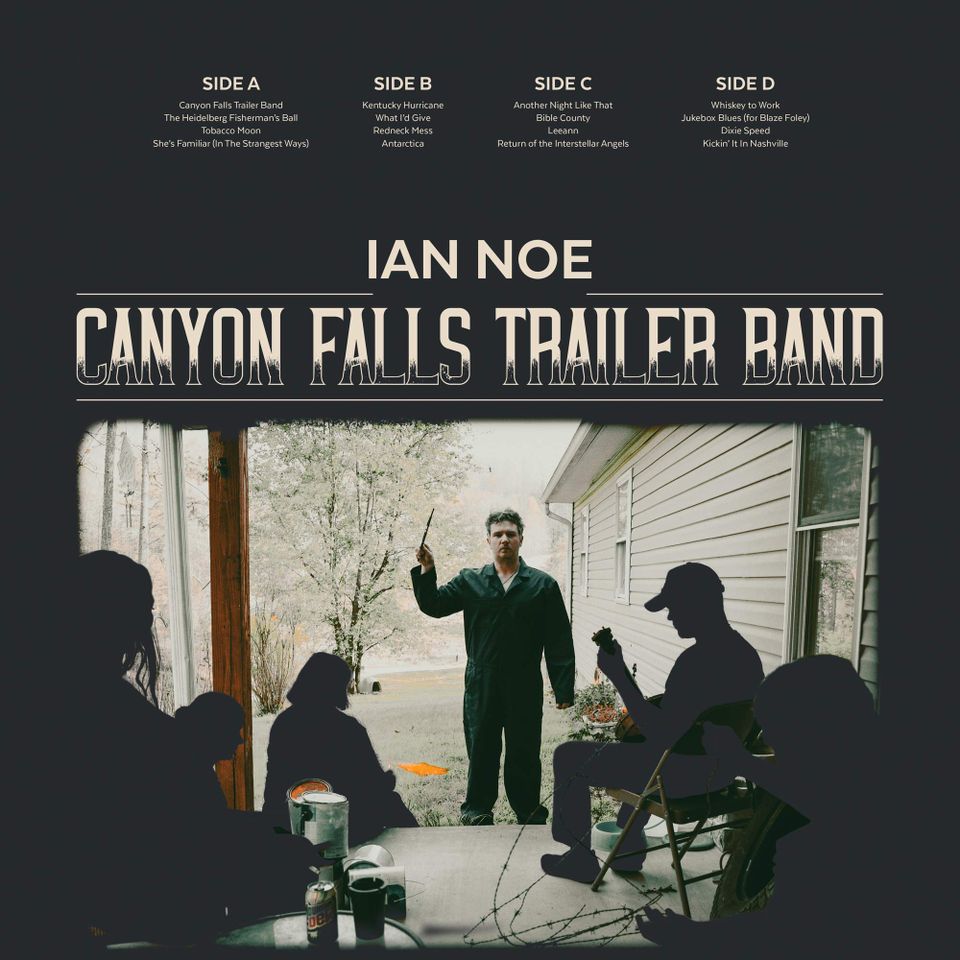
Credit: Thirty Tigers
Distinction is important to Noe in this context. He is well aware of Appalachia’s outside perspective, having its economic hardships displayed in poverty porn dynamics and its people relegated to stereotypes before onlookers attempt to understand them as individuals. Having spent his life inside that world, Noe knows there is a very fine line between telling the truth about a place and turning its shortcomings into a spectacle for the masses.
Noe explains, “I do my best to approach it with a respectful mind frame … riding that line, because there is a line.”
And while the characters he created may occupy a pseudo-fictionalized version of his Kentucky home, the ground beneath them—as well as the stories that informed them, is as real as can be.
“Once you get an idea and it’s in your gut, like you know it in your gut, it’s easy to go with the flow,” the artist shares of how the ball got rolling on Canyon Falls Trailer Band, a record he arrived at after workshopping a series of other track lists that weren’t “scratching the itch.” In turn, the profound satisfaction he experienced by finally scratching the itch runs like a mainline through the narrative arc of the project.
On the standout “Leeann,” a woman who once tried life on the road with her husband returns home to play small pool halls around Eastern Kentucky. Existing as a continuation of the album’s title track that invokes a name Noe has “been trying to work into a song for years,” the ballad locks in on the artist’s love of melody and references the cumulative, small moments in life that reinforce our humanity.
Then, on the likes of “The Heidelberg Fisherman’s Ball,” Noe allows himself to simply follow an A minor chord and a dream to what amounts to his most upbeat recording to date.
“I was sitting there one day last year in the summertime and I was fingerpicking an A minor, and I was like, ‘Man, I know where this is going. Somebody’s going to be by the river. They’re probably going to be dead by the end of the song,” he jokingly recalls. But Noe also channeled the essence of Craig Wiseman, who had highlighted in the past the importance of not worrying about whether an idea would be a good song or not, instead suggesting to simply write it down.
Then came the spark. “It was like a bolt of lightning,” Noe remembers of the moment that resulted in a truly playful track that runs dual purpose as a stunning example of his dynamic range and a lyrical archive of the very real Lock and Dam #14 in Heidelberg, teeming with fishermen and life as a whole.
“I’m proud of that song because it’s one of the most upbeat, happy songs I’ve ever wrote, really,” he confesses. “Even though the subject matter is about fishermen trying to pick up women by the river and this guy gets turned down, he doesn’t have enough money to even pick up a woman. He ends up being by himself. It’s a funny song.”
In Noe’s mind, darkness and humor are two sides of the same coin. The same mentality goes toward minor chords and happy melodies, both of which he considers different vehicles to the same destination. “I will always be a melody man,” he reaffirms of his disposition towards songwriting as a whole.
And at the heart of all of that is a deeply innate feeling, which drives Noe towards all of his creative decisions. “I’m just trying to move myself,” he shares. “The sad songs make me feel good. The happy songs make me feel good. It’s really about getting that thing. It’s just like, you’re looking for a feeling. That’s all it is.”

Credit: Jace Kartye
Nowhere is that more evident than a track like “Bible County,” where Noe learned the delicate balance between delivering a tragic, true story and honoring those it affects firsthand.
“I’ve never told anybody this,” Noe prefaces before explaining that the track centers around a lesbian woman hiding “from herself” in a fictional place called Bible County before ultimately jumping off a bridge due to societal pressures. Though the specific locale is imaginary, the song is “based on a true story,” as he shares.
The album’s culminating moment is “Kickin’ It In Nashville,” Noe’s waltz down Broadway and to the likes of The Bluebird Cafe, likening shady industry players to jackals and poking fun at major country stars trying to party like George Jones once did. Does his fictional band ever succeed? We may never know, but to view Music City through Noe’s lens is to peer into an often-hushed label power dynamic, and he shows no hesitation in telling it how he sees it.
While Noe attaches very real memories and moments to even fictionalized accounts, he states that the simplest observation he could have about his creative output in totality is that once his songs are shared with the world, their meanings are interpreted wholly within the mind of each listener.
“The songs, they’re for you,” he says. “They’re whatever you think about them.” That belief reinforces the notion that while Noe’s Kentucky is one must-see to believe, the overarching themes he addresses can be applied to those from all walks of life.
All-in-all, beyond the spiritual presence of all of whom he came up with and the lineage he continues of the likes of Foley, Van Zandt and Prine, the ultimate source from which Noe derives his creative spirit remains his grandfather.
“My mother’s dad, my grandpa, he’s no longer here, but I mean, I learned how to write songs at his house. That started as a teenager,” the singer shares. “He would let me stay up and smoke cigarettes till three o’clock in the morning, my grandma too, and would let me play the guitar all night. Me and him would go look for arrowheads. We would travel all over this state.”
These memories explain something about Noe that lyrics may never even fully convey, and exemplify just why he feels so obligated to tell the stories of the land that made him into the man he is today. “I’m not trying to take advantage of where I’m from,” he states, maintaining he intently addresses the good and the bad “in the most respectful way possible.”
He doubles down by adding, “I just have always tried to write what I think this place sounds like to me. That’s it… Those songs that I write, to me, sound like all the places that I’ve been in my 36 years on this planet.”
Therein lies the ethos of Canyon Falls Trailer Band, a project that, if recognized for anything, should be principally for its preservation of the traditions of an underrepresented lifestyle and people in cultural amber that will sustain long after Noe is gone.
“It’s just a damn beautiful place, man,” Noe continues of his Appalachian home. “The scenery of this place inspires me to write music. The people are beautiful… I love them over here. That’s who I am.”
Canyon Falls Trailer Band is available on all major streaming platforms now.
Read the full article here