
The researchers who found the fossil named the new species after a beloved cartoon character
Credit: Jun Seong Yi
NEED TO KNOW
- Researchers discovered a new dinosaur species, which they named Doolysaurus, through a fossil found in South Korea
- The fossil of the juvenile dinosaur includes skull material, offering key evolutionary insight
- The species’ name is inspired by the beloved Korean cartoon Dooly the Little Dinosaur
A newly identified dinosaur species is offering scientists a rare glimpse into prehistoric life.
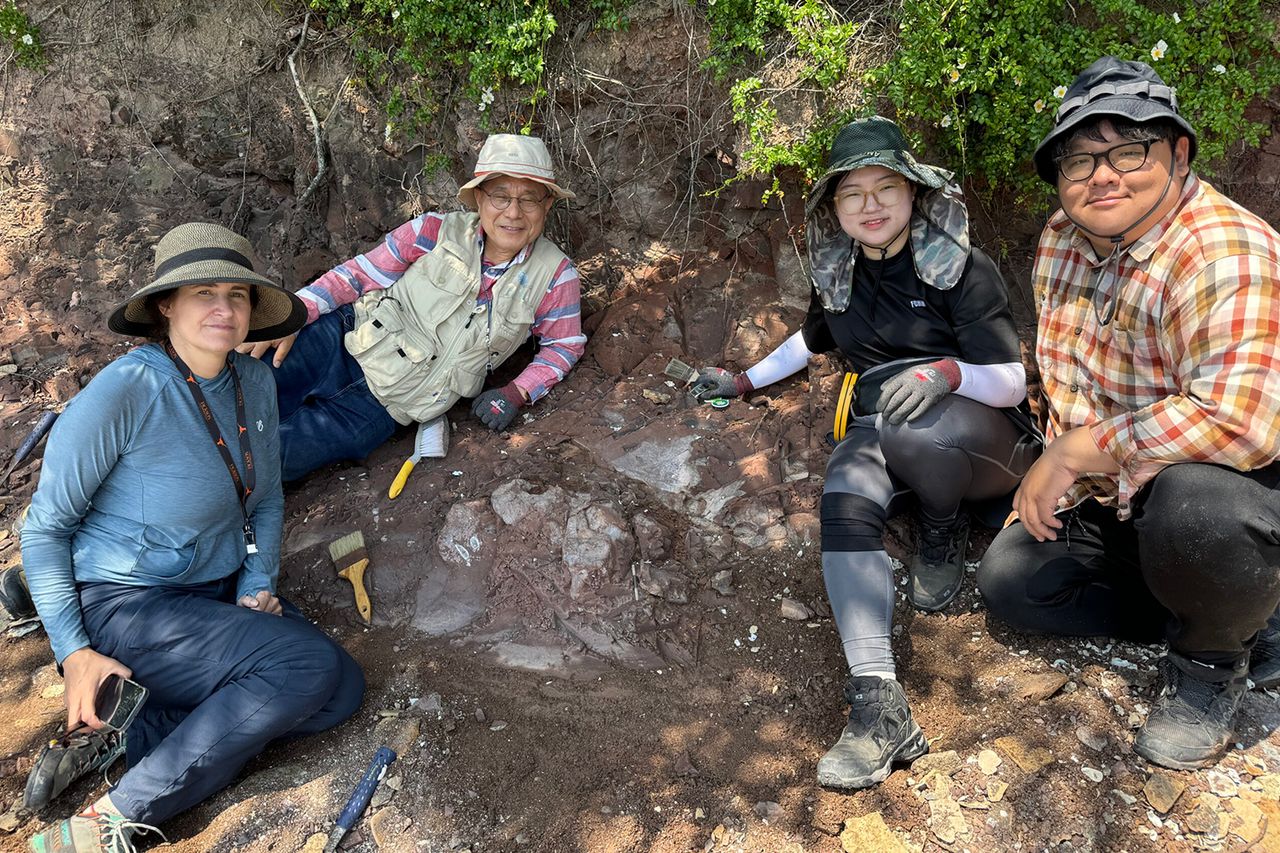
According to Tech Explorist and a Texas Standard interview, researchers from the University of Texas at Austin (UT Austin) and the Korean Dinosaur Research Center discovered a juvenile dinosaur fossil in South Korea, which they confirmed as a newly identified species. The researchers named the species Doolysaurus huhmini.
The fossil is believed to belong to a small, plant-eating dinosaur from the mid-Cretaceous period and includes parts of the skull and body — a rare find. Well-preserved cranial material provides critical information about how these dinosaurs grew, according to the researchers.

Credit: Jongyun Jung
The species name came from a combination of two sources: the popular South Korean cartoon Dooly the Little Dinosaur and a well-respected scientist.
"This species' name is Doolysaurus huhmini and is named after Professor Min Hu from Korea, who excavated the first dinosaur nest fossil in this site and also worked on various paleontological projects of Korea over the [past] 30 years," said Jongyun Jung, a visiting postdoctoral researcher at UT Austin, who also worked on the excavation.
"This specimen gives us insight into early plant-eating dinosaurs," said Dr. Julia Clarke, professor at UT Austin's Jackson School of Geosciences, during the Texas Standard interview. "We had to compare every part of the skull to known species to confirm it was new. It was a very exciting moment."
Jung added that the fossil has been scanned using CT technology. "One of the very important moments in my life," he said. "The scans revealed a complete skull hidden inside a hard rock block."
Clarke noted that the team's findings suggested that the dinosaur was about the size of a small dog or a large cat. Clarke said the find also provides evidence about mid-Cretaceous ecosystems in Asia. "It samples a lineage that has relatives in North America," she explained. "It fills in gaps in the evolutionary story and shows connections between continents."
Jung added that the site also contained dinosaur egg fossils, including bird eggs, suggesting further potential discoveries. "We expect to find more diverse dinosaurs and new species in the future," he said.
Never miss a story — sign up for PEOPLE's free daily newsletter to stay up-to-date on the best of what PEOPLE has to offer, from celebrity news to compelling human interest stories.
The Doolysaurus discovery demonstrates the value of international collaboration and modern technology in paleontology.
Read the full article here