
Marta Eliza Miller was diagnosed with scoliosis when she was 11
Credit: Cathryn Farnsworth; Courtesy of the Marta Eliza Miller Foundation
NEED TO KNOW
- Marta Eliza Miller was diagnosed with scoliosis at 11, and by age 13, she had a 48-degree spinal curve
- She and her mother founded the Marta Eliza Miller Foundation to raise awareness about the condition and raise funds for research
- Miller tells PEOPLE that the foundation has since raised over $1 million
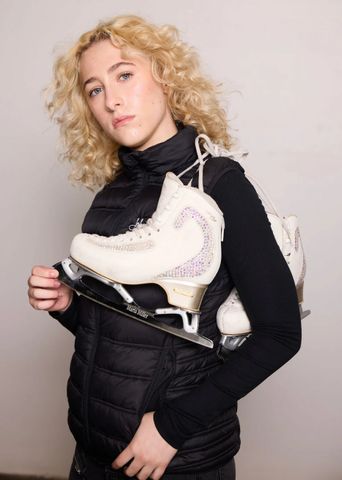
Marta Eliza Miller's happy place has always been on the ice, but a diagnosis at age 11 threatened everything she had been working toward for years.
"My mom noticed that I leaned to my left side and looked down while I was skating," the California-based teen tells PEOPLE. "Whenever we tried a posture brace, it would always shift to the wrong side."
"My mom did some research and realized that I might have scoliosis, so I got diagnosed when I was 11 years old and started wearing my flexible brace," she continues. "A year later, when I was doing a double lutz, I injured my right hip flexor, went to the Children's Hospital, and they noticed that I had scoliosis and a shorter left leg. The hospital started monitoring my scoliosis."
For a year, things were okay. Miller would wear a brace up to 20 hours a day while continuing to train and compete. Just two years after her diagnosis, however, she learned her spinal curve had progressed from 31 degrees to 48 degrees, threatening her future as a competitive ice dancer.

Credit: Courtesy of the Marta Eliza Miller Foundation
"The doctor I was with wanted me to get surgery, [but] because I was an elite figure skater, it was really hard," the now-19-year-old explains. "She said I should go to the head of the spine center, so I went to Dr. Skaggs. We did three consecutive MRIs, and after those, it was right before the pandemic, Dr. Skaggs said, that if I'm not in any pain, then I don't need surgery."
"It was a big deal that a doctor would suggest surgery when I'm not in pain," she adds. "We decided that in case I needed surgery and I couldn't continue figure skating, we would make a foundation to help other athletes like me."
Ultimately, Miller switched from figure skating to ice dancing to protect her spine and extend her athletic career.
In February 2020, Miller, then 13 years old, and her mother, Corrina Clover Miller, founded the Marta Eliza Miller Foundation (MEMF), a 501 (c)(3) nonprofit organization created for scoliosis awareness.
According to Marta, some of the money they've raised has helped the Los Angeles Children's Spine Center and the development of the Momentum app, which scans the body for signs of scoliosis or changes in the spine.
View on Instagram"That way, kids don't have to deal with radiation every single four to six months and going in to check if their curve has spiked or gone down," she explains. "It's an app that really helps to see, every single month, where your curve is at. And it's still in, like, the developmental phase, and I'm one of the people that does it every single month, but it's really exciting."
The Miller family continues to raise money through events, raising over $50,000 for Los Angeles' Children's Spine Center through skating exhibitions alone, and they'll be hosting a fundraiser on June 11 at Marta's home ice rink.
"We have a fundraiser that we will be doing at my home ice rink and I'm super excited because I did one back in 2023, and it was a huge success, and now we're gonna do another one," Marta shares. "We want to build more and expand our reach beyond California."

Credit: Cathryn Farnsworth
The goal, Marta shares, is to "go to all the states in the United States and help each hospital with their spine center."
"We want to expand and help more athletes or people who have scoliosis dream big and feel stronger about themselves, and not feel worried about scoliosis because it's not a setback. It makes you stronger," Marta tells PEOPLE.
One of the reasons they started the foundation, Corrina notes, is "because we were both really scared when Marta was told she needed to have surgery."
"When her spine reached the 48 degrees, that's a substantial curve, and yet she felt no pain, and she was skating every single day, and it was also right before the COVID-19 [pandemic]," Corrina shares. "The hospital environment was really scary. When we did the three MRIs, I could sense the fear that was going on in Marta's head."
"I remember sitting down at dinner one night before she did the MRIs and saying, 'Maybe we should consider having a foundation because what if there are lots of people who aren't able to do the things that they really wanna do. If we create a foundation, we can give back and help instill confidence and encourage other young athletes in a similar position to you,'" she recalls. "The idea stuck. While we were waiting for the MRI results and the consultation on what it meant for Marta's future, we decided we wanted to do it. It ended up being a positive result for her, and that helps her carry the message for the foundation."
With scoliosis, "every single case is different," the mother-daughter duo emphasizes.
"That's the challenge with scoliosis. There's no one cure. Every single curve is different, and the way it affects a person's body is entirely different," Corrina shares. "And it's not only the physical; there's also a neurological, psychological and emotional component to it. Those questions never get answered."
"A lot of it has been researching and reading about other people, reading about scoliosis," she adds. "Marta handles much of the outreach. She writes letters to people and talks about what she's gone through, and she's done a lot with the Children's Hospital."
Corrina shares that it's important not to compare people's journeys with the musculoskeletal disorder.
"Marta didn't have to have surgery. That doesn't mean that surgery isn't right," she says. "In some situations, surgery is important. In some situations, wearing a hard brace is important. Marta could wear a soft brace because she was on the ice five days a week, and it made sense for her because she wasn't in any pain."

Credit: Courtesy of the Marta Eliza Miller Foundation
Corrina shares that it's important for parents to "remind your child that scoliosis doesn't define you."
"Try to encourage your child to know that being individual is what makes you unique. The ultimate thing we were trying to create with the foundation was how can we make kids feel like they can dream as big as they want, stand tall, dream big and be strong," she shares. "I've seen Marta grow emotionally, as much as she's grown physically, through scoliosis. Remind parents one step at a time, instill as much confidence and encouragement as you can in your child, and know this makes them more unique."
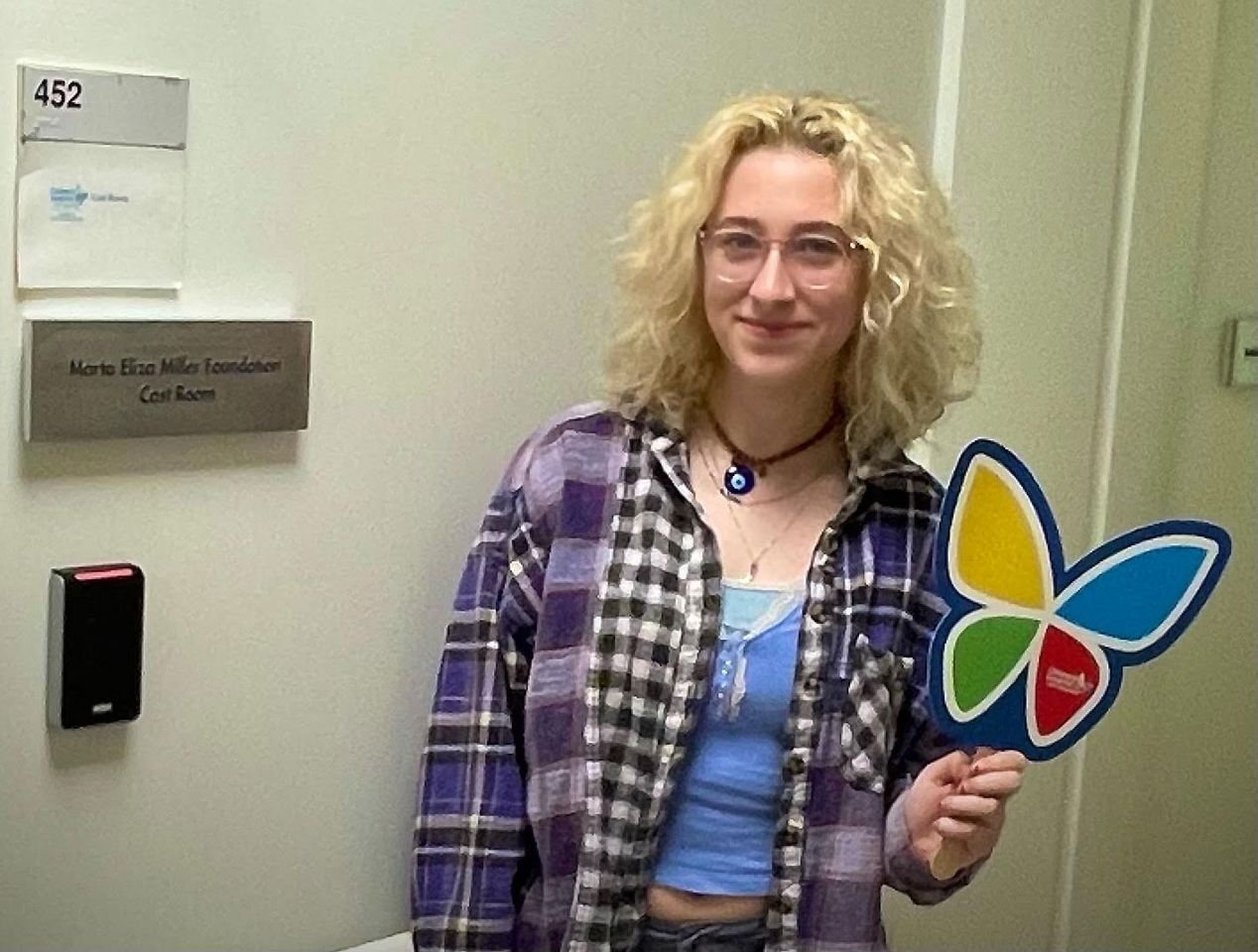
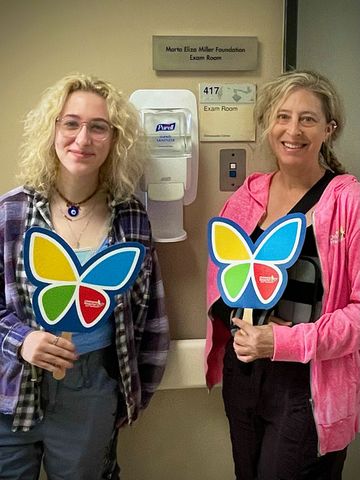
Marta graduated with a Bachelor of Fine Arts in Musical Theatre from the American Musical and Dramatic Academy (AMDA), becoming the youngest graduate in the school's history. Alongside her conservatory training, she has raised more than $1 million through the Marta Eliza Miller Foundation (MEMF) for scoliosis awareness — including over $475,000 for the Spine Center at Children's Hospital Los Angeles, where two rooms now bear her foundation's name.
Ultimately, Marta says, that scoliosis "does not define you."
"People are gonna say what they're going to say, and it does not define you as a person, and you have to push through, and you will get through it, and you will be stronger on the other end of it," she shares. "There's a lot of stigma with scoliosis. You figure out ways to make it work for yourself so it does not hurt you or make you feel like you're less because you can't do a certain move that every single other girl can do on the ice. You will become stronger because of it."
Read the full article here