


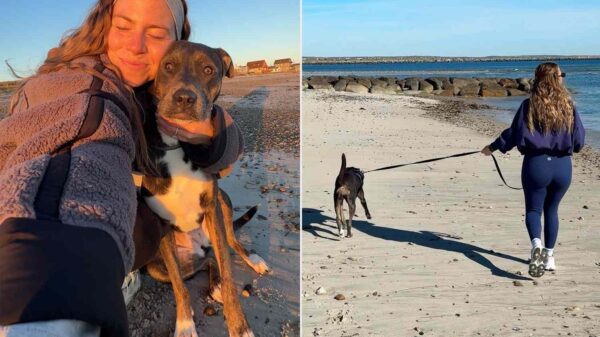




Kaitlyn Ballard teaches others how to build pet-sitting businesses through online courses and coaching
NEED TO KNOW
- Kaitlyn Ballard left teaching after five years to pursue dog walking and pet sitting full time
- She now earns $4,000 to $4,500 monthly, working 15 to 20 hours a week with flexible hours
- Ballard also teaches others how to build pet-sitting businesses through online courses and coaching
For five years, Kaitlyn Ballard worked as a fifth-grade reading and writing teacher.
On a typical weekday, she’d wake up at 4:30 a.m. to go to the gym before heading home to eat breakfast and get ready for work. By 7:30 a.m., she was in her classroom, where she taught until 3:30 p.m.
“Teaching was always the plan, and I honestly never thought about doing anything else,” Ballard, 27, tells PEOPLE exclusively. “I never had an ultimate passion for teaching where that is what I could only see myself doing, I just was never presented with any other option.”
But after five years in the classroom, Ballard, who was living in Texas with her husband at the time, began questioning whether teaching was where she wanted to spend the next chapter of her career.
She says she reached a point where she felt there was little room for growth in the direction she wanted to take her life. She wanted more flexibility, greater ownership of her time and the chance to challenge herself in a completely different way.
“I wanted my everyday to be something that I found so much joy in,” she says. “Leaving was scary because teaching had been such a huge part of my identity, but I also knew that staying somewhere simply because it was familiar wasn’t going to get me where I wanted to go.”
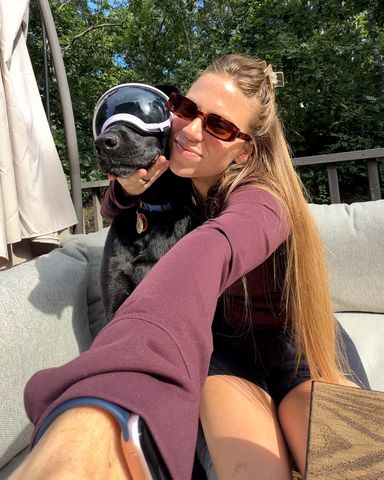
Credit: Kaitlyn Ballard
But even as Ballard became increasingly certain she wanted a change, there was one thing keeping her from walking away: financial stability.
So, while she was still teaching, Ballard began looking for a way to build an income outside of the classroom without giving up her steady paycheck. She turned to dog walking and pet sitting, signing up for Rover and beginning to take clients on the side.
She charged $20 per walk and $60 per night for house sittings and boardings. In total, Ballard says she earned an additional $35,807.25 through the side hustle while teaching full time.
At the time, Ballard had no plans to turn the work into a career. She was simply using the limited availability she had around her teaching schedule to make extra money.
“I never imagined becoming a full time dog walker/pet sitter, but I feel like anyone that is, never initially planned for it,” she says. “It kind of just happens over time.”

Credit: Kaitlyn Ballard
For Ballard, that shift happened gradually. As she gained experience and began seeing the potential in the business, she invested in building it into something more sustainable. She obtained pet first aid training, became fully insured to operate a pet-sitting business and more than doubled her rates.
She also began treating her Rover profile as a business in its own right, researching other sitters in her area to determine competitive rates and studying how to build a profile and bio that would attract clients.
In 2025, Ballard and her husband learned they would be moving from Texas to Cape Cod for his military service. The timing gave her an opportunity to make the change she had been considering — and the income she had already built through Rover gave her the financial cushion to pursue pet sitting full time.
After the move to Massachusetts, Ballard continued building her client base through Rover and word of mouth. Since moving to the Cape, she has worked with 29 different clients, including eight recurring weekly clients and four larger clients she regularly works with for house sittings and longer stays involving multiple drop-ins each day.
“One day, I want to open my own LLC, but as I am in the building stages, Rover plays an imperative part of it because that credibility travels with me and I am able to reach so many people without having to market myself outside of the app,” she says.
And the income has grown significantly since those early days.
While she was teaching, Ballard’s monthly dog-walking income ranged from about $300 to $500 during her slowest months and $1,000 to $1,500 during her busiest. Since making pet sitting her full-time job, she says that she averages $4,000 to $4,500 a month while working about 15 to 20 hours a week.
Her biggest month came in April, when she brought in $6,763.
“I didn’t even have to work 40 hours a week to see that income and that is when I knew this business could be scaled way further than what I am even doing now,” she says.

Credit: Kaitlyn Ballard
The numbers have allowed Ballard to rethink not only how she works, but what she wants her days to look like.
Her average day now begins around 9:45 a.m. when she leaves for her first client, and she is typically finished by about 1 p.m., depending on her schedule. Before heading out, she has time to wake up at sunrise for a walk on the beach, go to the gym and sit down for breakfast. She can even have lunch at home before wrapping up work in the early afternoon.
It’s a far cry from her routine as a teacher.
“Life is SO different now and only for the better,” she says. “I have more time to myself, to my husband, to our two dogs, and the opportunity to pursue the things that bring me the most joy.”
But the flexibility comes with responsibilities that Ballard says are often overlooked.
“The biggest surprise had to be how much work can actually go into building a dog walking business,” she says. “Dog walking can be viewed as a low income, side hustle, do it while you are in high school kind of job. However, that is so far from the truth.”
@kaitniccole my week as a dog walker🦴🐾 12.5 hour week including travel time + 1 house sitting. #income #dogwalkersoftiktok #petsitter
♬ original sound – Kaitlyn Ballard
The job requires knowing how to work with dogs of different sizes, breeds and temperaments, as well as understanding body language and recognizing when something is wrong, according to Ballard.
The situations can range from encountering an off-leash dog or a reactive dog on a walk to breaking up a fight at a dog park or responding to a dog that is choking or overheating.
“You can be put in high stake situations where you are the sole person responsible for the safety of that dog in your care and the safety of the people around you,” she says.

Credit: Kaitlyn Ballard
That experience also changed how Ballard viewed the term “professional pet sitter.”
“You see people referring to themselves as ‘professional pet sitters’ and from the outside, I used to laugh at that,” she says. “However, after being on this side of the business, I now recognize the importance of that label because when you do this full time, put in the work to obtain all the knowledge and experience, gain the necessary credentials and become fully insured, this is no less than a professional job.”
As her business took off, Ballard found another way to turn her experience into an opportunity — sharing what she had learned online.
She began documenting her journey on social media, creating content for people interested in using Rover to build their own pet-sitting businesses. She says she wanted to show others the financial possibilities of pet sitting while eventually creating another source of income for herself.
“I decided to document my journey for two reasons: to share with others the opportunities that jobs like dog walking can provide for you financially, even beyond a side hustle, and to eventually monetize what I am teaching others,” she says.
@kaitniccole another weekly income check! a $70/hr side hustle is exactly where i want to be👏🏻🤑 #sidehustle #dogwalker #income
♬ original sound – Kaitlyn Ballard
Ballard now offers Rover profile audits, a pet-sitting business tracker, a Rover Blueprint Master Course and one-on-one coaching. Her digital products have created another stream of revenue while connecting her with people across the U.S., Canada and the Netherlands who are either building similar businesses or considering leaving the classroom.
Her content focuses on optimizing the Rover platform while sharing the realities of self-employment, including numbers, expenses and taxes.
“Leaving teaching and building my pet sitting business has increased my mental health by 110%,” she says, adding that while she was teaching, she experienced panic attacks at night related to the environment she faced each day. “The pressure, the standards, the expectations, were insane and my body eventually stopped trying to keep up.”
“I do see dog walking as a long term career; however, I also see myself doing more than that,” she adds. “I see myself continuing to teach others how to successfully build their pet sitting business while continuing to build mine and working with brands who align with my values and my work.”
“What I am building is so much bigger than just walking dogs,” she continues. “I’m building a life that I actually want to wake up to. A life where I have freedom, flexibility, creativity, and the ability to decide what comes next.”
Read the full article here