
Jennifer Broyden was diagnosed with a rare autoimmune disease at age 20
Credit: Courtesy of Jennifer Broyden
NEED TO KNOW
- Jennifer Broyden was diagnosed with dermatomyositis, a rare autoimmune disease, at age 20
- Even brief sun exposure can cause severe reactions, including skin peeling and loss of mobility, requiring rehabilitation
- Broyden, now 24, shares her journey on TikTok to raise awareness and connect with others living with the condition
For most, spending time in the sun offers a sense of rejuvenation, but little did Jennifer Broyden know it was actually draining her.
In December 2021, a year and a half after first noticing rashes and extreme exhaustion, then-20-year-old Broyden was diagnosed with dermatomyositis, a very rare autoimmune disease that causes severe reactions to sunlight.
According to NYU Langone Health, sunlight is "the most common trigger of skin symptoms" for those with dermatomyositis, which can lead to skin burning and blistering, muscle atrophy and severe rashes.
In a now-viral TikTok video, Broyden explained that the disease "essentially flips a switch in your body to where your immune system no longer recognizes your skin and muscles as its own and it seeks out to destroy it."
While Broyden, now 24, tells PEOPLE that it was a "relief" to finally get a diagnosis, she notes that it's "incurable, and it has all these hoops to jump through to get your day-to-day to be stable."

Credit: Courtesy of Jennifer Broyden
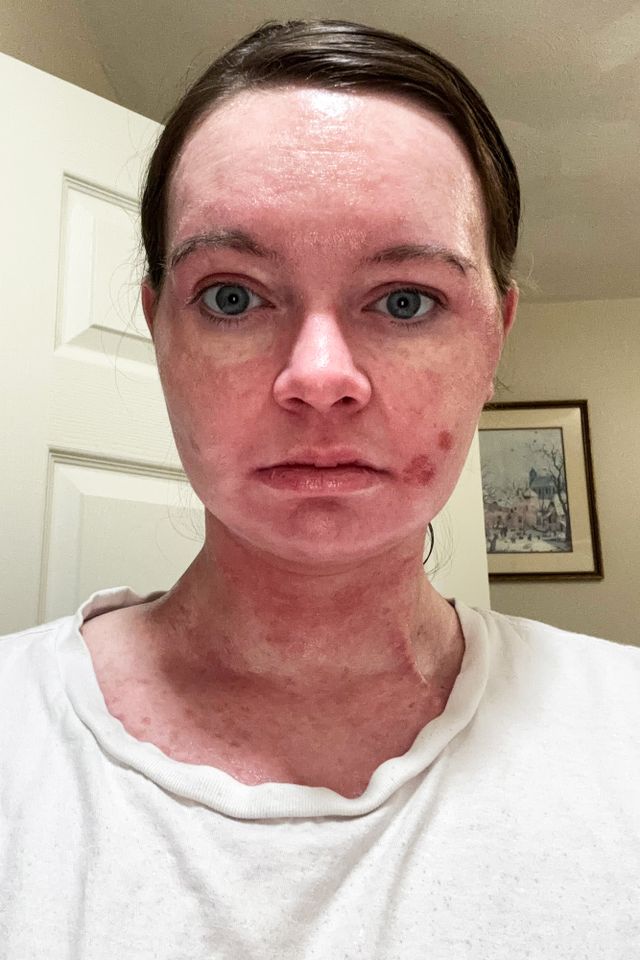
The Virginia resident explains that she has to take extra precautions before being exposed to any direct sunlight, including chance encounters in a car or through a window. Even under 30 seconds of accidental sun exposure can have a profound impact on her and her skin.
"Last year, I was walking to the mailbox, and I must have missed a spot with my sunscreen, and the side of my face just completely peeled off," she recalls. "Anytime I go outside, and there's a little bit of sun exposure, it just will cause my skin to freak out."
Broyden has to be diligent and deliberate with her skin protection, noting that she applies sunscreen in “every single spot ever" 30 minutes before she leaves the house.
“After I apply all my sunscreen, I let it soak in, and then I will put on my UV clothing and that is dependent on how the weather is that day," she shares.
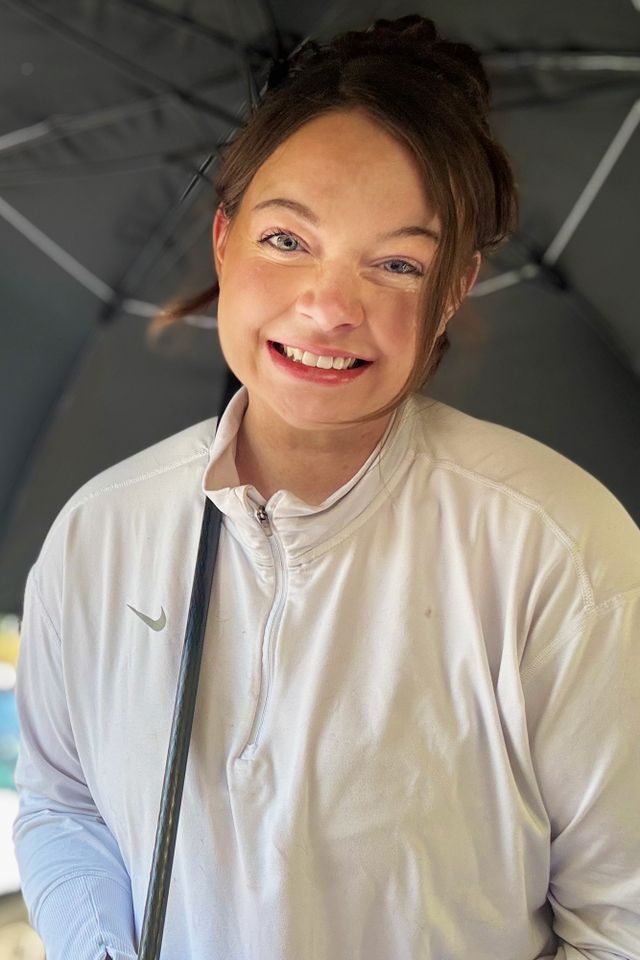
“I also have hairspray that helps coat your scalp, and so that keeps my scalp safe from any UV exposure," she adds. "I will always pack my UV umbrella and I have a few hats that I'll bring just in case. I also have gloves that I will pack."
Credit: Courtesy of Jennifer Broyden
Even when going through a drive-through, she says she always has "gloves and sunglasses.”
“If I go into a store, I'd have to suit up fully — gloves, umbrella and a hat — to go from the car to the store,” Broyden says.
Her routine “really depends on what time of day it is.”
“If it's 4:00 p.m., I don't have to be nearly as careful as I would be if it's at 11:00 a.m., but I try not to leave the house at all between like 12:00 p.m. and 4:00 p.m.,” Broyden shares.

Credit: Courtesy of Jennifer Broyden
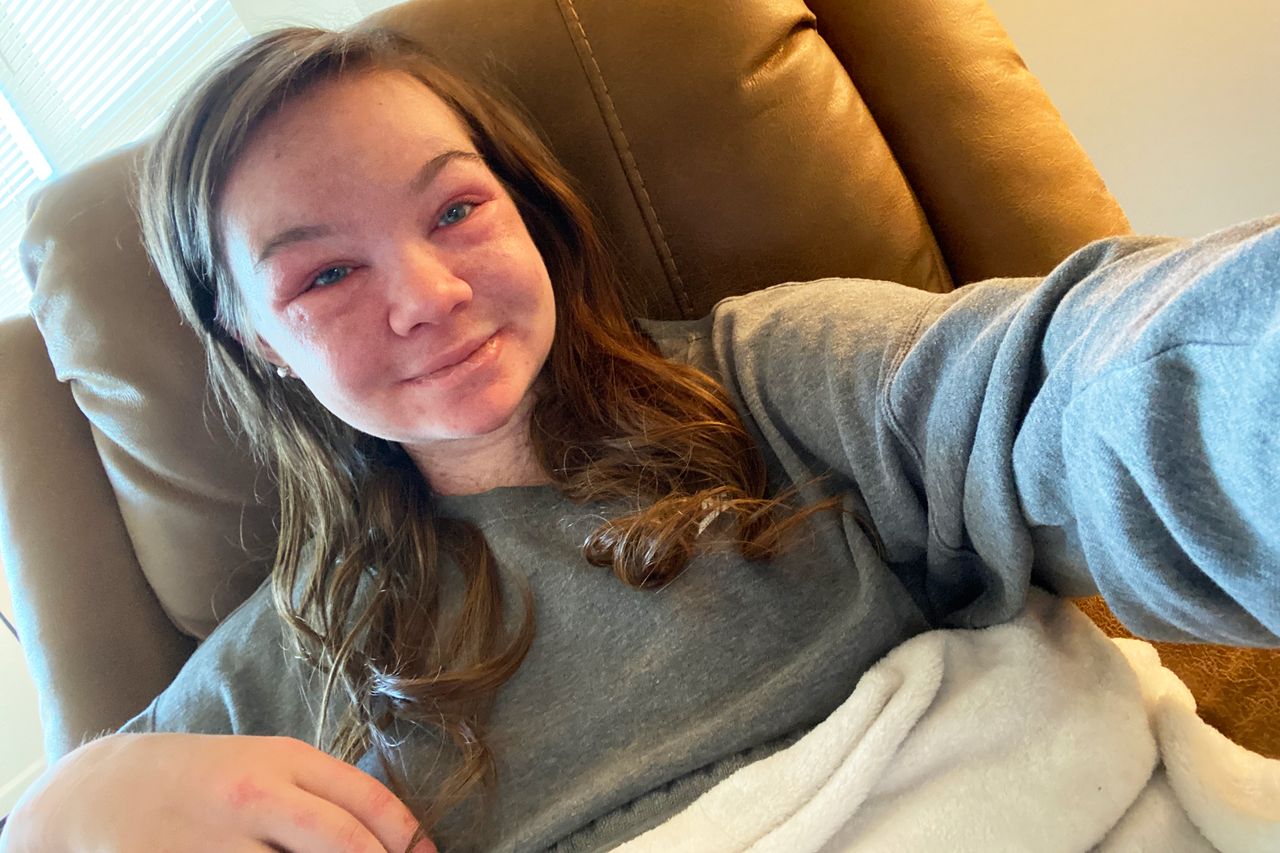
The worst flare-up that she had was two years ago when she was moving apartments with her now-husband.
"I had gotten a little too much sunlight and I ended up losing the ability to walk," she shares. "The UV rays cause your skin to absorb everything and they also trigger your immune system to start attacking itself."
"The medications that I'm on are really intense, but despite that, the moment the sun touches you, it doesn't even matter," she adds. "When I get exposure to any sunlight, the medications are effectively not there."
Because of this, she shares, "a flare-up can look like completely losing my mobility, the ability to walk."
"I ended up having to go to a rehabilitation center and work on getting my strength back all over again," she shares, noting that it was "the second time" she had to get full-time inpatient care due to the debilitating effects of the disease.
While she has her routine down now, in the beginning, she admits the lifestyle change was “huge.”
“It was a massive adjustment. Prior to getting sick, I would just head out. It was no big deal," she shares. "When I got sick, everything had to change, and not just my daily routine, but my plans and my future."
Ultimately, “every single day since then, I've learned to adapt.”
“Now, it doesn't bother me in the slightest because my whole life has been completely adapted and changed to fit my schedule and keep me safe. But in the beginning, it was really discombobulating.”
In her most viral video, which amassed over 18 million views, she explained that she has a "life-threatening sun allergy" and "has to be so careful anytime I leave the house" because if she "gets even the tiniest amount of sun, my skin will burn off."
"A lot of people get really concerned when they see the videos, and they're like, 'Oh gosh, can I develop this?'" she tells PEOPLE. "It is important to say that it is part of the autoimmune disease. You can't, or at least not that I know of, spontaneously develop a sun allergy."
One of the reasons Broyden made her TikTok account was because her illness made her feel isolated.
“I don't know anybody with this disease. I felt like everything I was going through was unique to me, and that was just isolating," she admits. "So I started posting on TikTok, and originally, it was people learning about what this is, and no one had ever heard of it.”
Credit: Courtesy of Jennifer Broyden
As her account grew, Broyden started meeting people who also have dermatomyositis and was able to listen to their stories, learn about their families and careers and the ways they have adapted.
While she started her page as her "own therapy, to vent and to have an outlet," she now says that "helping just one person is worth every video I've ever posted."
"Watching people watch what I'm going through and have questions or ask me about things and sharing what I know and hearing back from them is so rewarding,” Broyden says.
Sharing content about her life and diagnosis has also given her "a massive sense of purpose.”
“When I got my diagnosis, my life stopped. Going from being really active and having all these things to do to being in the house all day drove me absolutely nuts," she shares. "Having this and getting to interact with people has been so therapeutic for me and hopefully for other people as well."
Read the full article here