
“Only a handful of these super-puffy planets are known,” Dr. George Dransfield of the University of Oxford said
Credit: NASA / Daniel Rutter
NEED TO KNOW
- Astronomers have identified two super-puffs, which are Jupiter-sized planets that are less dense than cotton candy
- The sibling worlds are 1,113 light-years away and incredibly rare
- “These two planets have densities comparable to a nice blob of shaving foam, fresh from the can,” said Dr. George Dransfield of the University of Oxford
Astronomers have discovered two massive planets, each about the size of Jupiter, that are lighter than cotton candy. The incredibly rare worlds have been dubbed super-puffs.
In a newly released study, researchers announced that the planets — identified as TOI-791 b and TOI-791 c and orbiting a star comparable to the Sun that’s 1,113 light-years away — are the “puffiest” worlds ever discovered, NASA, the Associated Press and the University of Oxford reported.
“These two planets have densities comparable to a nice blob of shaving foam, fresh from the can,” Dr. George Dransfield of the University of Oxford told the AP. She and her international team published their findings in Monthly Notices of the Royal Astronomical Society on Thursday, June 25.
The planets are considered “siblings” because they were created “from the same disc of gas and dust surrounding their young star,” according to the University of Oxford. Their densities are about the same, even lower than cotton candy. In contrast, Jupiter’s density is about 28 to 35 times greater than either of the pair of planets located in the Volans constellation, the university reported.
Astronomers have conducted observations since the first potential "super-puff" was identified in 2019. While researchers are still determining how they form, a prominent theory indicates they are mainly composed of hydrogen and helium, according to the university.
So far, NASA has confirmed that nearly 6,300 worlds exist outside of our solar system, of which less than 40 are super-puffs, the AP reported.
Never miss a story — sign up for PEOPLE’s free daily newsletter to stay up-to-date on the best of what PEOPLE has to offer, from celebrity news to compelling human interest stories.

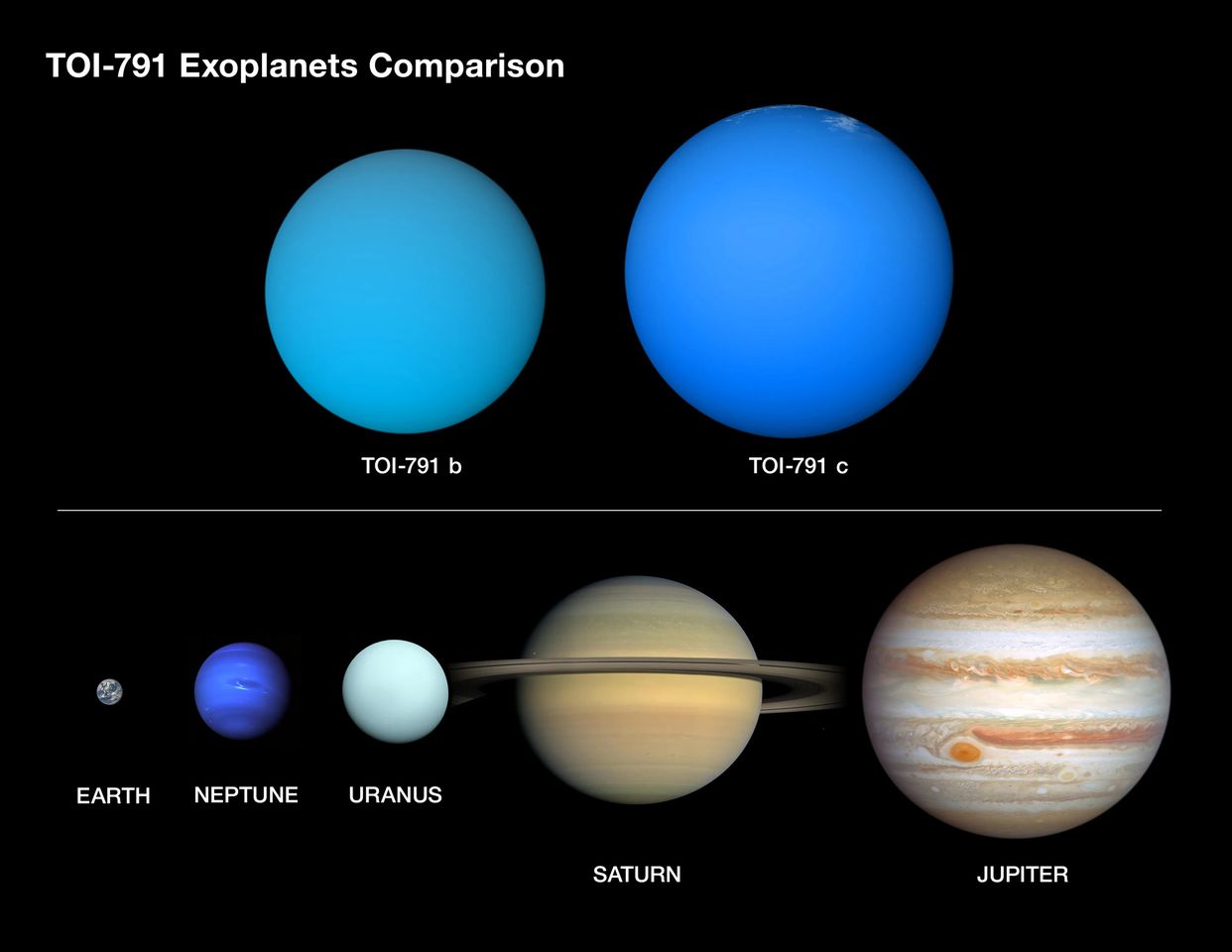
Credit: NASA / Daniel Rutter
“Only a handful of these super-puffy planets are known, and it is even rarer to find two in the same system,” Dansfield said, according to NASA. “Their extremely low densities make them fascinating targets for understanding how planetary systems form and evolve.”
Read the full article here