



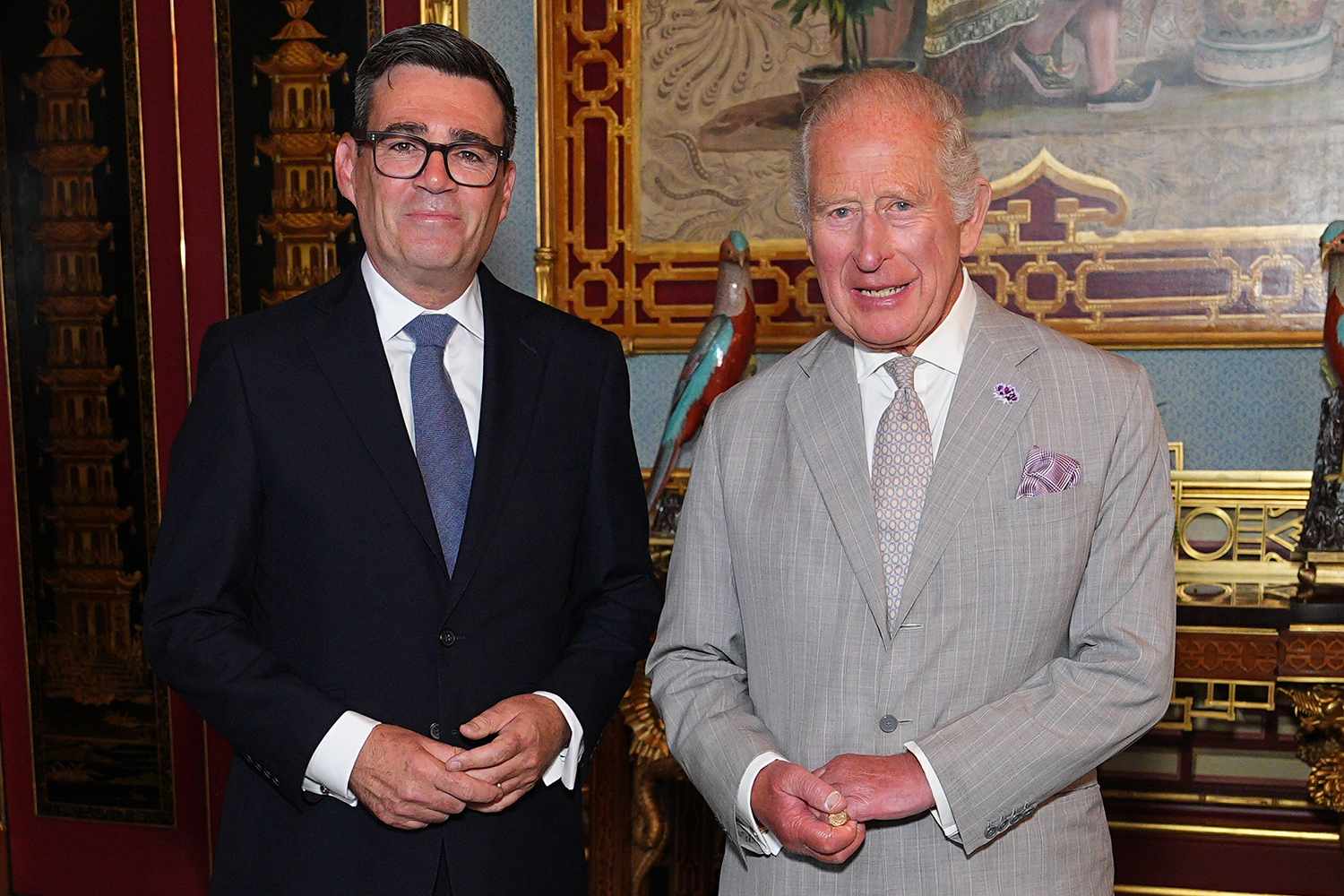
Burnham follows Keir Starmer, who resigned his position to the King ahead of Burnham’s introduction
Credit: Aaron Chown – Pool/Getty
NEED TO KNOW
- King Charles met with new Labour leader Andy Burnham on Monday, July 20, to ask him to become the U.K.’s new prime minister
- Burnham follows Sir Keir Starmer, who offered his resignation to the King just prior to Burnham’s introduction
- Burnham becomes the King’s fourth prime minister in under four years on the throne; his mother Queen Elizabeth had just 15 during her historic 70-year reign
King Charles has welcomed in Andy Burnham as the U.K.’s new prime minister.
On Monday, July 20, Charles, 77, met with 56-year-old Burnham, the new leader of the Labour Party, at Buckingham Palace, officially beginning Burnham’s tenure as prime minister.
Burnham arrived at the palace shortly after 12 p.m. local time for an audience with Charles and spent 35 minutes with the monarch. Shortly after, Buckingham Palace issued a statement, “His Majesty received in audience the Rt. Hon. Andrew Burnham MP and requested him to form a new Administration. The Rt. Hon Andrew Burnham MP accepted The King’s offer and kissed hands upon his appointment as Prime Minister and First Lord of the Treasury.”
Burnham succeeds Sir Keir Starmer to become the King’s fourth prime minister in less than four years on the throne and the U.K.’s seventh in the last decade. A period of political turmoil has followed “Brexit,” the U.K.’s decision to leave the European Union, which was voted on in 2016 and went into effect in January 2020.
Starmer announced his resignation to the nation on June 22, a few hours after U.S. President Donald Trump shared the news on his Truth Social account. However, on Monday morning, he and Burnham took the traditional steps to handover the position.
Credit: Dan Kitwood/Getty
In a carefully choreographed transition, Starmer met first with Charles to officially offer his resignation, despite the fact that he confirmed in June that he had spoken with the King to share the news before making the public announcement.
Then, Burnham met with the monarch, who, per tradition, invited him to form a government in his name. Burnham’s acceptance marked the official beginning of his tenure as prime minister.
Can’t get enough of PEOPLE’s Royals coverage? Sign up for our free Royals newsletter to get the latest updates on Kate Middleton, Meghan Markle and more!
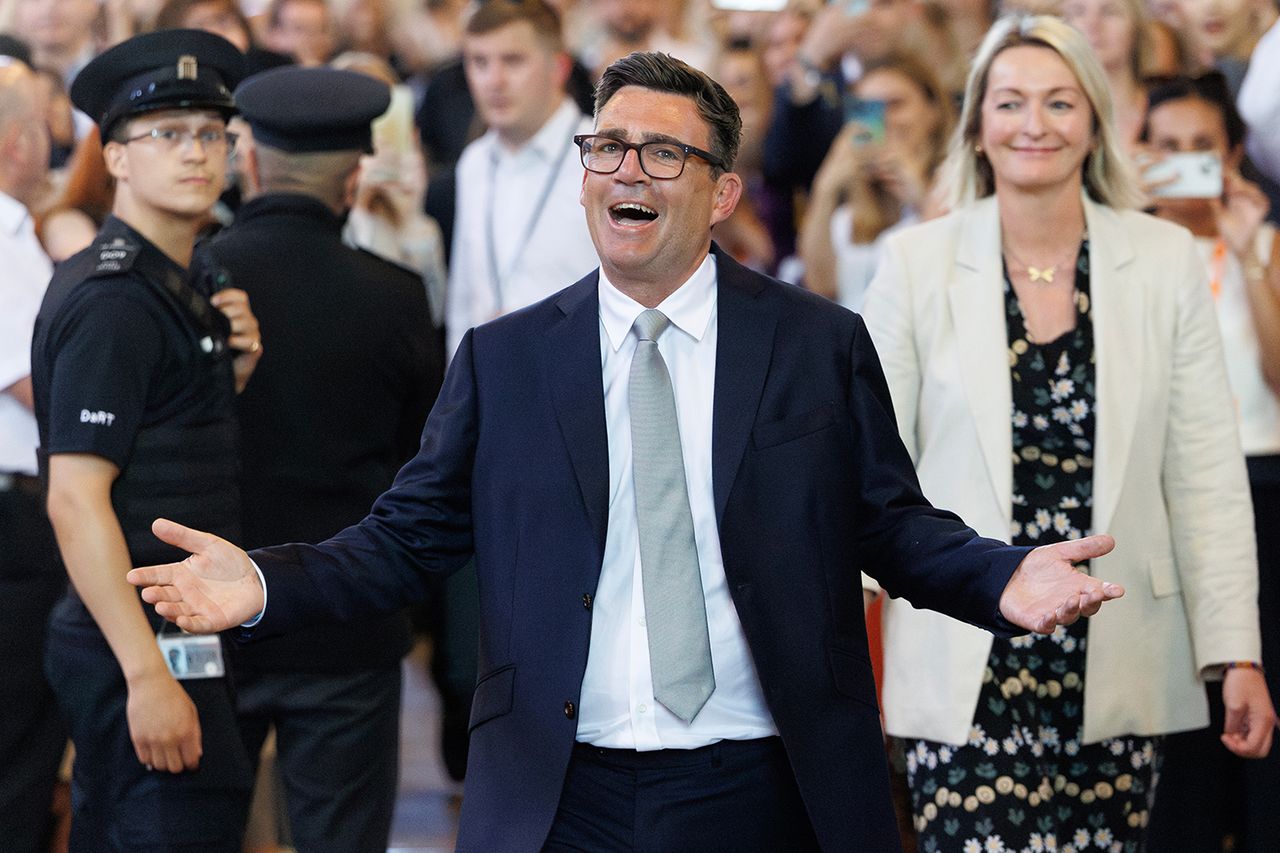
New Prime Minister Burnham was confirmed as leader of the ruling Labour Party on Friday July 17, after being unopposed in the contest to succeed Starmer. Burnham had secured the support of 94% of the ruling party’s members of Parliament.
In a speech in Downing Street before his meeting with King Charles, Starmer said he was closing “the book on my time. My work is done.” He spoke about his close to 7 years since he took over as Labour leader, and winning the election in 2024. It has been “the privilege of my life to serve you and this great country as Prime Minister,” adding the U.K. was “stronger and fairer” than it had been two years ago.
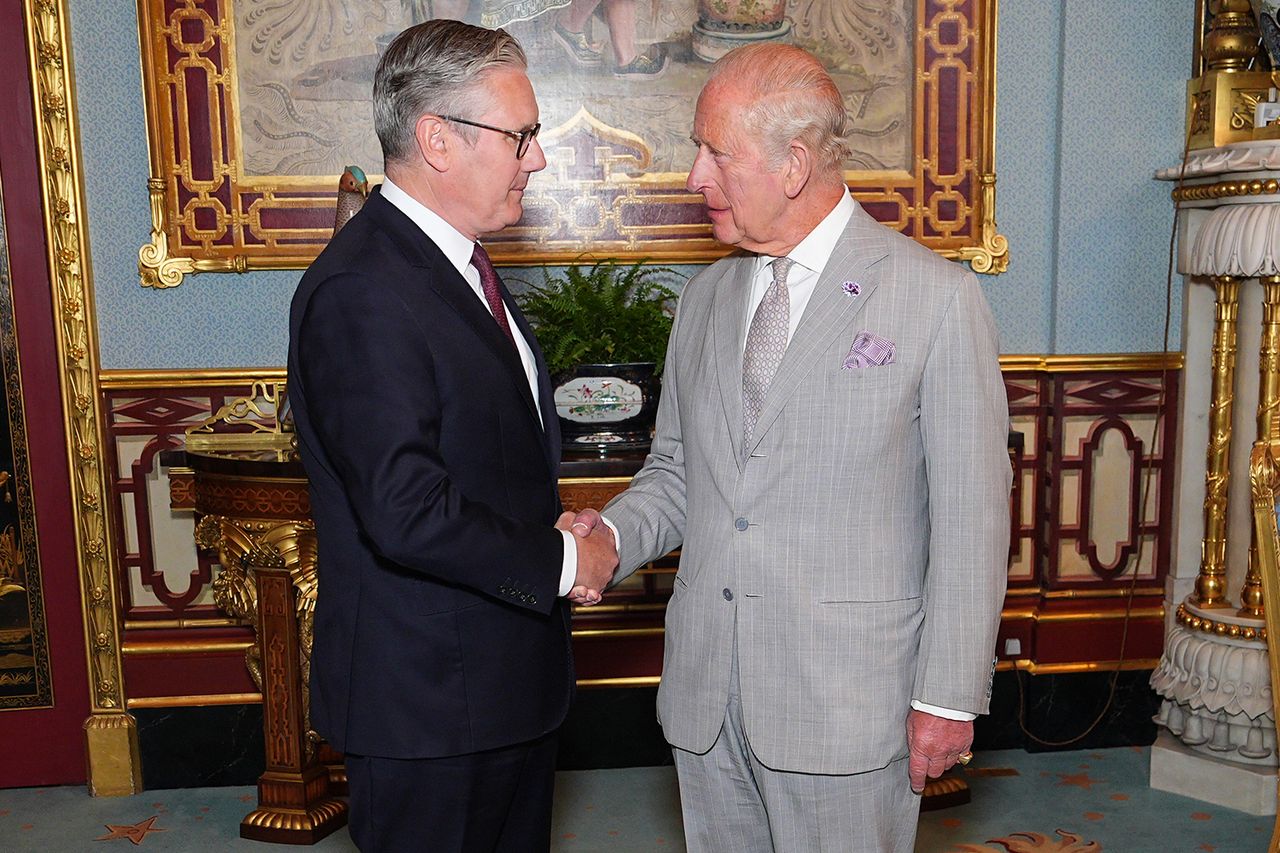
He said he was passing the baton to Burnham, adding “I wish him every success. He has my full support.” Within minutes, he was driven with his wife Victoria to Buckingham Palace at around 11.20am local time. There, as well as a private personal audience between the departing Starmer and the monarch in the Chinese Drawing Room, there was also a meeting with Starmer’s wife and two teenage children.
Credit: Aaron Chown – Pool/Getty
A simple statement was issued at about 11.35am by the palace marking the meeting. “The Rt. Hon. Sir Keir Starmer MP had an audience of The King this morning and tendered his resignation as Prime Minister and First Lord of the Treasury which His Majesty was graciously pleased to accept. Lady Starmer was also received by The King.”
Then, just after 12 p.m. U.K. time, Burnham and his wife, Marie-France van Heel, were welcomed to Buckingham Palace through the ‘Luggage Door’ due to ongoing renovations in the building. They were met from their car by the King’s equerry, Major Ben Rigby, and then the monarch’s private secretary, Sir Clive Alderton.
Starmer served as prime minister for just over two years after winning a landslide victory with his Labour Party. Prior to his tenure, Conservative leader Rishi Sunak held the position from October 2022 to July 2024.
Credit: JANE BARLOW/POOL/AFP via Getty
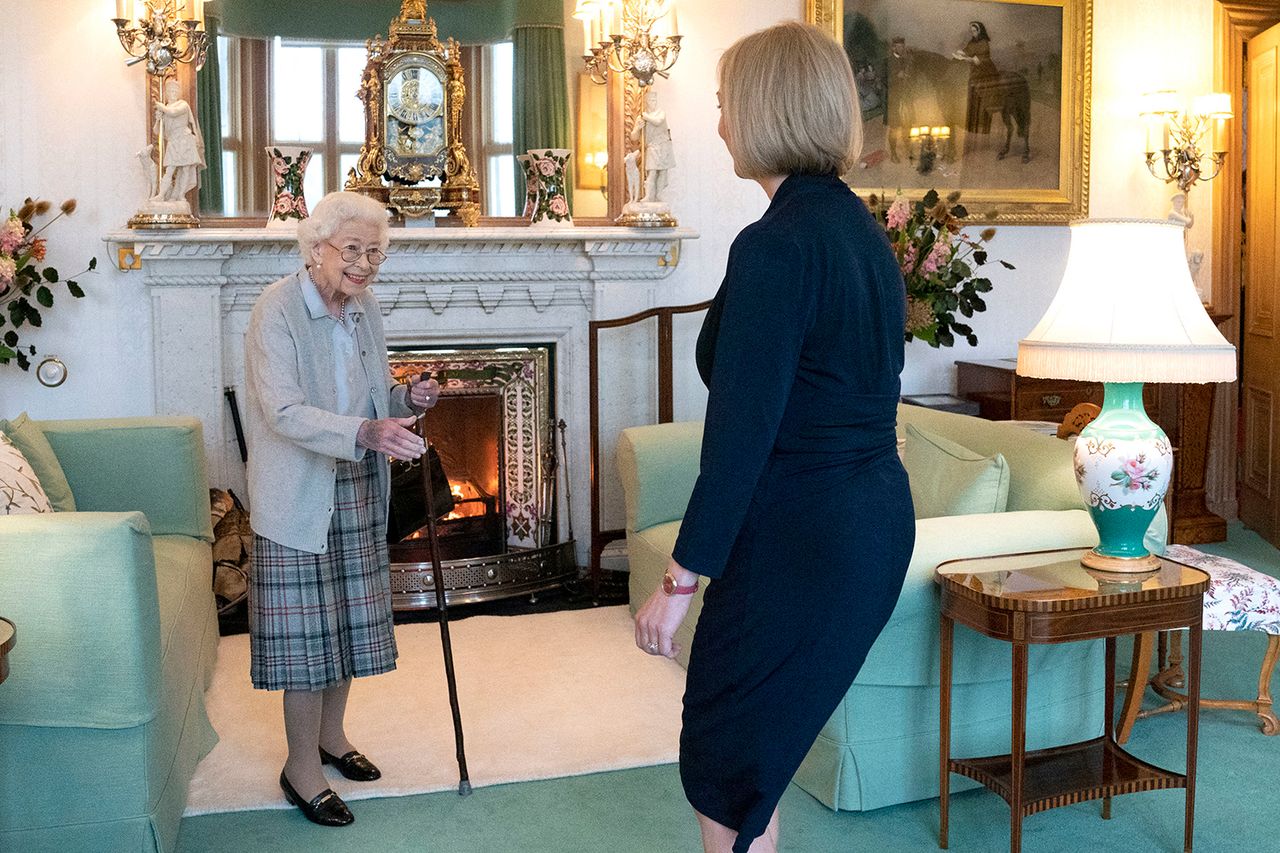
Before Sunak, however, was one of the most tumultuous prime minister tenures in U.K. history. After serving in Cabinet positions under former prime ministers like David Cameron, Theresa May and Boris Johnson, Liz Truss beat Sunak in September 2022 election to lead the Conservative party and succeed Johnson as prime minister.
Truss met with Queen Elizabeth at Balmoral Castle to begin her tenure as prime minister on Sept. 6, 2022; two days later, the country’s longest-reigning monarch died.
Side effects of the U.K.’s mourning period helped plunge the government into crisis, and, just 45 days after taking the position, Truss announced her resignation, making her the shortest-serving prime minister in U.K. history. Famously, she lasted less time in office than a head of lettuce did on a livestream set up by British tabloid newspaper The Daily Star.
This month, Truss teased a possible political comeback by speaking at a London political conference hosted by the Conservative Political Action Conference (CPAC). There, she took shots at her successors, calling Starmer “the most unpopular prime minister in British history” and warning that Burnham “isn’t going to be much better.”
Despite not being an elected political official, the British monarch meets with the prime minister every week. According to the royal family’s official website, “The King holds a weekly audience with the prime minister to discuss government matters. The audience is entirely private. Though the King remains politically neutral on all matters, he is able to ‘advise and warn’ his ministers — including his prime minister — when necessary.”
However, King Charles has had little time to get to know his prime ministers, given the rapid turnover since he’s taken the throne. In contrast, his mother had just 15 prime ministers during her historic 70 years on the throne.
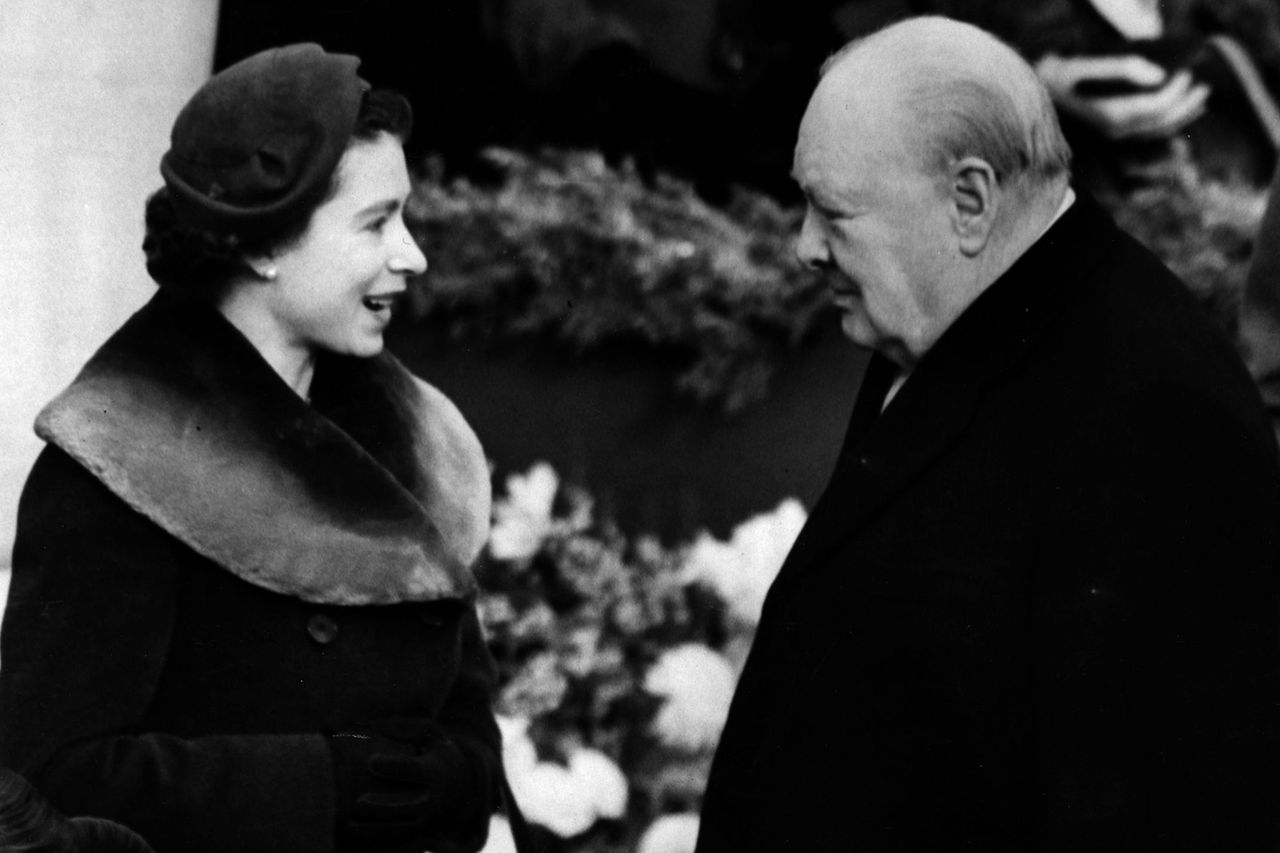
They included Winston Churchill, who carried over in the office when Queen Elizabeth acceded the throne in 1952, following the death of her father, King George VI. Upon his retirement in 1955, the Queen wrote to Churchill, expressing how “profoundly grateful” she was for his guidance during her early years on the throne.
Credit: Central Press/Getty
Queen Elizabeth had perhaps a frostier relationship with another infamous prime minister. Margaret Thatcher was the longest-serving British prime minister of the 20th century, from 1979 to 1990, and also the first woman to hold the role, but being historically impressive didn’t seem to help endear her to the monarch, according to sources close to the palace.
“It was the starchiest relationship. She was deferential, much too deferential. The Queen was not requiring so much,” said one longtime observer, according to The Daily Beast. A family friend added: “The Queen had some most amusing and well-observed lines about Thatcher.”
Read the full article here