




The young girl’s illness comes amid ongoing concerns of water pollution in the area
Credit: Getty
NEED TO KNOW
- An 8-year-old girl became ill after swimming at a beach connected to a river with pollution concerns
- The girl was diagnosed with a Campylobacter infection, which her mom thinks she contracted from swallowing seawater at the beach
- Another young girl contracted an E. coli infection after swimming in the waters, where there was a recent E. coli spike
A young girl was hospitalized with a bacterial infection after a family trip to the beach. Her mom thinks she contracted the illness by swallowing seawater in the area, which is currently the subject of pollution concerns.
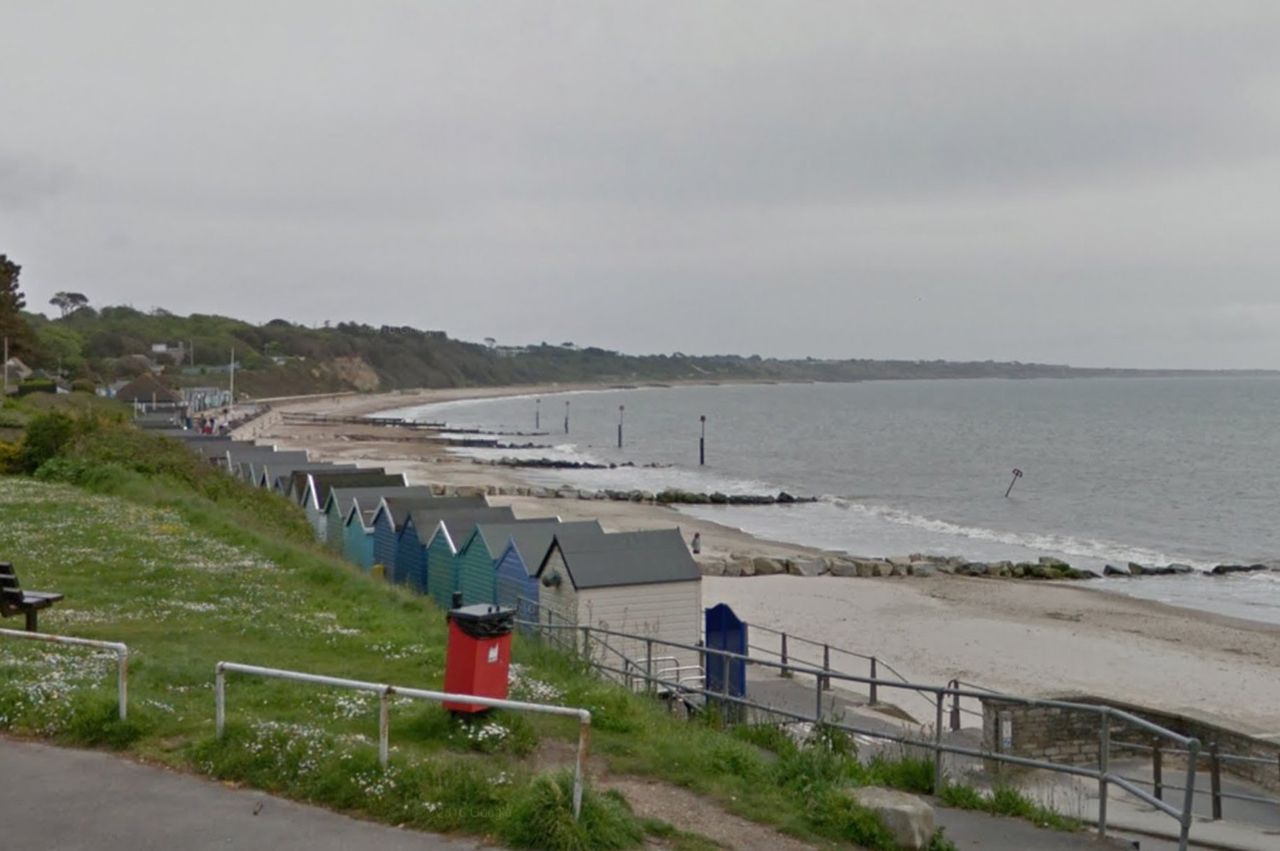
Aisling McCarthy took her 8-year-old twin daughters swimming at Avon Beach in Christchurch, Dorset, in the United Kingdom on Aug. 3, and the following day, one of them, Keeva Hollow, became ill, Metro reported.
Keeva was hospitalized and diagnosed with a Campylobacter infection, which McCarthy believes came from swallowing water at the beach — which, through a nearby harbor, connects with a river that recently drew attention for a steep spike in illness-causing bacteria.
McCarthy told Metro that the day after her family beach trip, Keeva was lethargic with no appetite and she had a high temperature, while her other daughter — who did not swallow any seawater — was fine.
“We were going to London, and she slept the whole journey,” McCarthy said of Keeva. “Her temperature was going up, and she just was not herself.”
Credit: Google
McCarthy took her daughter to a doctor, and the 8-year-old “was put on a drip while tests were carried out,” her mom told Metro, adding, “She was so ill by then; she had deteriorated so quickly it was frightening.”
Then, a urine sample revealed blood in the 8-year-old’s stool, and she was diagnosed with a Campylobacter infection.
According to the Centers for Disease Control and Prevention (CDC), drinking untreated water is a common way people get the infection — which causes symptoms like diarrhea, fever and cramps — along with contamination from raw or undercooked poultry, or foods like meat, seafood and produce.
Keeva’s “illness happened straight after the sea-swallowing incident at Avon Beach, and Cornelia has not been ill at all,” McCarthy told Metro. “I have a very clear memory of that moment when the wave hit Keeva, seeing her spluttering from swallowing the water. I am convinced that was what caused her to become so ill.”
“The hospital said it can be food poisoning as well, but Keeva does not eat meat, which is one of the main sources of that bacteria,” McCarthy said.
According to the CDC, most people with a Campylobacter infection fully recover within seven days.
However, about a month after she was hospitalized, Keeva is still ill, according to her mom. “She has lost a ton of weight, and her clothes are hanging off her,” McCarthy told Metro. “But the saddest thing is her fear of going into the sea.”
Never miss a story — sign up for PEOPLE’s free daily newsletter to stay up-to-date on the best of what PEOPLE has to offer, from celebrity news to compelling human interest stories.
“She used to swim all the time, a real water baby,” the U.K. said of her daughter. “But now I can’t see her ever going in the sea again; she is so scared of becoming sick again.”
Keeva’s illness comes amid ongoing concerns of pollution in Christchurch Harbor, where Avon Beach and the River Stour connect.
There was a huge jump in E. coli levels in the river in mid-August, testing by Christchurch Harbour and Marine Society (CHAMS) showed, according to the BBC. (During the week of Aug. 19, there were 370,000 E. coli colony-forming units per 100 ml of water, as opposed to 4,217 units in the same amount during that time last year.)
“I am being fed details of cases of illness where people have been in the water and ending up in Bournemouth Hospital. It’s a serious situation,” CHAMS chair Martin Stewart told the BBC.
Though E. coli can make people sick with diarrhea, among other illnesses, it cannot cause the infection Keeva experienced, as E. coli and Campylobacter are separate genera of bacteria.
However, another young girl, 3-year-old Ivy Foster, fell ill from E. coli after paddleboarding in Christchurch Harbour in August, The Sun and the Mirror reported. She was hospitalized with symptoms including vomiting, diarrhea and abdominal pain, according to the outlets.
The Environment Agency told the BBC it does not routinely monitor non-bathing waters, such as the River Stour, for E. coli “because its presence has no direct impact on the river’s ecology”.
The agency is investigating the bacteria spike, however, according to the outlet.
“We are considering multiple sources of pollution including agricultural and private sewage sources across Christchurch Harbour’s large catchment,” the Environment Agency said in a statement to the outlet. “Our officers are out taking samples and checking the performance of Wessex Water assets after a reported pollution incident at Christchurch Harbour.”
Addressing the E. coli spike in a statement to PEOPLE, a spokesperson for Wessex Water, U.K. water supply and sewerage utility company, said: “Wessex Water has no storm overflows that discharge into Avon Beach. The nearest overflow at Mudeford Gardens last operated in 2024.”
PEOPLE reached out to the Environment Agency for comment but did not receive an immediate response on Saturday, Sept. 5.
Read the full article here