







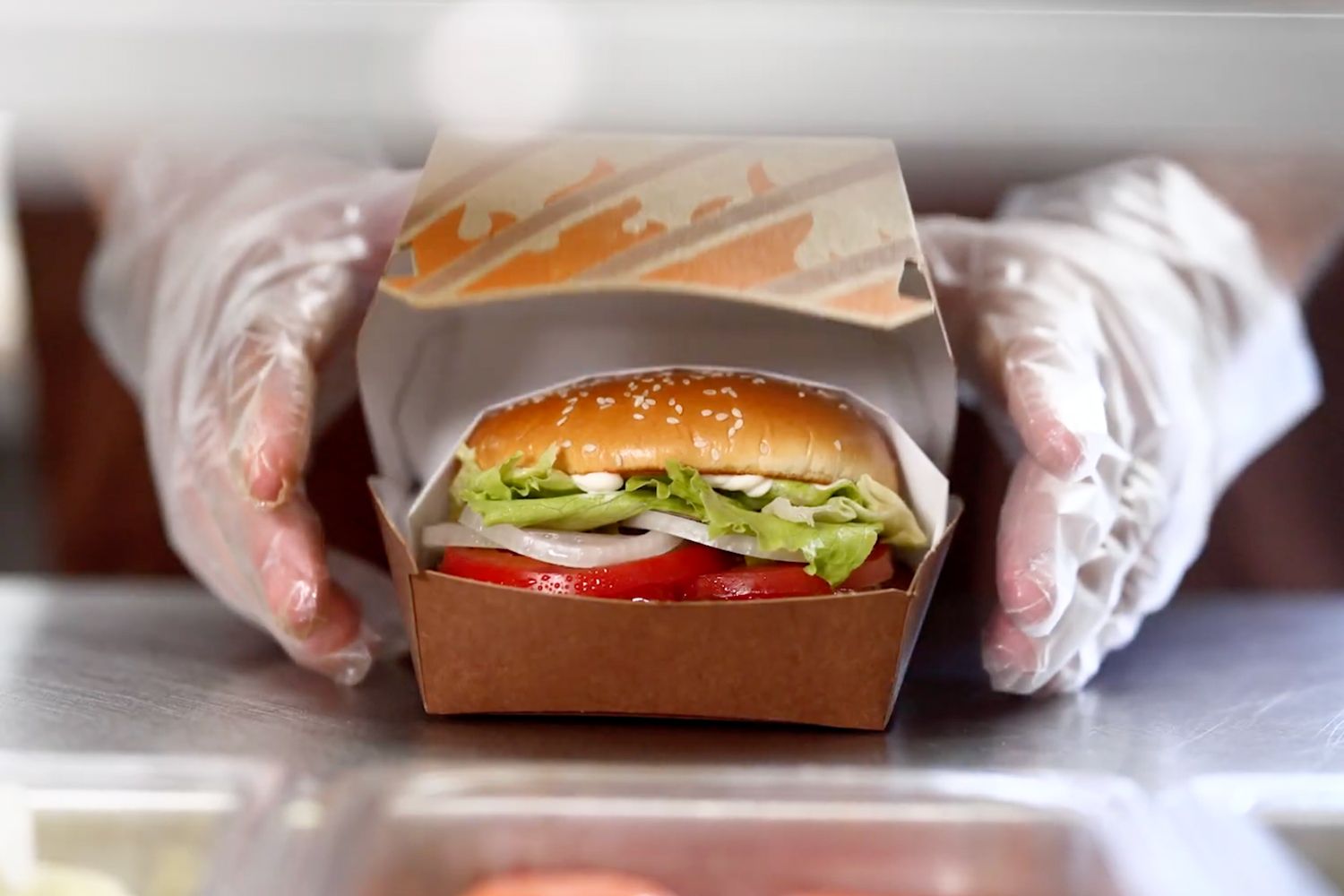
The changes affect the burger's ingredients and packaging
Credit: Burger King
NEED TO KNOW
- Burger King is changing its Whopper for the first time in nearly a decade
- The changes affect the burger’s ingredients and packaging
- The fast food change called the burger “higher-quality” in a press release
The Whopper is getting a makeover.
On Thursday, Feb. 26, it was announced that Burger King’s beloved burger will change for the first time in nearly 10 years.
The alterations are inspired by guests’ feedback, according to a press release, and make for a “higher-quality Whopper experience.” Specifically, three elements are new to the burger.
First, the bread is being swapped for a “more premium, better tasting” bun. But Whopper loyalists, fear not: it will still be a sesame seed-coated bun.
The presentation will shift in terms of the burger’s packaging. Rather than being wrapped in paper, the upgraded Whopper will be served in a box.
Lastly, the toppings will get an update. Each Whopper will come “stacked tall with freshly cut onions and tomatoes and crisp lettuce, tangy pickles,” per a release — all of which were ingredients already on the burger. Plus Whoppers will come with “better tasting mayo.”
The ¼-lb. beef patty will remain the same as its predecessor.
McDonald’s has a brand-new burger coming to U.S. locations.
The chain is introducing the Big Arch Burger, its “most McDonald’s, McDonald’s burger,” on Tuesday, March 3, per a press release. The burger is the chain's "biggest" burger, according to the McDonald's website.
The limited-time burger features two quarter-pound beef patties, three slices of white cheddar cheese, crispy onions, slivered raw onions, lettuce, pickles and Big Arch Sauce. The namesake condiment is described as having “a perfect balance of mustard, pickle and sweet tomato flavors,” per the release. The components are all sandwiched between a toasted sesame and poppy seed-coated bun.
The burger was previously tested in various European countries and Canada. It is a permanent menu item in the U.K. and Ireland.
Read the full article here