
“I still think about the quake and to me, Sept. 21 is my birthday because me and my brother were reborn on that day,” one survivor said
Credit: JOHNSON LIU/AFP via Getty
NEED TO KNOW
- The Taiwan earthquake of 1999, also known as the Chi-Chi earthquake or the 921 earthquake, left more than 2,400 people dead and 100,000 more without homes
- “Ten years on, I am still afraid of earthquakes,” a survivor said
- The disaster marked a major turning point in how the government and the island prepared for natural disasters and maintained building codes, experts said
On this day 27 years ago, a devastating earthquake killed thousands in Taiwan in 1999 and became a turning point in how the island prepares for natural disasters.
The 7.6-magnitude earthquake, known as the Chi-Chi earthquake or the 921 earthquake, struck Taiwan at approximately 1:47 a.m. local time on Sept. 21, 1999, killing more than 2,400 people and leaving approximately 100,000 more residents without homes, according to History.com.
It was the second-most deadly quake to hit the island, The New York Times reported.
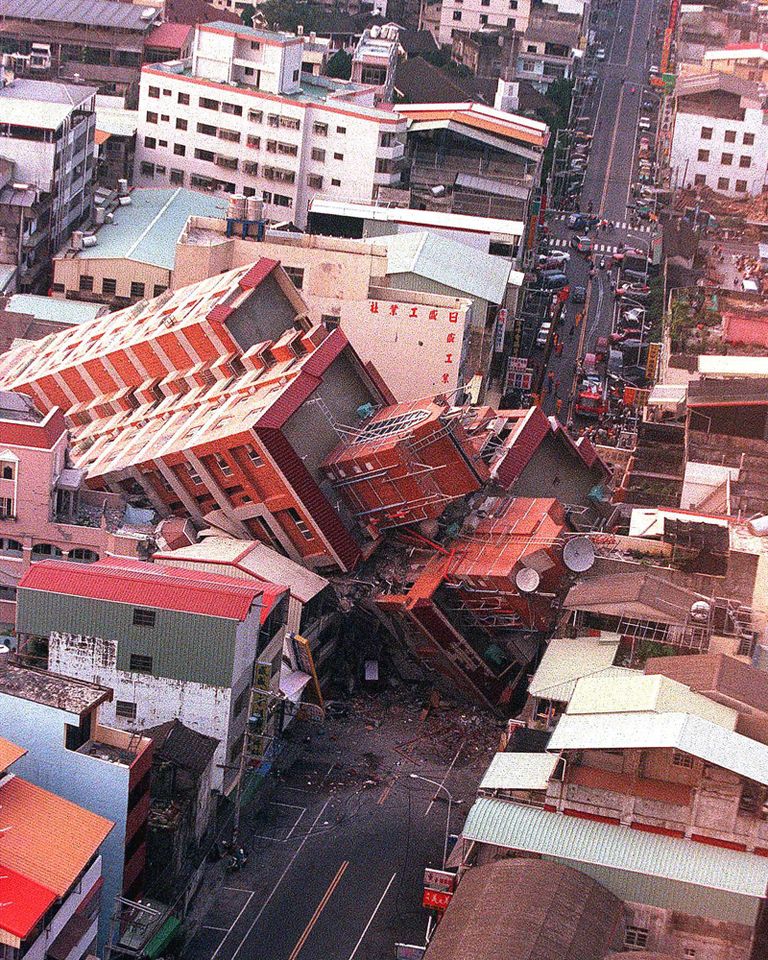
Thousands of buildings were also either destroyed or damaged in the aftermath of the quake.
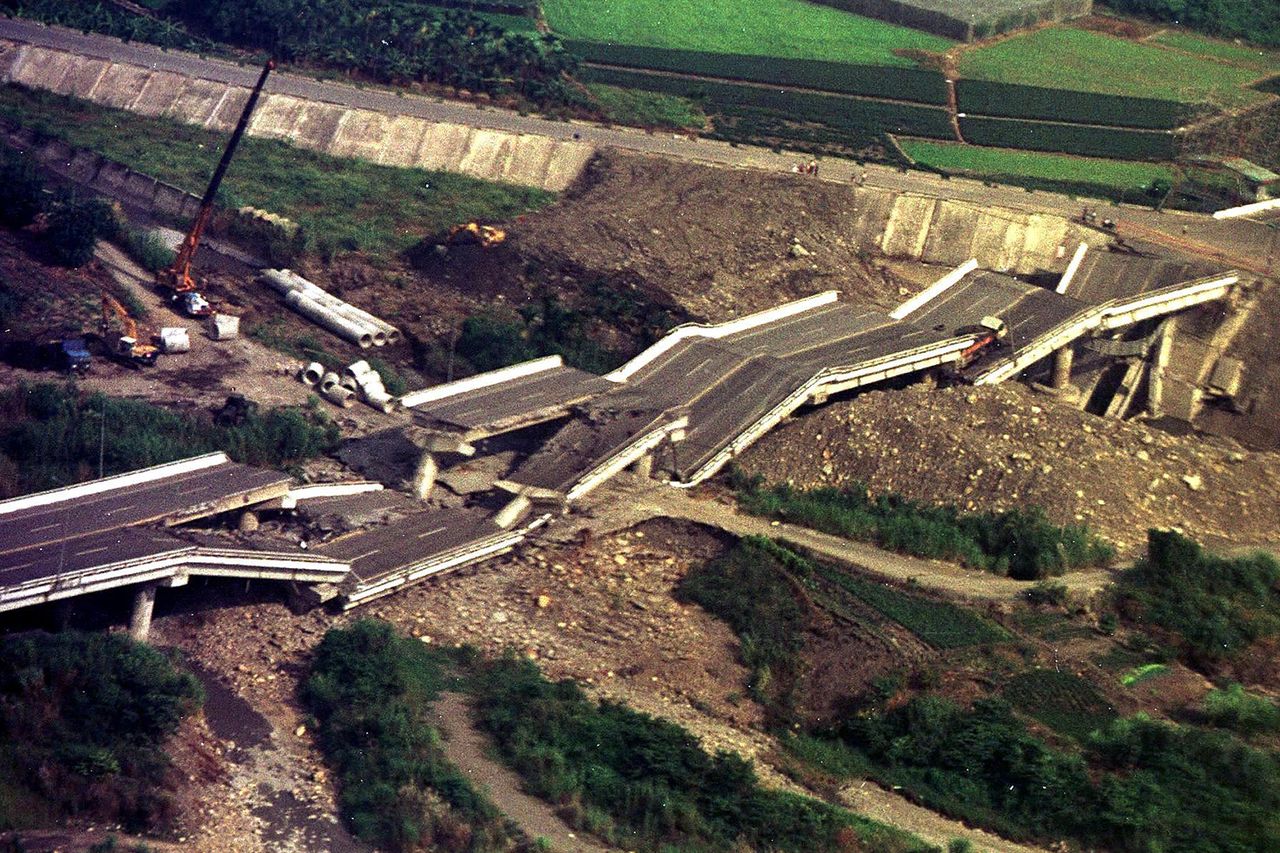
While the epicenter was located in Nantou County in central Taiwan, serious damage afflicted residents across the island as roads buckled, bridges collapsed and landslides destroyed everything in their path.

Credit: CHEN KUNG-KU/AFP via Getty
“Ten years on, I am still afraid of earthquakes,” Sun Chi-kuang told the Taipei Times a decade after he and his brother ate rotten apples and drank stale water for six days before digging their way out of the rubble under the ruins of a building in Taipei City.
“We’ve been trying to live our lives … and learned that the best way to repay the kindness and help from those who saved us is to live in the moment,” Sun Chi-fong, the older brother, added at the time. “I still think about the quake and to me, Sept. 21 is my birthday because me and my brother were reborn on that day.”
Lin Thung-hong, a sociologist at Academia Sinica, said that post-earthquake analysis revealed much of the structural damage was caused due to poorly designed lower levels and human error, according to the Voice of America.
As a result, Taiwan residents demanded more accountability and oversight in the construction industry.
“The [ruling] KMT government at that time did not really perform very well in the early period after the earthquake and it was criticized seriously by local people,” Thung-hong explained to Voice of America in 2022. “In Nantou and Taichung [in central Taiwan], voters punished the KMT government. The March 2000 presidential election was the first time the DPP government came to power.”
In the following years, the island saw major reforms in how the government handled and prepared for natural disasters, according to Elaine Lin Kuan-hai, an assistant professor at National Taiwan Normal University’s Graduate Institute of Environmental Education.

Credit: LIN HSIN-MING/AFP via Getty
“It’s clear that before the Chi-Chi earthquake in Taiwan, we actually didn’t have a concrete disaster reduction plan or any concrete policy,” Kuan-hai told Voice of America.
“Taiwan has incorporated seismic design codes since the 1980s, but following the Chi-Chi earthquakes in September 1999, there was a substantial improvement in seismic performance due to new seismic design requirements,” she said.
Never miss a story — sign up for PEOPLE’s free daily newsletter to stay up-to-date on the best of what PEOPLE has to offer, from celebrity news to compelling human interest stories.
Taiwan lies along the Pacific “Ring of Fire,” a line of seismic faults encircling the Pacific Ocean where most of the world’s earthquakes occur, per PBS.
“We cannot make everything earthquake-proof,” Kuan-hai said, “but we can make it more resilient and more capable of withstanding earthquake shaking.”
The only earthquake that has come close to matching the power of the 1999 disaster in Taiwan occurred in April 2024, per the Times. A 2016 quake also killed more than 100.
“Our government conducted a comprehensive review of building codes after the 1999 earthquake, and all buildings going up must use new technologies that make them more resilient to earthquakes,” Wu told CNN after witnessing the 2024 quake. “I feel very lucky. It’s not too bad.”
Daniel Aldrich, a professor of political science and public policy at Northeastern University, told CNN that the difference between the two disasters was “pretty miraculous.”
Read the full article here