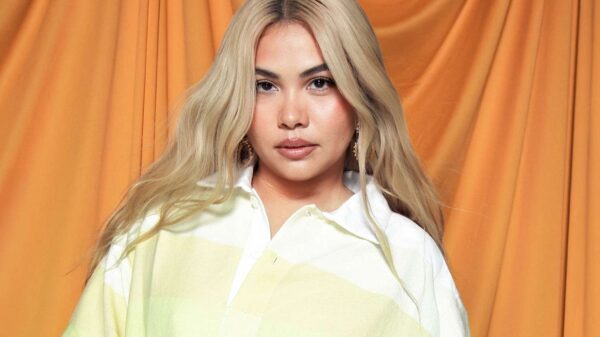

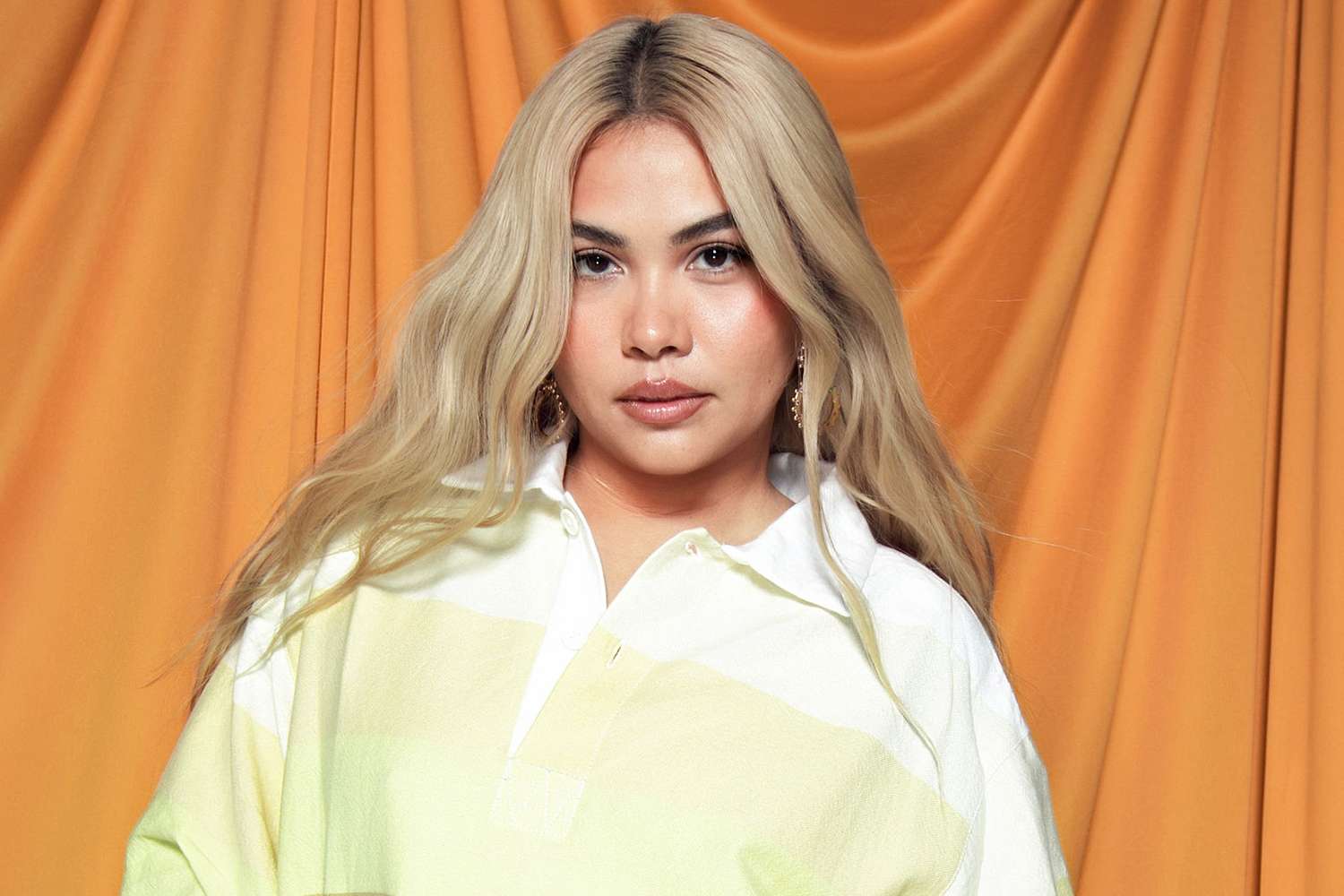
"It all began with a song," Kiyoko tells PEOPLE of her 2015 cult-classic track
Credit: Grace Scuitto
NEED TO KNOW
- Hayley Kiyoko turned her 2015 queer anthem “Girls Like Girls” into a film and companion album after 10 years of work
- The album features collaborations with queer artists like Tegan and Sara and revisits songs Kiyoko started at age 16
- Kiyoko says the film and album aim to celebrate self-love and representation for the LGBTQ+ community across generations
Hayley Kiyoko always knew that when her cult-classic track "Girls Like Girls" became a film, it would need the perfect companion album.
"It all began with a song," she tells PEOPLE over Zoom from Los Angeles. That 2015 pop song, which was inspired by the actress and singer's first time falling in love, was released only two days before same-sex marriage was legalized in the United States. It's since evolved into a cultural sensation: an anthem embraced by the queer community for flipping the heteronormative guy-stealing-girl narrative into a sapphic tale.
For Kiyoko, 35, it's been inspiring to see how the song has found a new generation of fans in the years since it was released. "I've had fans come up, and they're like, 'I'm 20. And when I was 9, I watched the music video," says Kiyoko. "And I'm like, "Nine?"
In 2023, the "Curious" singer even turned "Girls Like Girls" into a YA coming-of-age romance. (She released her second novel, Where There's Room for Us last year.) But she began working on the feature film adaptation long before that — 10 years ago.
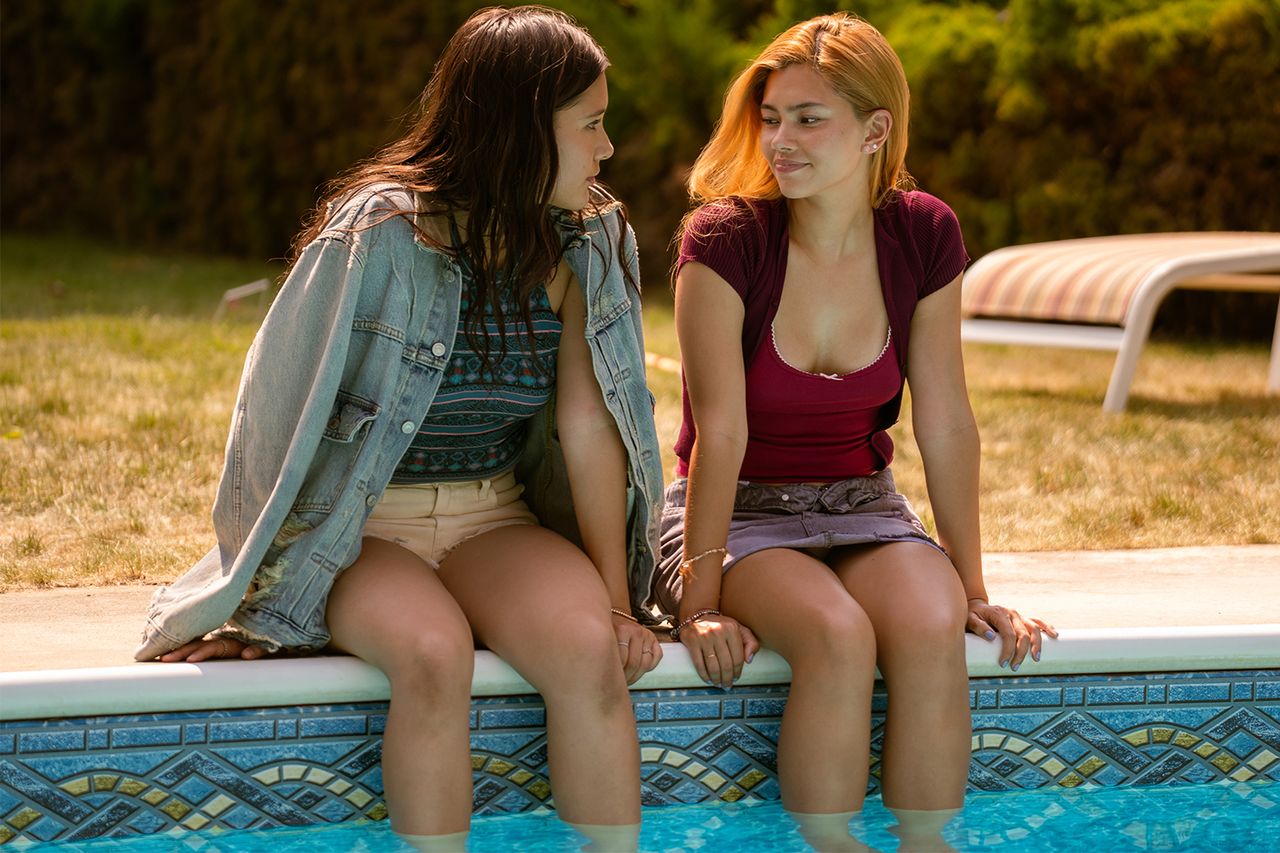
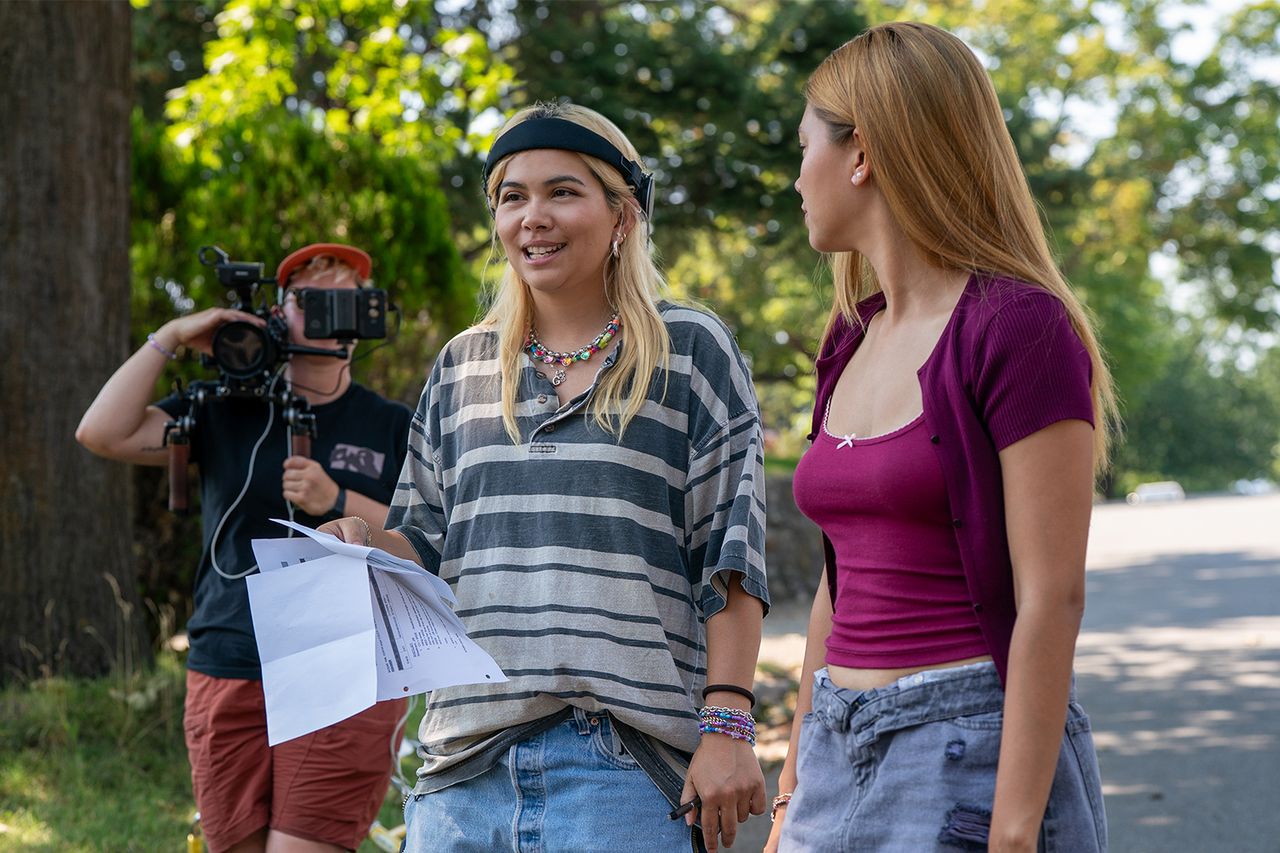
Kiyoko's long-awaited movie Girls Like Girls, which she directed and co-wrote, follows new-girl-in-town Coley (Maya da Costa) as she falls in love for the first time and goes on a journey of self-acceptance.
Credit: Grace Scuitto
"I think what's so beautiful about Girls Like Girls, which I don't think people realize is, it is unapologetically itself, but it's also so universal," she says of the film. "Because no matter your sexuality and whoever you are, every single person has had to confront a crush and find out if they liked them back or not. So, this film is going to definitely open those memories no matter whether you're the new generation [or] whether you're in your 50s or 60s. You'll be able to see yourself in this film."
For the Girls Like Girls companion album, which is also Kiyoko's third LP, she tapped into her 16-year-old self, revisiting ideas, voice memos and lyrics from that period in her life. For a large portion of the record, she enlisted several well-known and rising queer collaborators, including Tegan and Sara, Young Miko, Gigi Perez, Chelsea Cutler, August Ponthier and Snow Wife.
"I've only done a handful of collaborations in the past, so to be able to do an album almost entirely of collaborations was so fulfilling," says Kiyoko. But it's also been rewarding to work with so many artists who have been impacted by the song over the years.
"It's been really cool that I get to share their vision and version of that feeling," she adds.
Below, Kiyoko tells PEOPLE about how she landed a Tegan and Sara collaboration, recording a new version of "Girls Like Girls" with a live orchestra and the healing experience of making this film and album.
PEOPLE: How did you land on making Girls Like Girls the soundtrack your third studio album?
HAYLEY KIYOKO: Well, it's a small, but mighty film, and they don't necessarily make soundtracks for movies this size. And when I went into my directorial debut, I was like, "No matter what, I have to have a companion album or a soundtrack." Because music [is] where "Girls Like Girls" began. So when I finished the film, I jumped right into the studio, and I started writing the album through the lens of Coley, the protagonist, some songs through the lens of Sonya (Myra Molloy), and also songs that are inspired by certain scenes.
Because we had a limited budget, we weren't able to put all this music in the film. So, I was like, "Well, we have to have a music presence." That's where I was like, "We can make an inspired-by album where we have some of the songs from the film on the album." But I can also expand another 10 tracks, and hopefully get the community involved. I can't believe we pulled it off. Now we have Girls Like Girls, the album, and four of those songs are in the film.
PEOPLE: Were any of the songs written for other projects or was this fully inspired by the film?
KIYOKO: [It was] fully written for Girls Like Girls. None of these songs existed before this. So, I really wanted this Mandy Moore song for one of the scenes, and we couldn't afford it or license it — "Only Hope." It's a good example of how creativity is explored because I wasn't able to get it.
I was sitting in my hotel room in New York, and I started going through these old ideas I had when I was 16, and these songs that I hadn't finished. So, I was like, "Maybe I share the music that I wanted to complete when I was younger, and have that be a part of the narration of the film,'” like "Lungs" and "Notice." "Falling Through," the sample of my voice is actually a sample of one of my old demos when I was 16. So it's actually my voice as a 16-year-old. I was able to revisit [these songs], complete them [and] fully flesh them out for the film. It ended up being a blessing because my voice became the narrator for the music, for the film, and for Maya and Myra's performance as Sonya and Coley.
Credit: Grace Scuitto
PEOPLE: Were there any other artists or films or TV shows or books that influenced the sound or the direction of the record?
KIYOKO: I really just tried to remove any outside influences that I had picked up along the way as a pop artist, and I tried to go back to Hayley Kiyoko at 16 and the music that I loved during 2006, 2007. It was like really returning home. I wanted to be like, "This is my love letter to my 16-year-old self." This is the soundtrack album that I wish I had, where I could've blasted it in the car and listened to in my headphones [while] walking in my neighborhood.
PEOPLE: Did you have any intention of making a different third album, but the movie came about?
KIYOKO: I mean, I've never stopped writing music. But I thought I was going to shoot the movie in 2020. So, this has been a very long journey. It just happened to be that my third album became the album inspired by the film. And it feels right. The other special thing about this album is that I didn't have to choose a lane genre-wise. Because I was collaborating with so many artists that are very different from me, I was able to kind of dip my toe into different genres and sounds. There's a little Americana, there's more pop, there's a little more rock. What I was telling the artists as we were working on it is like, "It just needs to feel like summer, and it needs to feel nostalgic."
PEOPLE: You intentionally collaborated with all queer artists on the album. How did you go about selecting them?
KIYOKO: It was very organic. Chelsea lived in New York at the time, and I brought her over to the editing room and showed her a clip of the film. She, in 40 minutes, sent me an idea, and then we jumped in the studio. When I was 16, I was listening to Tegan and Sara, so I was like, "You guys have to be a part of this." Honestly, most of the artists I reached out to and was like, "Hey, I'm a huge fan of your art, and would you be interested in being a part of this cultural movement?"
Sometimes we went into the studio together — like Gigi and I — we were writing together in between her crazy touring schedule. Then, some artists, like August and I, we were remote, and we were sending each other ideas and vocals. It was so fun to get to share that with other artists and getting to hear their perspectives and what "Girls Like Girls" meant to them.
Credit: Dan Power/Focus Features
PEOPLE: Were there any artists you tried to collaborate with that you maybe couldn't land because of scheduling?
KIYOKO: I like to think that there's a world where there's a deluxe album, and any other artist that may have had to pass or wants to jump back on the bandwagon [can]. The door is open.
PEOPLE: What has it been like for you to have this longevity in terms of storytelling from this song?
KIYOKO: It's been a really long and hard journey. I'm super grateful for [it]. I feel like my fans have almost watched me get closer to myself, and this film is the most authentic version of this story for me. And so, it's been beautiful. I'm so overwhelmed that it's going to actually exist and be released, not only in theaters, but during Pride Month.
There have been a lot of challenging nights and days in getting here, but I've always believed that our story was worth fighting for, and that our community needs this. If I gave up, it was never going to get done. So, I really put a lot of pressure on myself to complete this universe for everyone. My hope is that we get more films like this quicker and sooner — that you don't get one of these movies every 10 to 20 years — and I hope the path is a little easier for future filmmakers like me.
PEOPLE: Did making this movie or the album bring any surprising healing or emotional experiences for you?
KIYOKO: It was extremely healing for me. I've been writing music in my bedroom on the guitar for so long. My dream was to become a pop star and to become mainstream. And during that journey, I separated myself from that 16-year-old person. So, it's been a really healing journey to finally embrace that Hayley who was 16 because that person drives me to want to be the best version of myself, to have self-love, to feel enough and worthy. To celebrate that person is an indescribable feeling.
PEOPLE: Tell me the story behind “Choker. I feel like that's going to be a fan-favorite.
KIYOKO: Yeah. I co-wrote it with Jess and Pat, who are a part of a band called ill peach. I was like, "I need to have a song called ‘Choker.'” Like, Coley wears this laced choker, and then we had this idea of kind of like approaching it with a little sexier. There's a specific scene in the film where she's imagining being with another girl, but is hooking up with this other girl. So we're like, "What if we write this song inspired by this specific scene?" I'm super proud of the lyrics because they're really fun and flirty.
PEOPLE: What made you decide to release “Collide” with Gigi first, and what was your experience working together?
KIYOKO: It was a universal alignment. Gigi had asked me to perform with her on stage at Coachella, and we were figuring out the single. It just made sense to share “Collide” first, because Gigi has been such an amazing supporter of Girls Like Girls and really resonates with the universe of Girls Like Girls. I deeply resonate with her as an artist, and I'm so inspired by her. It's kind of a sad song to start the album launch, but I feel like we're all a little sad, so I think that's okay.
PEOPLE: Can you talk about “Postcard” and why Tegan and Sara were the right fit for that song?
KIYOKO: I met with Tegan about the movie, and actually, Tegan had started the idea of “Postcard.” She sent me the idea, and I was like, "Oh, my gosh. This is perfect." And even though they're on [AIM] in the film, “Postcard” still has that nostalgic element. I told Tegan, I was like, "I love The Con, that era. Can I have that feeling?" I felt like Postcard was the perfect one. It's super hooky, but it reminds me of the '06, '07 era. Getting to sing with artists that I grew up looking up to so much was such an honor.
PEOPLE: What's your favorite song on the record and why?
KIYOKO: I love “Lakeside.” It's more of a transitional song, but it's something that I really resonate with lyrically. It builds the world of what the film feels like to me. Gosh, every single song that's on the album I love. But obviously, “Notice” and “Lungs” are really meaningful to me. I think “Periwinkle Princess” is so much fun to sing, and “Die 4 You” with Young Miko was so cool and very different from my usual sound. I mean, I'm going to end up listing all the songs, but there's a few right there.
PEOPLE: You also rerecorded a softer version of your hit “Girls Like Girls” for the album. Why did you approach it in the way you did?
KIYOKO: It was such an emotional day when I went into the studio to rerecord “Girls Like Girls.” Almost 10 years ago, the original came out. So, it felt right to do a 30-piece orchestra. I remember having tears stream down my face. I wasn't physically there, but I was watching the [live orchestra] recording via Zoom. I think the orchestral version really celebrates and honors the extremely long journey to get to this point. This new version brings a new importance to it. “Girls Like Girls,” when I released it, was this liberation moment. Now, I feel like this orchestral version is this reflective moment of where we were, where we are now and where we're going.
Credit: Dan Power/Focus Features
PEOPLE: What do you hope the impact of this movie and your album is on younger girls and younger girls in the queer community?
KIYOKO: I just hope people feel loved, whether it's from themselves or their community that they're getting to watch this movie with in theaters. This world can be a really scary place, and it's really easy to feel alone. I also hope that this film is a reminder that your story and representation matter. I hope people feel seen, and I hope it feels like a big hug to themselves to hopefully go after whatever their dreams are because, if I can do this, so can you.
PEOPLE: Are you working on any other film projects or directing any further at the moment?
KIYOKO: Not at the moment. My hope and goal is to make movies forever and to direct TV shows or film, and to be able to write music for those projects. But right now, I'm in Girls Like Girls land. I've waited 10 years for this moment, so I don't even want to think about the future.
Girls Like Girls the album is out now. The film hits theaters Friday, June 19.
Read the full article here