
Johnson looks back on the decision to cancel football games following the attacks, and why he brought his current players to the site on the 25th anniversary
Credit: Dylan Goodman/New York Jets Photo
NEED TO KNOW
- Woody Johnson brought Jets players to the 9/11 memorial to emphasize the day’s impact on New York and the world
- Johnson recalls breaking down in a room honoring victims, saying it profoundly affected him and the players
- The NFL team owner supports the Tunnel to Towers Foundation, providing resources for first responders and military families, including building smart homes and paying off mortgages
New York Jets owner Woody Johnson can never forget 9/11 — he lost many dear friends in the attacks, and in the days following, took several Jets players to the smoldering pit to visit with the first responders. He says his then quarterback, Vinny Testaverde, was also instrumental in convincing the NFL commissioner to cancel games at the time.
“Vinny really brought it home for the commissioner and me,” Johnson says. “He goes, ‘I’ve lost 25 first responders, firemen and policeman friends today, and I’m not playing on Sunday.’ And we canceled before we even knew that flights would be shut down. It was the right decision.”
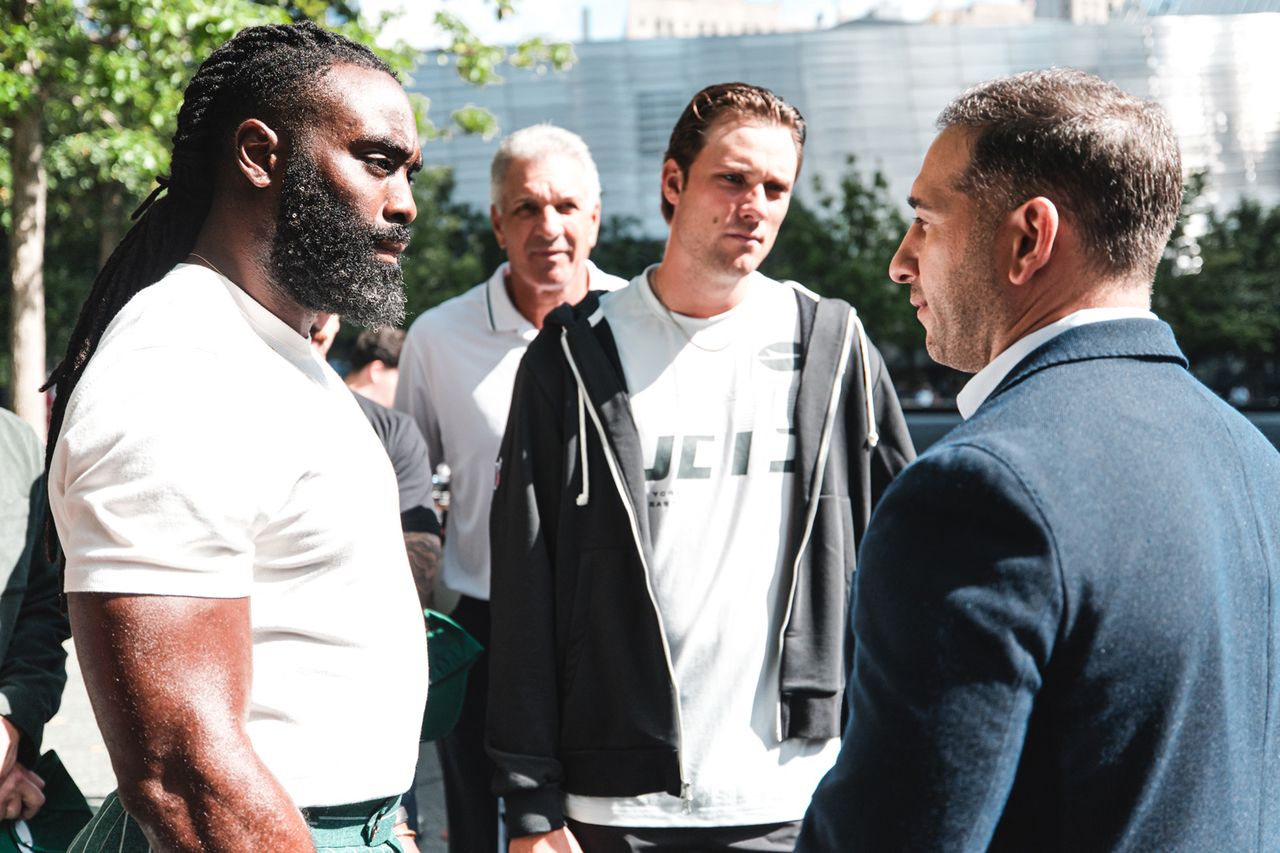
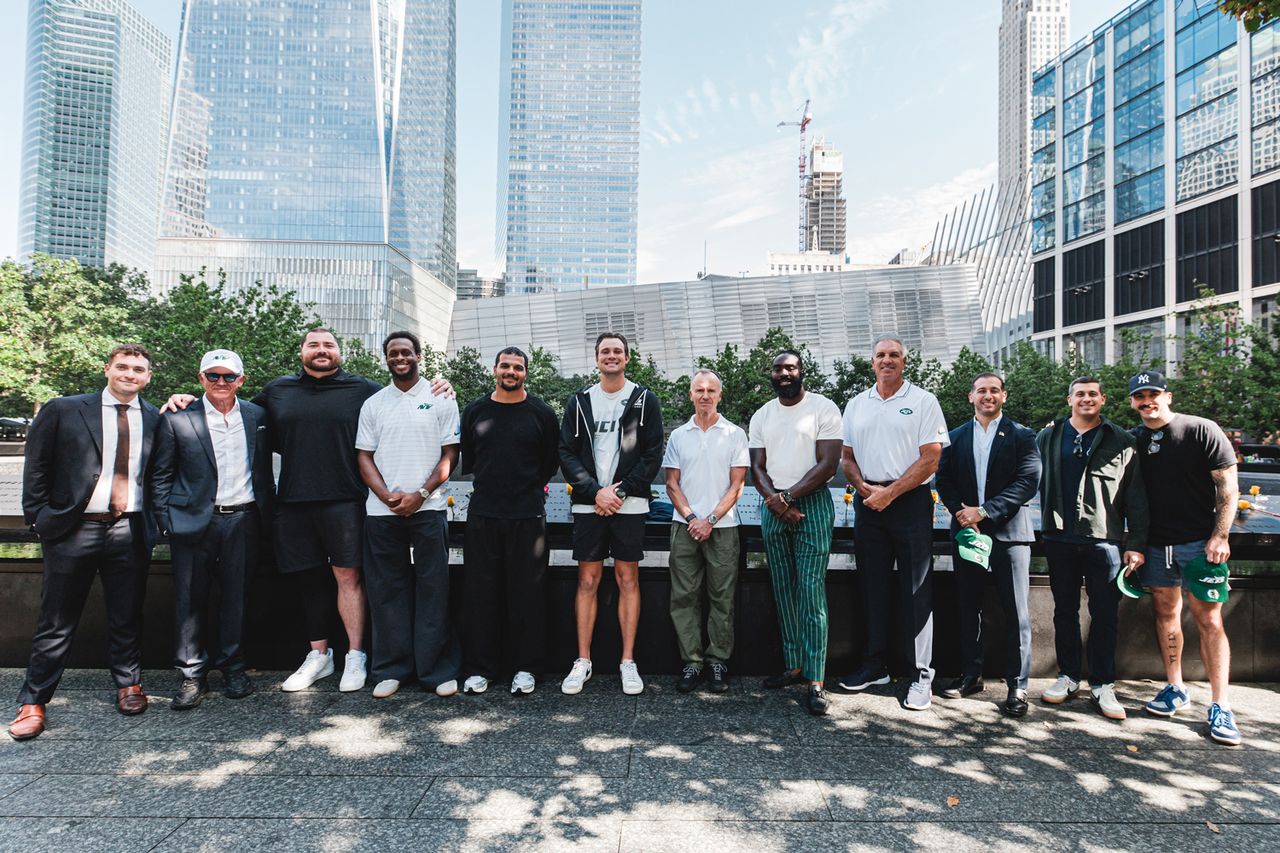
Which is why, decades later, on Sept. 9, 2026, Johnson thought it was important to bring current players like Geno Smith, Demario Davis and Harrison Phillips to the 9/11 memorial for a preview of the special 25th anniversary exhibit In Their Honor. He wanted to ensure they understood the gravity of that day’s impact on the city they played for.
“I think for the young guys that hadn’t seen it before, it was really a wake-up call to the meaning of what New York is, what being a New Yorker is,” he says. “And just how important New York is to the world.”

Credit: Dylan Goodman/New York Jets Photo
“You truly see the enormity of what fell down that day,” Johnson continues of their visit. He recalls the moment he broke down during the tour.
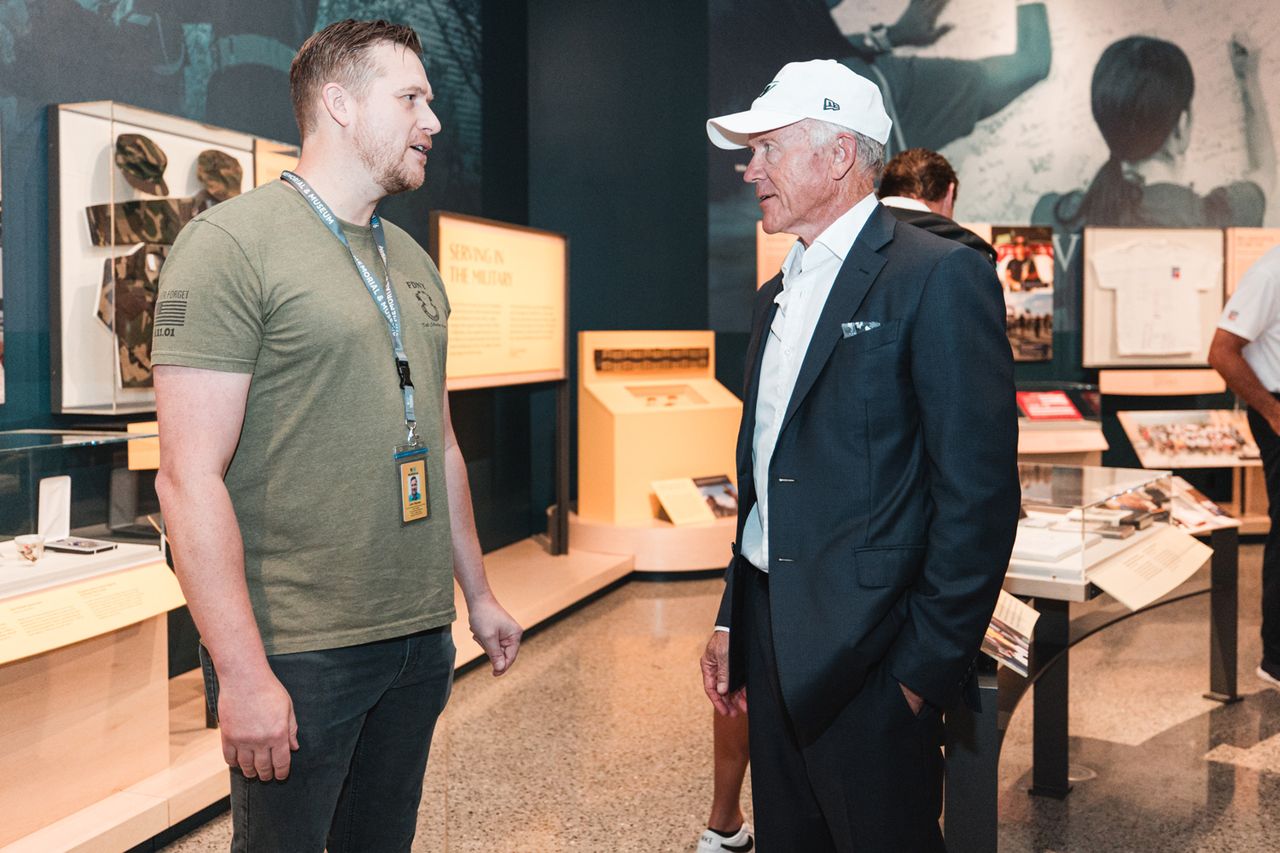
“There’s a room, I’d never been in it before, and it’s just a dark room with benches and it scrolls through names of people who died, and then there’s video of the relatives talking about them, and it really got to me. I didn’t think it would, but yeah, it really got to me.”
He adds, “I think it had a profound impact on the players. You go in that room, but you come out a different person.”
Credit: Dylan Goodman/New York Jets Photo
He also recalls the ways not only New Yorkers, but the entire nation bonded in wanting to help in any way they could.
“There was such a feeling of other states and other municipalities just wanting to give to New York,” he says. “The West Side Highway was lined with 18-wheelers full of donations for anything we needed in New York. Eventually there was no more room for any more 18-wheelers.”
In the days following the attacks, he got permission from then-Governor George Pataki to take some Jets players down to the site to meet with the first responders. “It was hot, smoking, and they were sorting through all this horrific stuff,” he recalls.
“I think it also gave the Jets a sense of reality, that America is still gonna survive, and we will get through this together,” he says of the love and camaraderie they saw displayed.
“The first responders were heroes, but the average citizens were also heroes. There are so many stories of people helping each other, so while it’s horribly sad, it’s also heroic,” he explained. “It showed our resilience. It was a horrific terrorist attack, there’s no question about it, but we can take some good out of it too.”
Credit: Dylan Goodman/New York Jets Photo
Johnson’s New York Jets foundation has since given back in myriad ways, including being on the board of the 9/11 museum in its earliest days, and supporting the Tunnel to Towers Foundation.
“Frank Siller started this amazing, amazing foundation for first responders,” he says of Tunnel to Towers.
Never miss a story — sign up for PEOPLE’s free daily newsletter to stay up-to-date on the best of what PEOPLE has to offer, from celebrity news to compelling human interest stories.
“It started by building houses for the critically wounded, not only in 9/11, but also in military excursions around the world — people in particular who have lost a couple of limbs, building smart houses,” he says. “Now it does things like pay off mortgages for those wounded or widows. If you have the means to give back as an American, you have to do it. You really do.”
Read the full article here