
Four in five Australian teens were still using social media three months after the law was put in place, a new study has found
Credit: Getty
NEED TO KNOW
- A recent study found more than 85% of Australian teens were still using social media despite a nationwide ban for those under 16
- Authors of the study said it could take “a decade” for the full impacts of the act to become evident
- The U.K. announced it was implementing a ban last week and the law could come into effect by spring 2027
Four in five children are still using social media in Australia, despite a ban being in place, a new study has found.
Since December 2025, kids under the age of 16 in the country have been prohibited from having social media accounts, including with platform giants such as TikTok, Instagram and Snapchat.
Now, new research undertaken by the University of Newcastle in New South Wales has discovered that more than 85% of young teenagers were still using social media three months after the Social Media Minimum Age Act 2024 was put in place.
The academics, who observed 408 children aged between 12 and 17, found “insufficient evidence to conclude that exposure to the Act had any early substantial effects on social media use among adolescents aged under 16 years.”

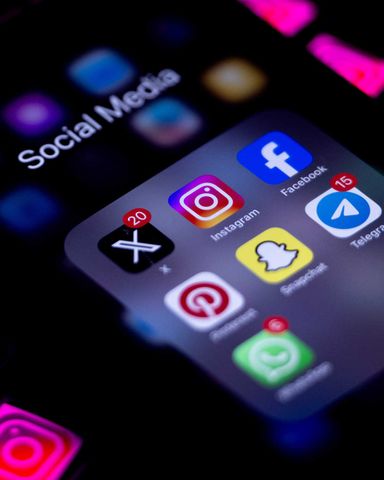
Credit: Ismail Aslandag/Anadolu via Getty
Efforts to get around the ban, including using a “fake” account or accessing social media via a private browser were also reported, while the study also found that daily social media use was "relatively stable," despite the restriction.
The study concluded that it found “limited policy implementation, efforts among adolescents to circumvent restrictions, and insufficient evidence of any substantive early effects of exposure to Australia's Social Media Minimum Age Act 2024 on the social media use of adolescents.”
However, it noted that the benefits from previous public policy changes can take time to manifest. “The full impacts of the Act may not be evident for a decade,” the authors said.
This comes as the U.K. announced that it was following Australia in banning social media for under-16s on June 15, according to a government press release.
The act could come into effect by spring 2027.
U.K. Prime Minister Keir Starmer, who announced his resignation from the role on Monday, June 22 ,said in the release: “Parents want to keep their kids safe and happy, but the online world has made that harder than ever. I've heard first hand from families crying out for change and we will do right by them.”
Last week, the BBC spoke to U.S. citizens about their thoughts on a social media ban and while some welcomed it, others were not so keen.
Trudy Cook, from North Carolina, said: “The United States needs to follow soon as well … Teenagers are going to be hating me but I don't care.”

Credit: Getty
Teenager Chance, from Kansas, added: “I learn a lot off social media and that's the main way I learn besides school.”
Another youngster called Naysa, from Iowa, said she didn't think it should be “completely erased,” and described social media as “valuable.”
British children's charity Barnardo's told PEOPLE that while they welcome the decision to prohibit social media for young people, “stronger, more effective age assurance is needed.”
Never miss a story — sign up for PEOPLE’s free daily newsletter to stay up-to-date on the best of what PEOPLE has to offer, from celebrity news to compelling human interest stories.
“No safeguarding measure is foolproof, but the possibility that some young people may try to bypass age restrictions cannot be used as an excuse for leaving millions of children exposed to harmful content,” Lynn Perry, chief executive of Barnardo's, told PEOPLE. “That is exactly why stronger, more effective age assurance is needed.”
Perry said social media companies “must take responsibility for making their platforms safe by design” and that government and regulators should hold “them to account.”
“It is not, and never has been, children's responsibility to keep themselves safe online,” Perry added.
Chris Sherwood, CEO of British charity NSPCC (National Society for the Prevention of Cruelty to Children), told PEOPLE that the U.K. government “must learn lessons from Australia” as they embark on the ban.
“It's evident from this research that a ban alone will not keep all children safe from harm online,” Sherwood said. “It's [welcoming] to hear Liz Kendall say that the UK will be using highly effective age assurance to bolster their ban, which will hopefully keep more children off restricted platforms.”
Read the full article here