






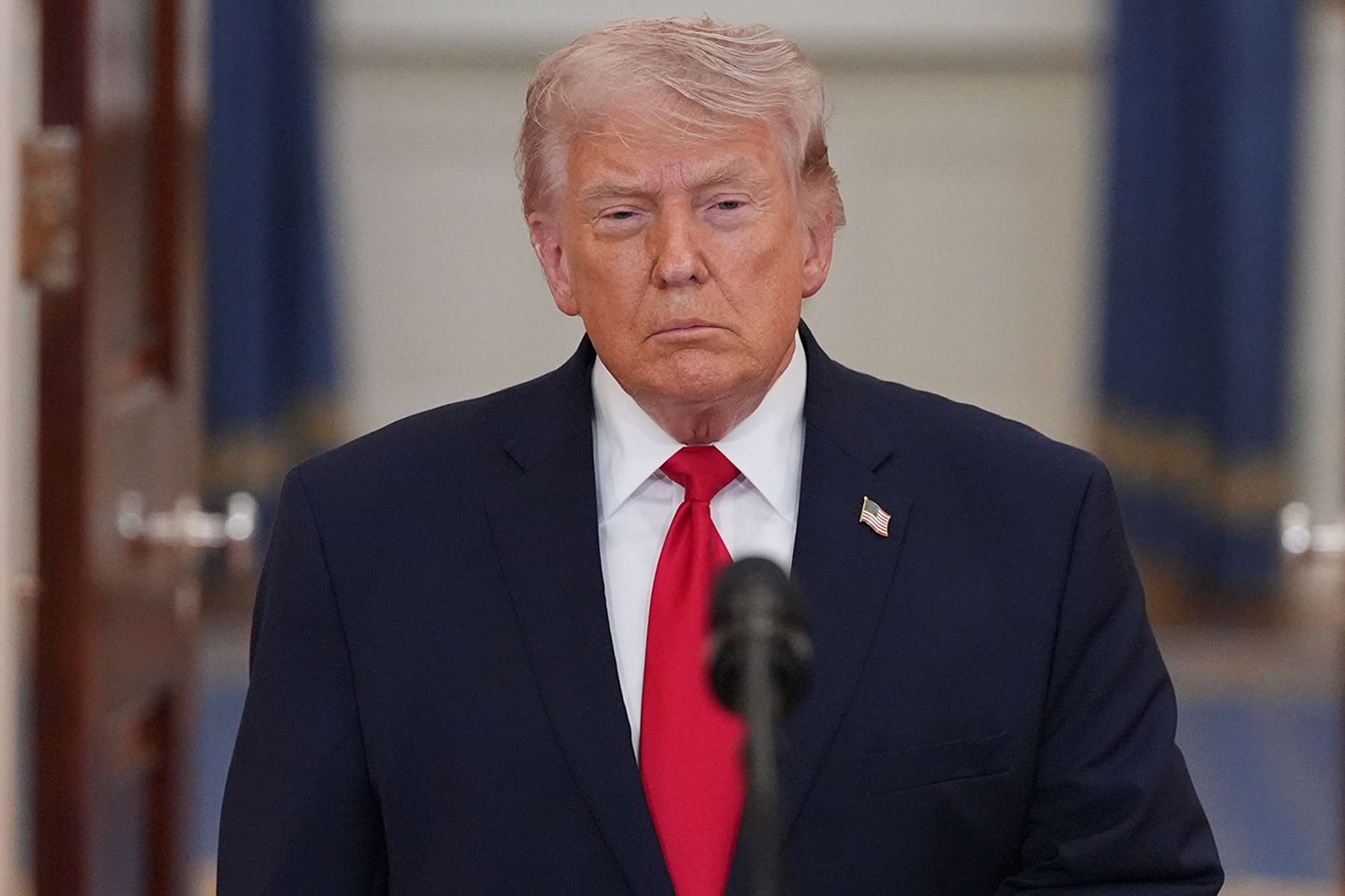
The president claimed the Iran war is "nearing completion"
Credit: Alex Brandon-Pool/Getty
NEED TO KNOW
- During an address to the country on April 1, President Donald Trump said the Iran War was “nearing completion” and the U.S. military was close to achieving its goals
- Trump claimed there would be two to three weeks more of involvement, adding, “We are going to bring them back to the stone ages, where they belong”
- The war began on Feb. 28
President Donald Trump said the war in Iran was "nearing completion," 32 days after it began, during a live address to the nation on Wednesday, April 1.
"Tonight, I’m pleased to say that these core strategic objectives are nearing completion,” Trump, 79, said in his speech. "We’ve done all of it. Their Navy is gone. Their Air Force is gone. Their missiles are just about used up or beaten. Taken together, these actions will cripple Iran military, crush their ability to support terrorist proxies and deny them the ability to build a nuclear bomb. Our armed forces have been extraordinary."
The Republican president also framed the war as part of ongoing efforts to prevent Iran from obtaining nuclear weapons. “For these terrorists to have nuclear weapons would be an intolerable threat,” Trump said. “The most violent and thuggish regime on Earth would be free to carry out their campaigns of terror, coercion, conquest and mass murder from behind a nuclear shield.”
He went on to bring up the 1983 bombing of Marine barracks in Beirut and the 2000 bombing of the U.S.S. Cole when discussing violence supported by Iran and its proxies.
Trump cited how long past wars involving the U.S. lasted, listing the lengths of American involvement in World War I and II, the Korean War, the Vietnam War and Iraq.
"I've made clear from the beginning of Operation Epic Fury that we will continue until our objectives are fully achieved," Trump said. "With the progress we've made, I can say we're on track to complete all of America's military objectives shortly. Very shortly. We're going to hit them extremely hard over the next two to three weeks. We're going to bring them back to the stone ages, where they belong."
The president said discussions were "ongoing" and claimed that regime change was not his administration's original goal. He claimed that new leadership in Iran is "less radical" and "more reasonable."
If no deal is reached, Trump said the U.S. would hit "key targets," specifically "electric generating plants." Trump offered no explanation of what the terms of a deal might be.
Trump's remarks come as the war with Iran, launched by the United States and Israel on Feb. 28, enters its second month. International pressure is mounting for the war to end as the global economy reels from rising oil prices.
In recent days, the U.S. military moved thousands of troops to the region in preparation for possible ground operations, which the president was publicly considering after mostly waging the war from the air.
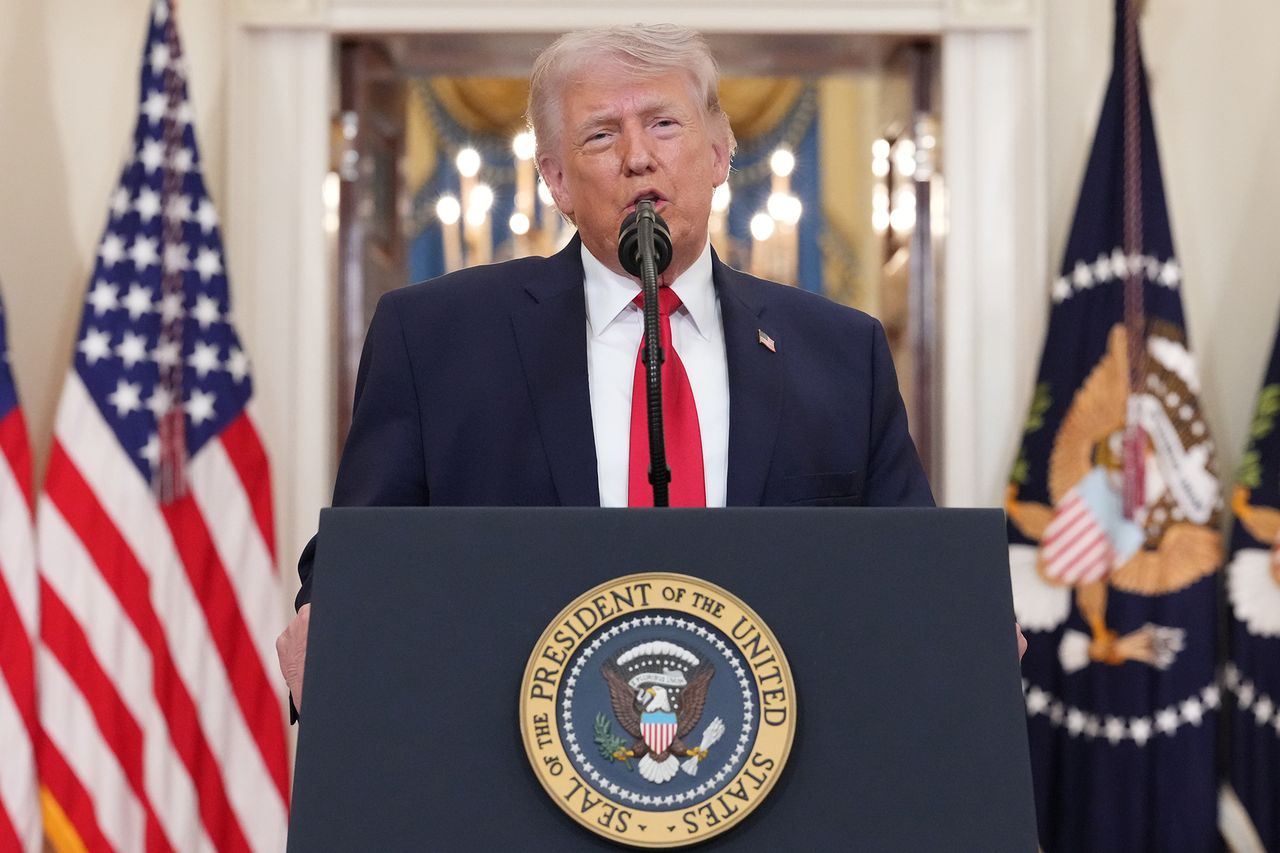
Credit: Alex Brandon-Pool/Getty
"Iran’s New Regime President, much less Radicalized and far more intelligent than his predecessors, has just asked the United States of America for a CEASEFIRE!" Trump wrote on Truth Social earlier on Wednesday. "We will consider when Hormuz Strait is open, free, and clear. Until then, we are blasting Iran into oblivion or, as they say, back to the Stone Ages!!!"
Iranian President Masoud Pezeshkian wrote an open letter "to the people of the United States of America" on Wednesday, April 1, noting "the choice between confrontation and engagement is both real and consequential." A spokesperson for Iran's foreign ministry denied the country was pursuing a ceasefire, according to The New York Times.
To the people of the United States of America pic.twitter.com/3uAL4FZgY7
— Masoud Pezeshkian (@drpezeshkian) April 1, 2026
At least 13 U.S. service members have been killed since the fighting began and hundreds more have been injured as U.S. military bases across the Middle East have been targeted by Iran and its allies, according to U.S. Central Command.
The fighting in the Middle East has killed thousands in Iran and across the region, including at least 1,300 in the Israeli invasion of Lebanon, according to the latter country’s health ministry.
The war, dubbed “Operation Epic Fury” by the Pentagon, is unpopular with a majority of Americans. Last week, Pew Research Center found about 60% of Americans disapprove of Trump’s handling of the war and believe that the U.S. made the wrong decision in attacking Iran.
In an Ipsos poll last month, just 7% supported deploying a large number of ground troops in Iran and a majority opposed any troops on the ground at all. Recent Economist-YouGov and AP-NORC polls also found opposition to ground troops outweighed support for the possibility more than four times over.
Never miss a story — sign up for PEOPLE's free daily newsletter to stay up-to-date on the best of what PEOPLE has to offer, from celebrity news to compelling human interest stories.
U.S. gas prices have hit over $4 a gallon on average in the U.S. as global oil prices rise due to Iran’s closure of the Strait of Hormuz, which typically sees a fifth of the world’s oil pass through. The New York Times’ polling average has Trump at his lowest approval rating of his second term and his highest rate of disapproval.
The president and his top advisers, including Defense Secretary Pete Hegseth and Secretary of State Marco Rubio, have offered differing interpretations of how the war was playing out, what the administration’s goals were and who the U.S. government was negotiating with in Iranian leadership.
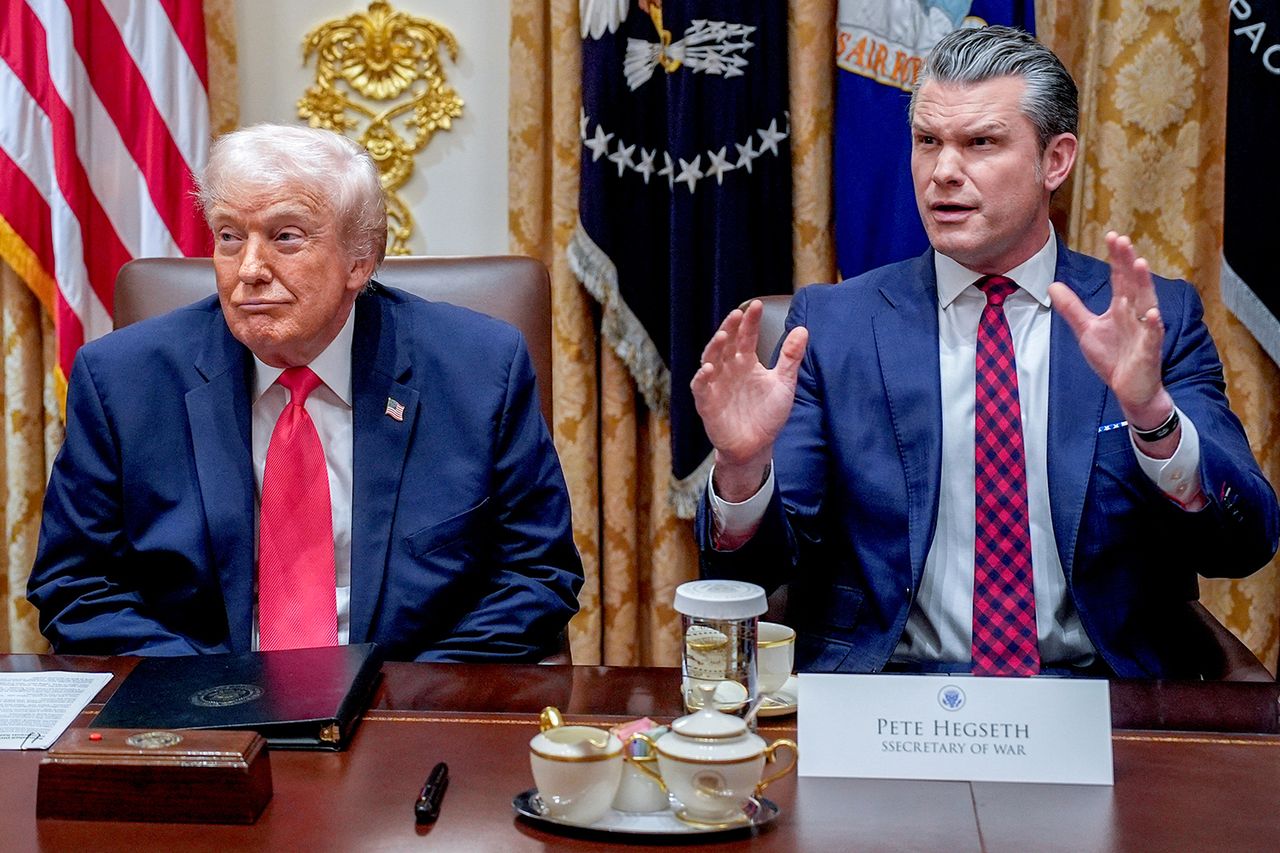
Credit: Yuri Gripas/CNP/Bloomberg via Getty
Before Trump’s speech on Wednesday night, the White House previewed his remarks by declaring the war had been a “decisive success against” Iran, arguing many of his goals had been achieved.
Those goals included: “obliterate Iran’s ballistic missile arsenal and production capability, annihilate its navy, sever its support for terrorist proxies, and ensure the world’s leading state sponsor of terrorism never acquires a nuclear weapon.”
Trump, who campaigned in part on a pledge to stay out of costly foreign conflicts, has argued the monthlong mission was successful in forcing “regime change” in Iran. When the fighting began in late February, U.S. and Israeli strikes quickly killed many Iranian leaders, including the long-reigning Ayatollah Ali Khamenei.
Despite pleas from the president and Republican allies like South Carolina Sen. Lindsey Graham, the Iranian population did not overthrow their government and many of the same factions and figures remain in power as they resist U.S. and Israeli efforts to topple the regime. The deceased ayatollah’s son, Mojtaba Khamenei, was named his father’s successor, despite Trump calling him an "unacceptable" choice.
Read the full article here