
Lizzie Borden became the prime suspect in her father and stepmother’s murders, but was eventually acquitted of both crimes
Credit: Bettmann/Getty; Universal History Archive/Universal Images Group via Getty
NEED TO KNOW
- Lizzie Borden was tried and acquitted of killing her father, Andrew, and stepmother, Abby
- Prosecutors argued Lizzie resented her father’s frugality and her stepmother’s financial influence over him
- Evidence against Lizzie was largely circumstantial, and key testimony was excluded from her trial
When Andrew and Abby Borden were found brutally murdered in their home on Aug. 4, 1892, the police zeroed in on a surprising suspect for the time: Andrew’s younger daughter, Lizzie Borden.
The Fall River, Mass. businessman and his second wife had been bludgeoned to death, with Andrew sustaining 11 blows to the head and face and Abby being struck up to 19 times, per Britannica. The crime scene was gruesome, horrifying those who were summoned to the Second Street home in the wake of the attacks.
“Physician that I am and accustomed to all kinds of horrible sights, it sickened me to look upon the dead man’s face,” Dr. Seabury Bowen, the Borden family physician, said at the time per The Herald News.
But Lizzie, Andrew’s 32-year-old daughter, was “oddly composed” immediately following the murders, according to the Smithsonian Channel, and shed no tears over the deaths of her father and stepmother. Not only was her lack of grief odd to those around her, but Lizzie’s calm and cool demeanor was considered bizarre given that she was the one who discovered her father’s body. Police were immediately suspicious, and launched an inquest in the days following the murders.
At the conclusion of the three-day inquest, Lizzie was arrested and charged in the double murder of her father and stepmother. Although she was eventually acquitted at trial, the lore of the crimes would follow Lizzie until her death in 1927 and beyond, including in the latest installment of Ryan Murphy and Ian Brennan’s Monster, which was released on Netflix on Sept. 17.
Below, here’s a look at why the authorities and prosecution believed Lizzie Borden was behind the murder of her father and stepmother.
Lizzie reportedly had a contentious relationship with her stepmother, Abby, though she said they were “cordial”


Credit: Courtesy of Netflix
Lizzie’s biological mother, Sarah, died in 1863, when Lizzie was only a toddler, per The Herald News. Two years later, in June 1865, Lizzie’s father Andrew — a wealthy but practical Fall River businessman — remarried Abby Durfee Gray.
Abby, who was 37 years old at the time, then became a stepmother to Andrew’s two young daughters: Lizzie, who was nearly 5, and her older sister Emma, who was 14. (Andrew and Sarah also had a daughter Alice, who died just before her 2nd birthday in 1858, before Lizzie was born.)
Over the years, there have been several different accounts about the nature of the sisters’ relationship with their new stepmother.
According to the 2016 book The Borden Murders: Lizzie Borden and the Trial of the Century, Emma and Lizzie supposedly kept their distance from Abby, choosing not to eat meals with her and avoiding her company. Per the book, they also refused to call Abby “mother”; Emma referred to her as Abby, while Lizzie addressed her as Mrs. Borden.
In one reported instance, Lizzie allegedly called Abby a “mean thing” who she “[hated]” when a dressmaker referred to her as the girls’ mother, per American Heritage.
However, Lizzie painted a different picture of their relationship when questioned by police in the wake of the murders. She testified during the police inquest that she and Abby were “quite cordial” with “very kindly feelings” towards one another, per The Borden Murders.
Lizzie allegedly resented her father and stepmother over finances
Credit: Courtesy of Netflix
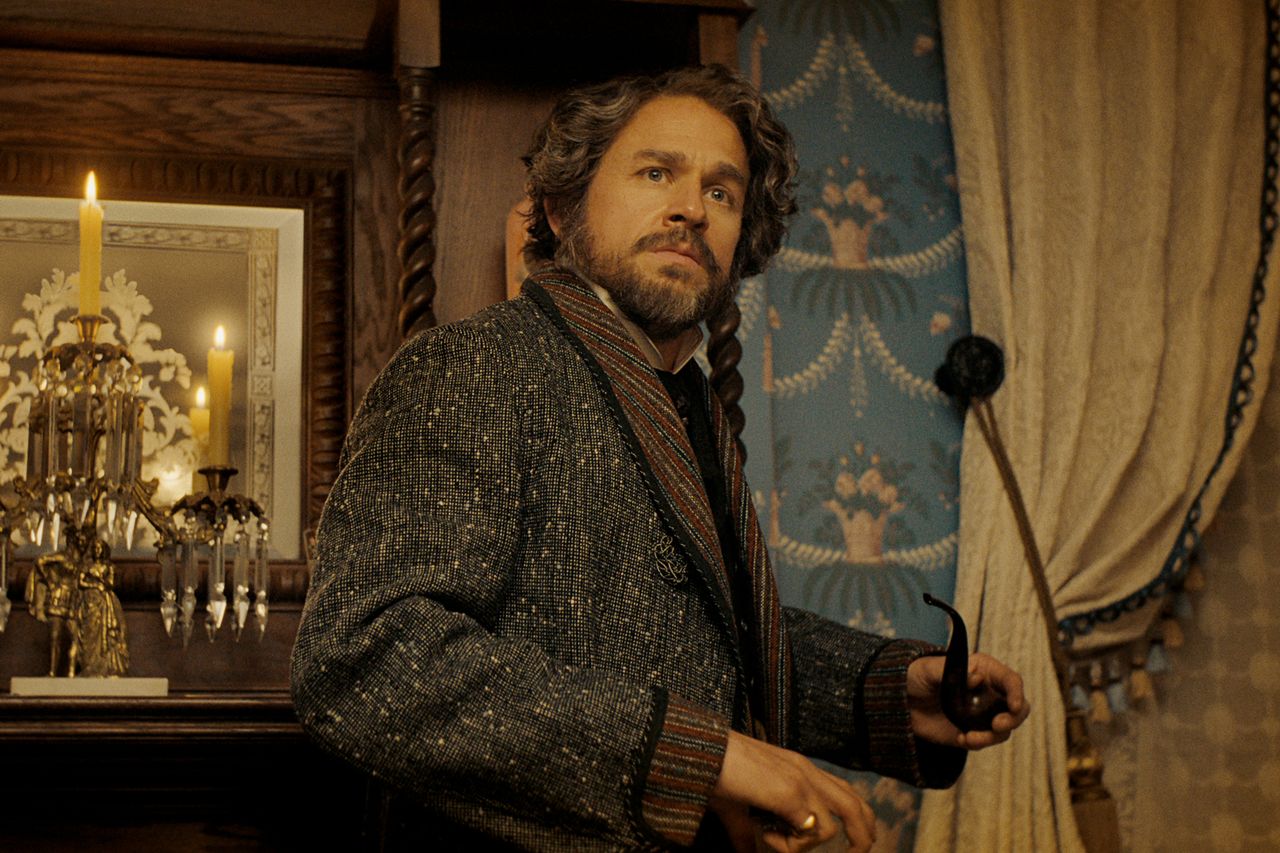
Andrew was a wealthy and successful businessman, thanks to smart investments in mills, banks and real estate, according to Smithsonian Magazine. However, he was known to be frugal when it came to his spending, and his stinginess reportedly frustrated both Lizzie and her sister Emma.
For instance, the Bordens lived in a modest home on Second Street in Fall River, with little indoor plumbing and no gas lighting, per CBS News. But Lizzie and her sister longed to live in the wealthy section of town known as The Hill — and though she knew her father had the means to do so, he saw no reason to make the move, per Smithsonian Magazine.
“What is wrong with the house?” Andrew reportedly said of their Second Street home, according to The Borden Murders. “It is good enough for me – good enough for any one to live in.”
The alleged financial friction between the girls and their father reached a pivotal turning point in 1887, when Andrew purchased a nearby home for Abby’s half-sister to live in. Emma and Lizzie were allegedly hurt after learning of the property purchase from “outsiders” instead of their father or stepmother, and also reportedly resented that Abby seemed to have financial influence over Andrew.
In hopes of placating his daughters, Andrew bought Lizzie and Emma a home to rent out, per American Heritage.
Lizzie provided conflicting alibis to the authorities
Lizzie, along with the Borden family housemaid, Bridget “Maggie” Sullivan, were the only two individuals home when the murders of Andrew and Abby occurred, per History.com. Since no one reported seeing any suspicious individuals entering or leaving the Borden property that morning, police were led to believe the killer must have already been inside the home.
When questioned by the police, the housemaid, Bridget, gave a “clear and consistent” account of her whereabouts that morning: She had been washing windows, before retiring to her third floor attic bedroom to rest, according to The Borden Murders. Lizzie’s responses, however, were not as consistent.
She answered police questions with “terse, vague answers” that frequently contradicted themselves. Lizzie changed her story about where she was when her father returned home from his morning business meetings multiple times, first alleging that she was downstairs and then, moments later, claiming she was upstairs, per The Borden Murders.
Her location was significant because investigators had determined Abby, who was found dead in the second floor guest bedroom, had been killed about 90 minutes earlier than Andrew, leaving many to argue that Lizzie would have seen Abby’s bludgeoned body lying on the floor had she been upstairs.
Lizzie also gave conflicting accounts over her whereabouts when her father was killed. According to American Heritage, her answers ranged from being in the backyard, to being in the barn looking for fishing line sinkers, to sitting in the barn loft eating pears.
Her inconsistencies raised alarms for police, as the closed barn loft would have been unbearably hot that day to have visited voluntarily, per American Heritage. Meanwhile, an officer who claimed to have been the first to examine the loft following the crimes testified that the dust on the floor was seemingly untouched, with no footprints or trailing skirts.
Police learned Lizzie Borden had attempted to purchase prussic acid before the murders
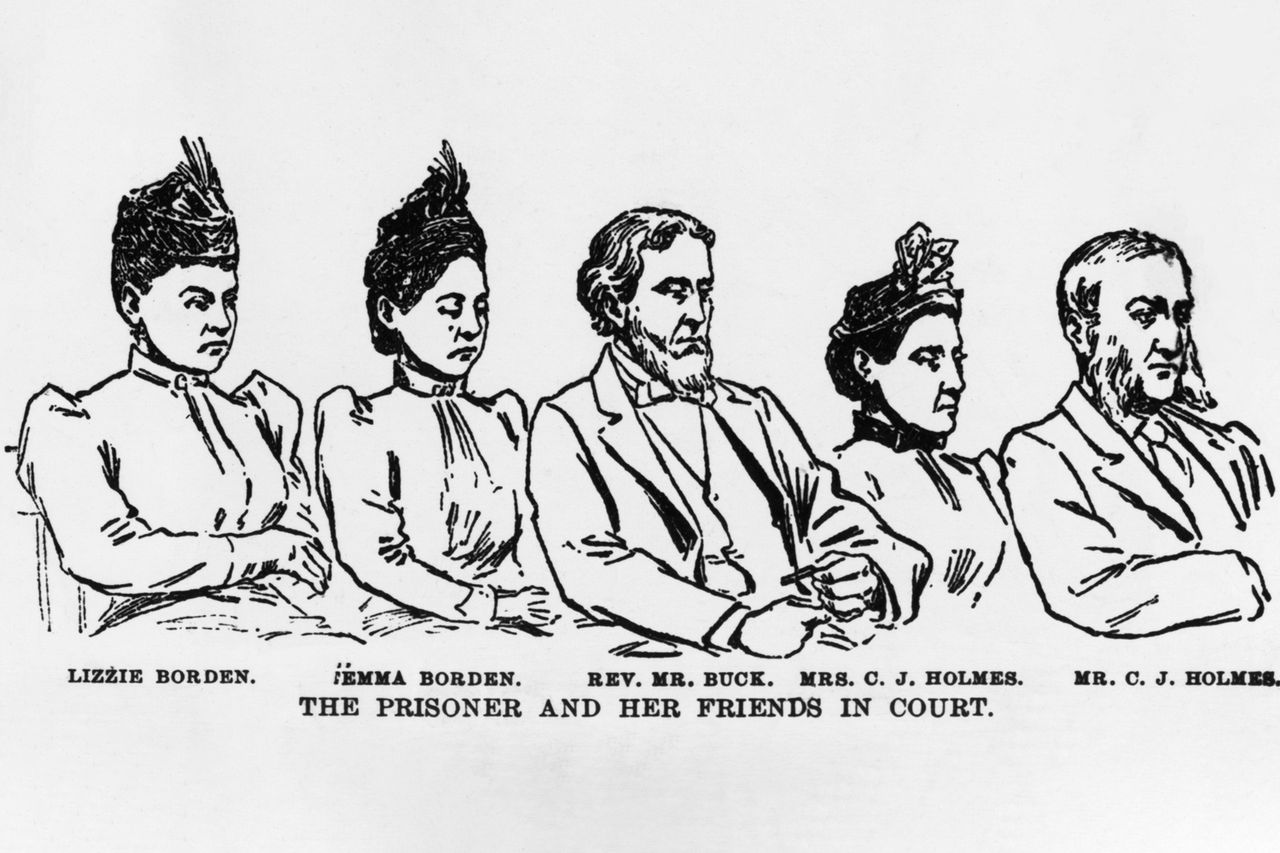
Credit: Bettmann Archive/Getty
Authorities became increasingly suspicious of Lizzie when a local drug clerk named Eli Bence claimed that she had tried to purchase prussic acid — a deadly poison more commonly known today as cyanide — the day prior to the murders, per Britannica.
Bence, who worked at D.R. Smith’s, a drugstore located three blocks from the Borden home, later provided key testimony at the inquest into the murders. He testified that Lizzie had come into the store looking to purchase the lethal poison, claiming she needed it to place an edge on a sealskin cape, The Borden Murders. However, without a doctor’s prescription, Bence refused to sell it to Borden, despite her alleged insistence that she had purchased it several times before.
Police believed they located the murder weapon in the Bordens’ basement
In the days following the murders, police uncovered a potential murder weapon hidden in the cellar in a box of abandoned tools. It was a hatchet which had had its handle broken off and was covered in a layer of ash, according to CBS News.
The blade of the hatchet was about three and a half inches long, which was seemingly consistent with the size of the wounds found on Abby and Andrew Borden, per the outlet. While the other tools in the box were dusty and unused, the hatchet was neither rusted nor old, and appeared deliberately rubbed in ash, according to American Heritage.
This “handleless hatchet” became the suspected murder weapon and became a critical piece of evidence in the case against Lizzie.
At trial, prosecutors laid out evidence to show how the dimensions of the hatchet matched the dimensions of the injuries on Andrew and Abby’s skulls, per CBS News. They also brought in medical experts who testified that a woman of “ordinary build and ordinary strength” could have had the ability to commit the murders with the hatchet.
Lizzie allegedly burned a dress in the days following the murders

Credit: Courtesy of Netflix
Just over a week after the murders, a judge ordered Lizzie’s arrest following a three-day inquest — where Lizzie’s conflicting statements and movements led authorities to believe she was “probably guilty,” according to Smithsonian Magazine. Months later, new evidence emerged at a grand jury hearing that only bolstered the prosecution’s case.
Alice Russell, Lizzie’s next-door neighbor and friend, came forward at the grand jury hearing in early December 1892 and testified that she had witnessed Lizzie burning a dress in the kitchen stove three days after the murders, per The Providence Journal. The dress, Lizzie claimed, had been stained with brown paint — a color that is also strikingly similar to dried blood, the prosecutor noted, according to American Heritage.
In addition to the destroyed dress, authorities had also found a bucket of bloody rags in the cellar washroom following the murders, per CBS News. Lizzie claimed that they were a result of her menstruating.
During trial, Lizzie’s sister Emma claimed that it had been her idea — and not Lizzie’s — to burn the dress in the days after the double murder.
Prosecutors argued Lizzie had a financial motive to kill her father and stepmother
At Lizzie’s trial, the prosecution laid out how — based on body temperature and blood coagulation — Abby had been killed first, per The Borden Murders.
This was significant because if Andrew had been the first to die, Abby’s family would have been entitled to part of his estate, former Brooklyn-based prosecutor Anna-Sigga Nicolazzi explained to CBS News. But if Abby died before Andrew, Lizzie and her sister Emma stood to inherit everything — which was estimated to be around $10 million in today’s dollars, according to History.com.
This, prosecutors argued, gave Lizzie significant financial motive to kill her father and stepmother. This motive, combined with her opportunity to commit the crimes, made her the prime suspect, according to the prosecution.
Why was Lizzie Borden acquitted?

Credit: Bettmann Archive/Getty
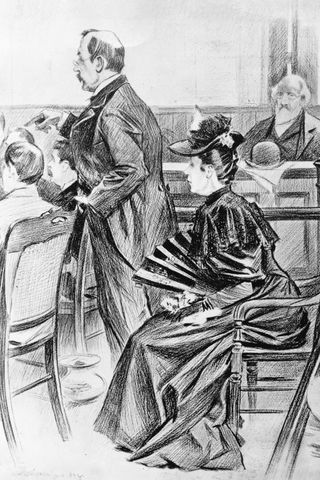
Despite having both motive and opportunity, the majority of the evidence against Lizzie Borden was largely circumstantial. Additionally, some of the prosecution’s most damning evidence against her was excluded from Lizzie’s trial.
All of Lizzie’s testimony that she gave at the three-day police inquest was ruled inadmissible, as her defense argued that she had been questioned without a lawyer present, per The New York Times. Her doctor had also later stated that he had given Lizzie morphine at the time of the inquest, per Britannica. This meant that all of Lizzie’s contradicting statements about her whereabouts during the murders were not allowed to be presented as part of the prosecution’s case.
The inquest testimony about Lizzie’s attempt to purchase prussic acid was also excluded, dealing another major blow to the prosecution. This evidence was not allowed to be presented at trial because the judges ruled that the prosecution had not disproved that the lethal poison could also be used for innocent purposes, according to Smithsonian Magazine.
These hits to the prosecution’s case, combined with the overwhelming belief at the time that a woman — particularly one of Lizzie’s social standing and pedigree — could not commit such a heinous crime, could have played a factor in leading the jury to find Lizzie not guilty, according to historians and experts.
Read the full article here