
For Disability Pride Month, scholar and author Kenny Fries breaks down why disabled peoples’ stories are a valuable part of the literary community
Credit: Michael R. Dekker; Nine Mile Books
When Body, Remember, my first memoir was originally published in 1997, I was interviewed on Wisconsin Public Radio. The interviewer asked why someone who wasn’t disabled would be interested in my book. “The book is about the relationship between the body and memory,” I replied. “We all have bodies. We all remember.”
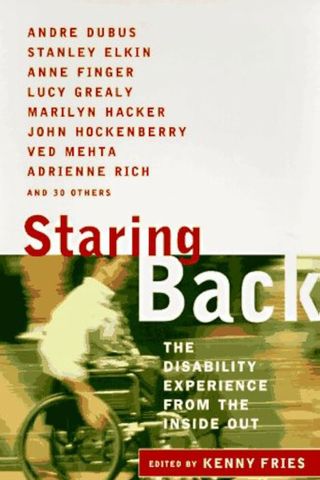
In literature, it is rare to view disability as something universal. But as I wrote in the introduction to Staring Back: The Disability Experience from the Inside Out, the first commercially published multi-genre anthology of U.S. writers with disabilities (Plume, 1997): “What differentiates the oppression and discrimination of the disabled from other traditionally marginalized groups is that in one quick instant — a slip in the bathtub, a virus-borne disease — anyone can join us, the disabled. In fact, at some point in our lives, each and every one of us, sooner or later will be, whether for short term or long, in some way disabled.”
In 2002, I went to Japan as a Creative Arts Fellow of the Japan/US Friendship Commission and the National Endowment for the Arts to look at disability and the lives of people with disabilities in Japan. During my time in Japan I wrote about Japanese gardens.

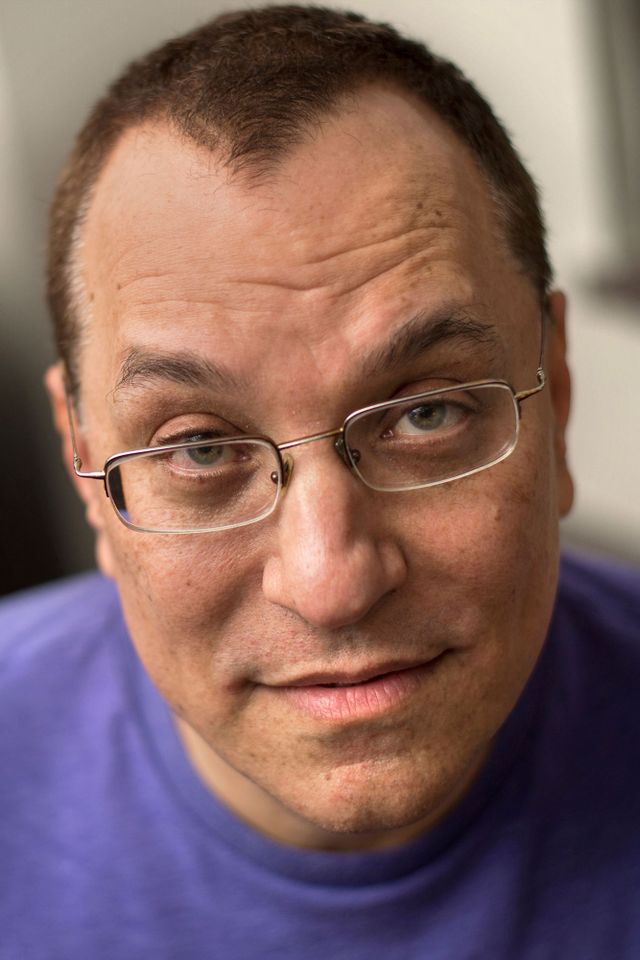
Credit: Michael R. Dekker
On the surface, these poems seem to be about what I saw: the flowers, the teahouses, the rocks, the bridges. But by the end of my stay in Japan, I realized that what I was actually writing about was what the gardens represent: a microcosm of what it means to be alive in an ever-changing mortal world. And living life in a mortal world is perhaps the greatest lesson learned from the experience of living with a disability.

Credit: Plume
In studying Japanese gardens, I kept reading about mono no aware. Noted translator Sam Hamill describes mono no aware as “a resonance found in nature… a natural poignancy in the beauty of temporal things… Aware originally meant simply emotion initiated by the engagement of the senses.” Ivan Morris, in his study of The Tale of Genji, says aware refers to “the emotional quality inherent in objects, people, nature, and… a person’s internal response to emotional aspects of the external world.” Donald Richie writes, “The awareness is highly self-conscious, and what moves me is, in part, the awareness of being moved, and the mundane quality of the things doing the moving.”
Mono no aware. There is nothing more constant — or moving — than change.
Credit: Kenny Fries
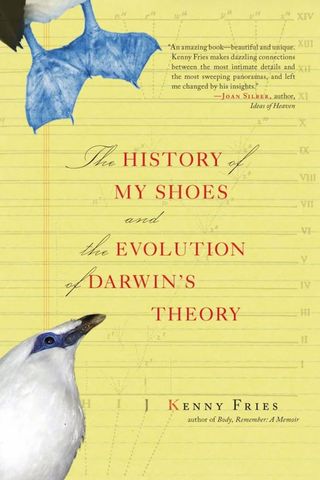
Later, in writing my 2007 memoir, The History of My Shoes and the Evolution of Darwin’s Theory, I discovered how disability could offer a new and incisive view of a major scientific paradigm, a shift in understanding the world in which we live. In doing so, I provided a different take on Darwin’s and Alfred Russel Wallace’s theory of natural selection, linking it to the way disability provides variation and creating adaptations as the means of survival. The disability experience can transform the way we think about the ideas that shape our world.
Then came 2020 and with it, the beginning of the COVID-19 pandemic. In the early days of the pandemic, seemingly all of a sudden, people said the world had become disabled. What they meant by this rather ludicrous idea brought to the surface the stereotype of people with disabilities as isolated, living a confined life with restricted mobility, and with limited ability to be out and about in society to engage with others.
The irony is that during those times, adaptations those with disabilities had been using as much as possible in their pre-pandemic lives — personally and professionally connecting via remote access; using masks and other preventive measures to lower the risk of contagion; creating safe ways to gather — became standard for everybody.
But as soon as we were told the pandemic was declared over, which it actually isn’t, these adaptations disappeared. Workers were called back to the office. Students and teachers were once again required to attend classes in person. Masks were banned in some jurisdictions.
And perhaps most importantly, the specter of eugenics reared its ugly head in medical triage protocols, and the devaluing of lives deemed less worthy than others. Eugenic ideas continue, like a dangerous genie released from its container and allowed to run rampant.
Credit: Nine Mile Books
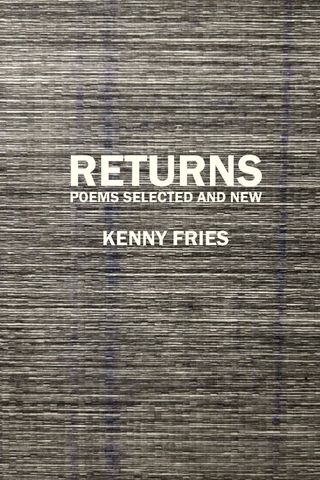
My new book, Returns: Poems Selected and New (Nine Mile Books) collects four decades of my poems, including depictions of landscapes ranging from the desert Southwest, northeastern U.S. lakes, beaches and islands, as well as those Japanese gardens, while offering a much richer — and much truer — depiction than depiction of disability and disabled lives than we’ve historically been given in both literature and society.
During a time when a President can be elected despite openly mocking a disabled journalist and a prominent Cabinet Secretary of Health and Human Services spreads false understandings of disability, especially neurodivergence, my work is just one example of how disabled writers counter commonly held ideas of what a disabled life can hold. Disability literature shows that the disability experience is not one of limitations, but an amalgam of different ways of moving through the world, and surely of value to all of us, disabled and nondisabled alike.
Need your next page-turner? See which books our editors can’t put down with our People Who Read newsletter — plus get PEOPLE News.
Read the full article here