
Chelsea Fenton uses TikTok to highlight opportunities for women in the skilled trades
Credit: Chelsea Fenton
NEED TO KNOW
- Chelsea Fenton uses TikTok to inspire and educate women about opportunities in union trades and skilled labor
- She highlights benefits like equal pay, pensions and safety training while addressing misconceptions about women in construction
- Fenton emphasizes the importance of community, representation, and visibility to encourage more women to join the trades
Chelsea Fenton has been a union laborer for almost 14 years and recently decided to start sharing videos about her life as a woman in the trades.
Fenton began by posting comedic videos about her career, then noticed an influx of women across the country asking how she got into the industry and what it might entail.
“It’s opened a lot of doors for me, and it’s just a really great organizing tool,” Fenton, a site foreman on a big commercial project and part of LIUNA Local 596 out of Holyoke, Mass., tells PEOPLE.
“Every girl that watches my videos doesn’t have to become a laborer, but I want her to know that the door is open for them and that these opportunities are there, because it’s not that women don’t want to do this type of work,” she says. “I know thousands of tradeswomen and I’ve met thousands of women in the industry over the last decade. It’s that women don’t actually know about the opportunities.”

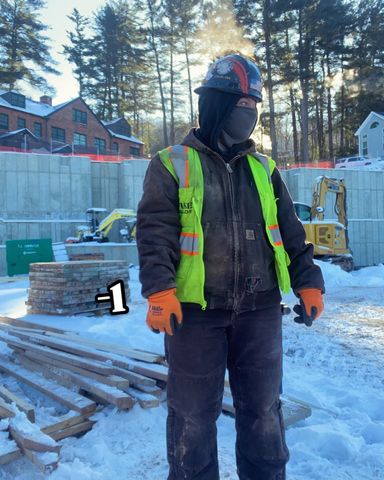
“They have no idea they can get paid over $40 an hour without a college education, with a pension and annuity and world-class safety training,” she continues. “Women just don’t know about opportunities.”
An hourly wage of $40 roughly equates to a gross annual salary of over $83,000 a year, based on a standard 40-hour workweek.
Fenton says that through TikTok, she has been able to educate women about the opportunities that exist in the trades, from construction work like electrical and plumbing to manufacturing jobs like welding.
“I think that in the next decade, hopefully my job — and my daughter’s job sites, if she chooses to do this type of work — will someday look different. Hopefully it’s not so male-dominated,” Fenton shares.
Fenton understands that it’s important for laborers to get all of the certifications they need and continue their education, but also shares that it’s important for women to “build a community around you.”
Fenton notes that she likely wouldn’t “be where I am without the tradeswomen that I’ve met along the way and that I’ve become really good friends with.”
“Those relationships have given me a lot of confidence and stability,” she says, noting that they remind her that she is “not alone.”
“I might be the only woman on my job site, but I’m not alone because there are thousands of us out there; we’re just really spread out,” Fenton says.
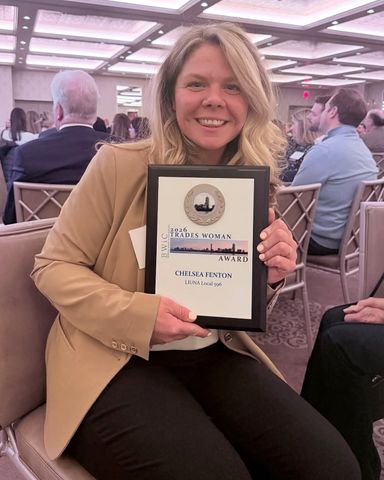
She hopes that women don’t think they need to “shrink” themselves to “make other people feel comfortable” in the trades.
“Even though it is the construction industry, you don’t have to. Especially now, it’s a lot better. You don’t have to deal with a lot of the big culture guys,” she shares. “More times than not they are very welcoming to your crew and anybody wants to teach you. I think that … not shrinking yourself to make other people comfortable is really important in setting your boundaries really early in your career.”
Fenton tells PEOPLE she is frequently asked whether there is an age limit for women to join a union or start an apprenticeship. Women also ask how she handled her pregnancy on the job site, and how early she has to get up — all of which she is happy to answer.
“I try to be real with people and not beat around the bush and say, ‘Hey, this is what it is.’ You don’t have to do it by yourself,” Fenton shares.
While everyone’s career is bound to look different, she likes to “educate about facts.”
“I’m really about facts. Women make 23% more in a unionized trade than our non-union counterparts,” Fenton says. “As a woman, you’re getting paid the same hourly wage as your male counterpart. You cannot get paid less because you’re a woman, and that happens really frequently in non-union work. The wage gap is a lot less in the unionized trades.”
“I’m really in anybody’s corner. I deal with all walks of life, so I am a person that has really strong beliefs about women being able to financially support themselves and their families,” she continues. “I want women to be able to get the resources and find the resources that they need to join the trades and get on a good path, to maybe home ownership someday.”
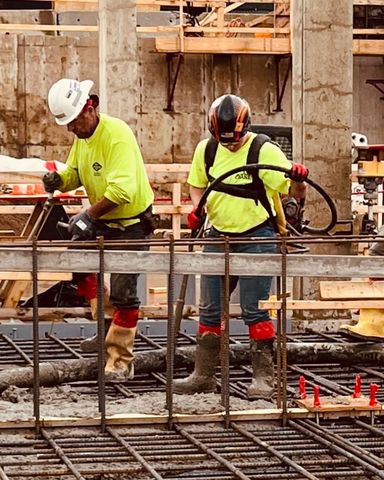
Fenton hopes that by sharing resources online and teaching more people about unions and trades, it inspires women to look for jobs they may never have considered.
“If we’re gonna get the next generation of tradespeople, really get more people into the skilled trades, like, you have to be on TikTok, you have to be on social media recruiting these young folks, because 18-year-old kids, they’re on their phones, they’re scrolling and that’s an opportunity for millions of young people to see your trade and what you’re about,” she tells PEOPLE.
Ultimately, Fenton emphasizes that “visibility is power because if you can’t see yourself out here in our boots, you’re not gonna take the jump.”
“You can’t be what you can’t see. Representation really is so important. All of the young people out there that want to do this, if they can see themselves out here in the field, I think that they’re gonna be more apt to get into it.”
Read the full article here