





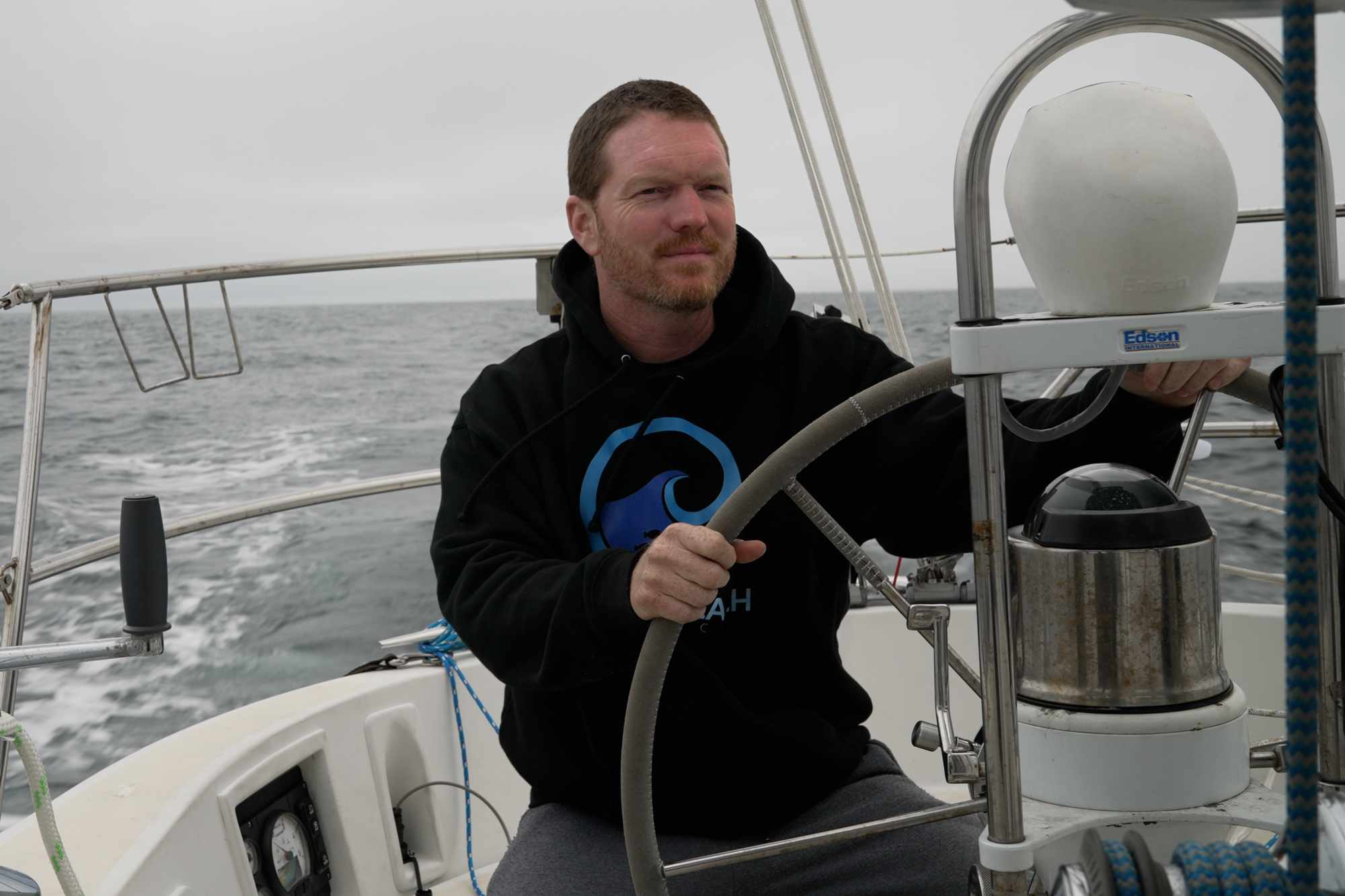
Matt Rutherford is manning a one-person circumnavigation for the sake of science
Credit: Courtesy of Matt Rutherford
NEED TO KNOW
- Matt Rutherford discovered sailing as a teenager after a troubled youth and sought adventure through the ocean
- In 2011, he became the first person to complete a solo nonstop circumnavigation of North and South America
- Rutherford’s current Arctic expedition aims to raise awareness for climate change and support polar research funding
Matt Rutherford wasn’t always a sailor.
An Ohio native, Rutherford first discovered his love for sailing as a teenager while looking for an adventure to keep him out of trouble.
“When I was younger, I got into a lot of trouble. The street life was an unhealthy adventure,” the 45-year-old tells PEOPLE. “It’s an adventure nonetheless, but I kept getting locked up, and I grew up in and out of detention centers. I got locked up five times when I was a kid, so I grew up in those places. I needed a healthy adventure.”
When he was 19, Rutherford looked at an atlas and thought to himself, “If you can learn how to sail and get a sailboat, you can show up and drop an anchor for free. And you show up with your bed, you don’t gotta get a hotel, you got your kitchen, you don’t have to go out to eat every night.”
“It seemed like a really cool way to travel,” he continues. “It seemed as if this ultimate wilderness lay in the ocean.”
So, in his early 20s, he “bought a little crappy boat” from the ‘60s and took it “from Maryland down the coast to the Florida Keys,” figuring out the laws of the sea along the way.
“I was the captain. I had a girlfriend with me from Cleveland, and she didn’t know anything about it. We did make it down there, but I made a lot of mistakes,” Rutherford admits. “The first night out, I ran us aground, but I was the captain. You can’t learn seamanship from a book. You gotta get out there and experience sailing and the ocean and learn from your mistakes and hopefully get better.”
Credit: Courtesy of Matt Rutherford
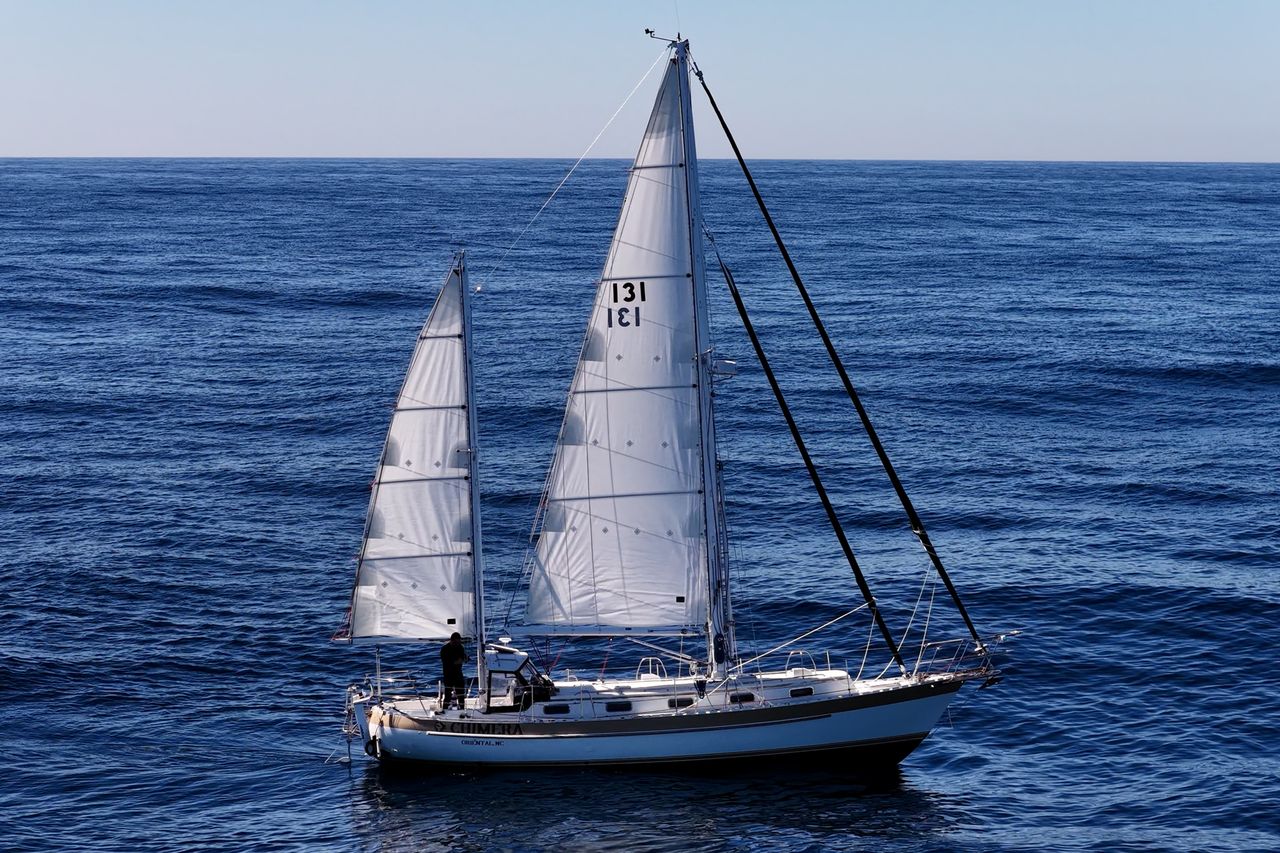
He continued to sail, and in 2011, Rutherford became the first person in history to complete a solo, nonstop circumnavigation of North and South America, departing Maryland and sailing 27,077 miles in 309 days through some of the most dangerous waters on Earth.
Fast forward to today, and Rutherford is in the midst of another adventure.
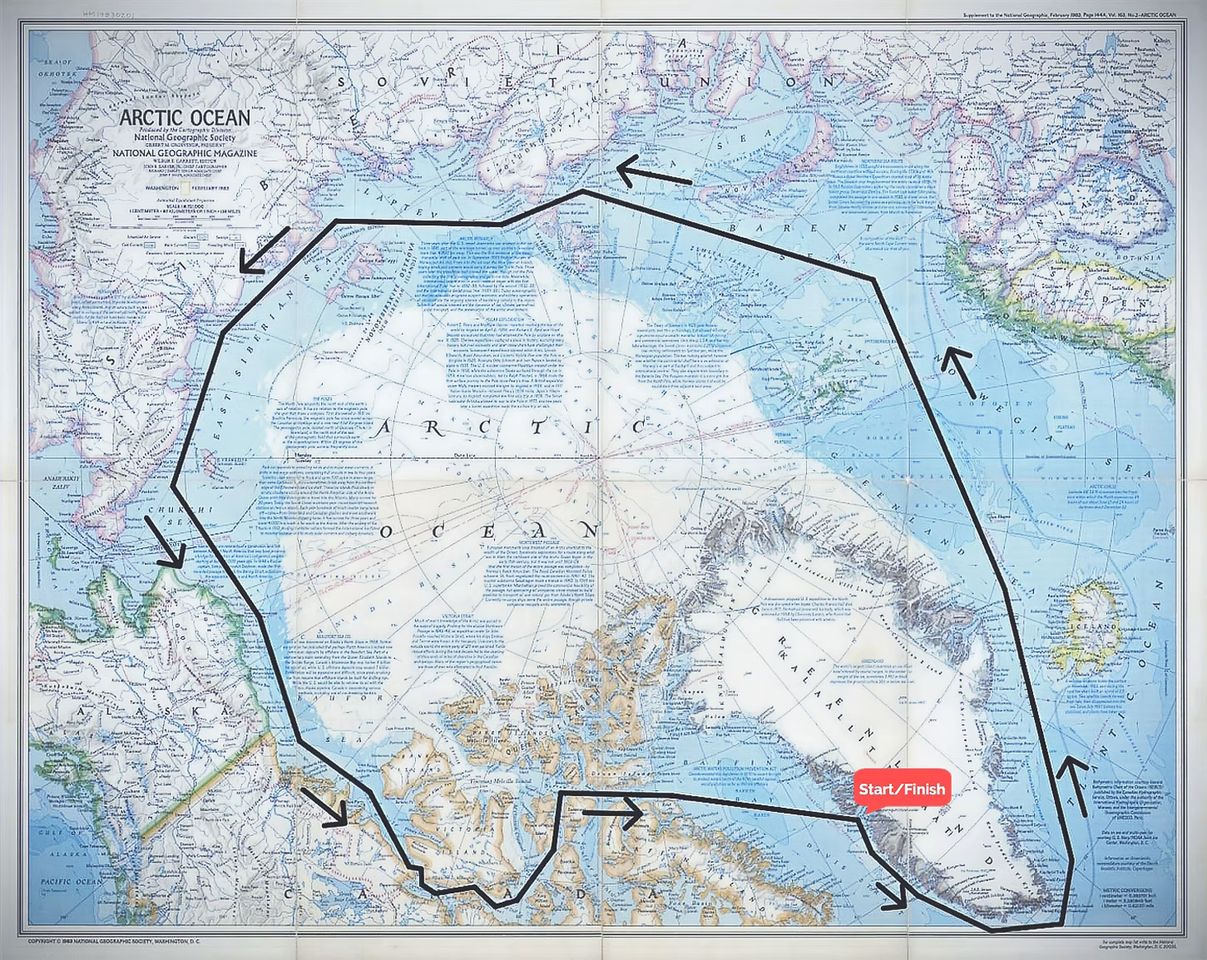
Rutherford, the founder of the nonprofit Ocean Research Project, departed from Aasiaat, Greenland, on June 25 in an attempt to complete the first-ever solo, nonstop, unassisted circumnavigation of the Arctic Ocean.
His target finish is early October, sailing more than 10,000 miles through the Arctic Ocean, passing through the Northern Sea Route along the Russian Arctic coast, and the Northwest Passage through the Canadian Arctic Archipelago, before returning to Greenland.
He set out on the expedition to raise money and awareness for his nonprofit, which is dedicated to Arctic climate research, marine science and exploration. Rutherford shares that, until now, a voyage like his would not have been possible, but warmer climates globally have drastically lessened the ice in the Arctic.
He notes that the nonprofit’s work has never seemed more important, as funding for science programs, specifically polar research, has been slashed in recent years.
“There’s not much money right now, generally speaking, to be doing polar research. It certainly has affected the community overall,” Rutherford shares.
While Rutherford is manning the ship on his own, he works alongside Nicole Trenholm, the Science Director of the Ocean Research Project. Trenholm’s work focuses on Arctic glacial fjord systems, investigating the physical and biogeochemical changes occurring as glaciers retreat and assessing what that means for coastal ecosystems and global sea levels.
Before setting off in Greenland, Rutherford says he “collected 50 samples for a scientific paper” that Trenholm is working on.
“A lot of our research is based on the effects of climate change on glaciers. This is the effect of climate change on the polar ice cap, how it’s been retreating and getting smaller over the last 20 to 30 years,” Rutherford shares. “You can look at satellite information in the Arctic over the last 30 years and see pretty clearly that the Arctic has lost roughly one-third of its ice.”
Credit: Courtesy of Matt Rutherford
The point of this particular sailing trip is to try “to get around the top of the planet, basically sailing around the top of the planet, trying to raise money” and spread awareness about polar ice cap melting— all while “having a nice time.”
However, Rutherford, who is already weeks into the journey, notes that “the Arctic can be really difficult, particularly with the ice.”
“The ice situation, it’s really sleep deprivation, is a big problem. You can’t sleep when you’re alone and around a bunch of ice, because if you hit ice, you’ll die. They’re all death sentences,” he shares, noting that storms and bad weather can also be of concern.
“I try to stay out of the elements the best I can, because that will wear you down quite a bit,” he tells PEOPLE.
Rutherford will have been alone for nearly 100 days by the time he hopefully completes the circumnavigation, but admits he was mentally prepared going into the trek.
“I don’t mind the solitude,” he shares.
“In the ocean, there’s nobody around here. You’re not lonely; it’s just solitude. It’s just a mental thing. It’s not an emotional thing. It’s a lot easier to deal with,” he says.
While Rutherford has internet access during different parts of the trip, he notes that it “takes a lot of power,” so he typically only uses it to check the weather and communicate when needed.
When it comes to food, however, Rutherford notes that he has “more than I need” — from coffee to oatmeal and plenty of freeze-dried goods.
A large portion of his meals, such as rice dishes and soups, are premade and just need water.
“I probably have six months of food on this boat. I got some other basics like beef jerky and nuts, and I’m running out of chocolate. I’m eating way too fast. It’s pretty basic stuff,” he says. “The freeze-dried consistency is very similar in every meal. It’s like a bowl of sailor slop of some sort. But it tastes different, and it tastes good, and it’s super healthy.”
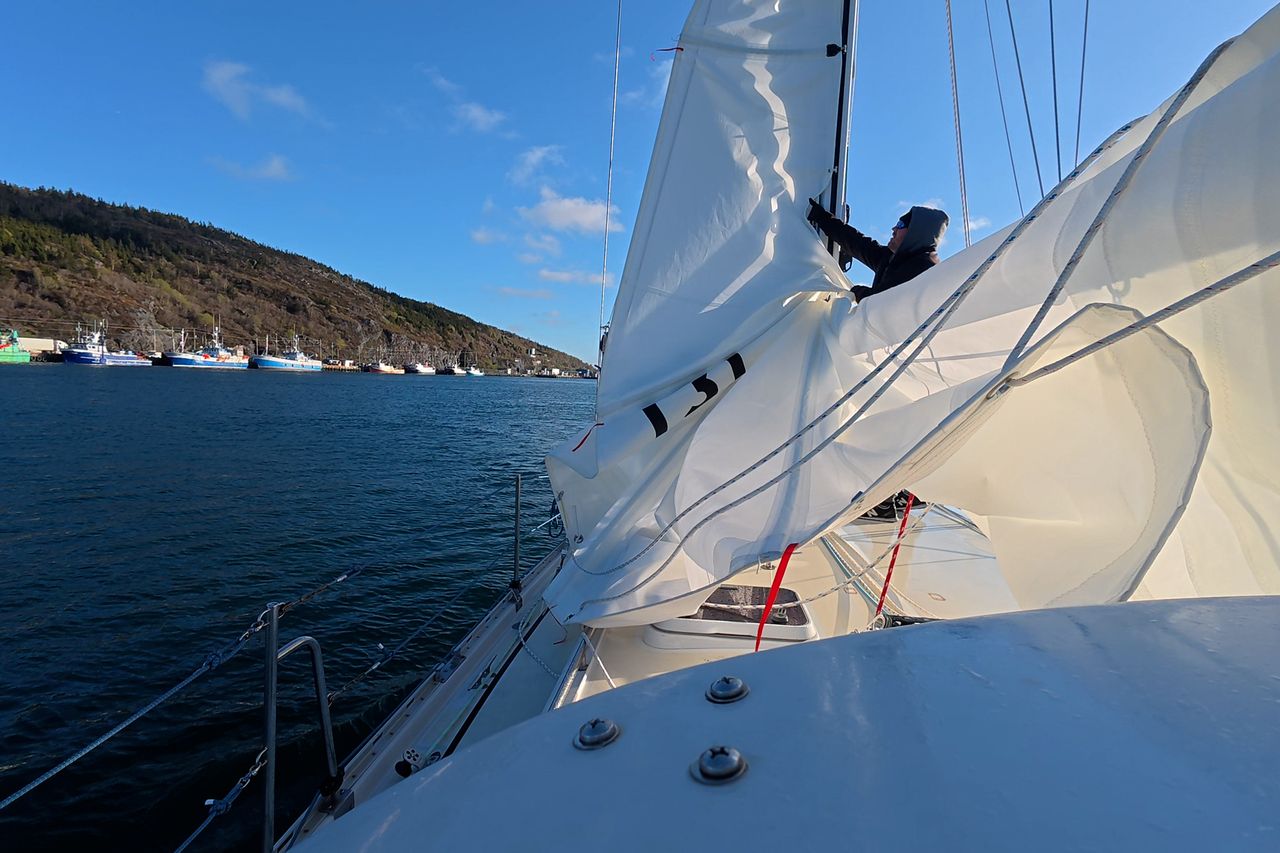
Credit: Courtesy of Matt Rutherford
“I’m fortunate to have this food. Any complaining about any of that stuff, anything, even being cold and wet, none of it helps anything. You can be cold and wet and complain about it, but it’s not gonna make it warm and dry, and it’s not gonna give you a piece of pizza and a beer or something,” he adds. “So you might as well keep a good attitude. I do really enjoy it out here, and it’s just such a rare thing in life to get these opportunities to do this thing.”
However, it’s not all smooth sailing ahead. The next phases will likely put a strain on Rutherford’s mental health, resources and already fickle sleep schedule as he navigates choppier waters. Right now, Rutherford is in the first phase of the expedition, sailing north above Iceland and Scandinavia to the Russian border.
Phase two is the most dangerous leg of the trip, Rutherford shares, explaining that he will spend approximately one month sailing above Russia along the Northern Sea Route, which promises ice, choppy conditions, and no internet access or communication.
The third phase will take him north of Alaska, through the Northwest Passage, and across Baffin Bay back to Aasiaat.
“I look forward to sailing north of Russia, although it’s gonna be a pain in the ass. I’ve never done it before. It’s gonna be all new to me. There’s nobody I can call who’s ever done it before,” he shares. “It’s gonna be interesting because it’s like you’re trying to climb a mountain and nobody’s really climbed up. There is no path. You gotta make your path the best you can.”
“I love all that stuff, and I look forward to it, even though I know it’s gonna be hard and difficult and probably scary at times with all the pack ice,” he adds.
However, the unexpected conditions are “great motivation for staying awake when you’re tired.”
“I got tons of coffee. All the parts of it have their ups and downs. Any day out here is that way too. It can rain and be gray and nasty all day, or this morning I woke up to blue sky,” Rutherford shares. “I could sit here, have a cup of coffee, and look out. There wasn’t much wave action, so it’s a nice morning in the Arctic Ocean. You appreciate that when you get it.”
Read the full article here